
LED Smart Street Light Suppliers: Questions to Ask Before Ordering
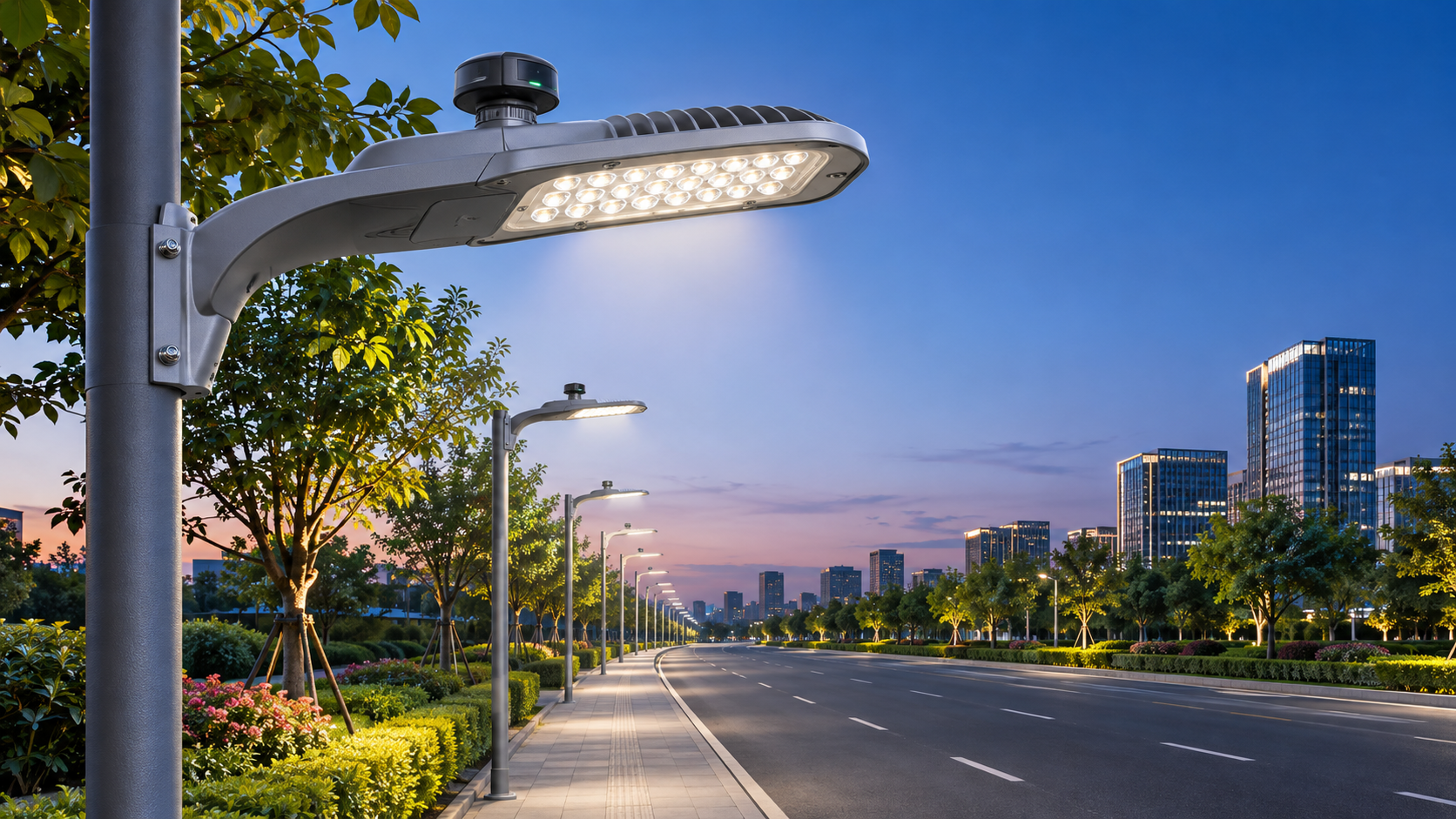
Choosing an led smart street light supplier involves more than comparing prices and specifications. For procurement teams, the right questions can reveal whether a supplier can support product quality, smart control integration, delivery schedules, and long-term project needs.
From road lighting to complex urban installations, a reliable partner should demonstrate manufacturing capability and practical project experience. Before placing an order, use the following questions to assess potential suppliers and reduce procurement risks.
1. Can You Demonstrate Experience With Comparable Projects?
Start by describing your road types, installation environment, control requirements, and expected order volume. Ask the supplier to identify projects with similar technical and delivery challenges.
Request case studies that specify the supplier's role, project scale, installation dates, and control system scope. A product sale alone does not demonstrate responsibility for system integration.
Where confidentiality permits, ask for customer references and discuss delivery performance, commissioning issues, and after-sales response. Treat unsupported claims of project success as a reason for further verification.
2. How Will You Confirm the Lighting Design Meets Our Requirements?
Ask for a lighting calculation based on the actual road geometry, pole height, spacing, and relevant local standards. Product wattage alone cannot establish whether a design is suitable.
Review the proposed illuminance or luminance, uniformity, glare, and light distribution against the project specification. Request the photometric files and identify the assumptions used in the calculation.
Confirm who is responsible for revising the design if pole positions, mounting heights, or road layouts change. Record approval criteria before production begins.
Ask whether the proposed optical distribution is available throughout the required power range. A substitute optic or mounting angle can change performance even when the luminaire looks identical.
3. What Evidence Supports Product Quality and Durability?
Request current test reports for the proposed luminaire, not just individual components. Check the model number, configuration, testing body, and applicability to your destination market.
Discuss ingress protection, impact resistance, surge protection, thermal performance, and corrosion resistance against the installation environment. Coastal roads and high-voltage exposure may require additional protection.
Ask which LED packages, drivers, and surge protection devices are specified, and whether the supplier may change them. Require written approval for substitutions affecting performance or certification.
Compare claimed service life with the stated operating conditions and supporting test data. Distinguish LED lumen maintenance from the expected life of the driver and other replaceable components.
Before committing to volume production, inspect samples for build quality, labeling, mounting compatibility, and ease of maintenance. Agree on how any sample approval relates to the final configuration.
4. Will the Smart Controls Work With Our Existing System?
Define the intended functions before evaluating hardware: remote switching, dimming schedules, fault alerts, energy reporting, and asset management may each require different components or software capabilities.
Ask the supplier to identify every part of the proposed system, including controllers, gateways where needed, communications networks, management software, and any third-party services.
Request written confirmation of supported interfaces and protocols, then verify compatibility with your existing platform. A shared protocol name alone does not guarantee that all functions will work together.
Arrange an integration demonstration using representative equipment and software versions. Test commissioning, dimming, fault reporting, network interruption, and restoration before approving a large order.
Clarify who owns operational data, who can access it, and how it can be exported. Ask about user permissions, software updates, cybersecurity responsibilities, and any recurring platform fees.
Document what happens if connectivity fails or a software service is discontinued. The project should have an agreed operating mode and a realistic route to ongoing support.
5. Can You Deliver the Required Quantity on Schedule?
Ask for a production schedule covering sample approval, component sourcing, manufacturing, inspection, packing, and shipment. Identify dependencies that could delay delivery, particularly for customized controls or optics.
Confirm available production capacity for your order and how it fits alongside other commitments. For phased projects, agree on quantities and delivery dates for each batch.
Request a quality control plan with incoming component checks, in-process inspections, and final testing. Specify whether you or an independent inspector may witness agreed inspection stages.
Set acceptance criteria for appearance, electrical performance, control functionality, labeling, and packaging. Define the procedure for handling failed inspections before the goods leave the factory.
Include packaging requirements for transport and storage, especially for poles, controllers, and spare parts supplied separately. Ask for a packing list that links each item to its destination or installation phase.
6. What Is Included in the Price and Warranty?
Compare quotations using the same quantities, configurations, and delivery terms. A lower unit price can conceal separate charges for controllers, software, commissioning, freight, or replacement parts.
Request an itemized breakdown of luminaires, mounting accessories, smart control hardware, software licenses, testing, and technical support. Confirm taxes, shipping responsibilities, and payment milestones in the contract.
Ask how long the warranty lasts, when it begins, and which components and failure modes it covers. Review exclusions for power surges, installation errors, environmental exposure, and software services.
Agree on the claims process, response times, evidence required, and responsibility for shipping replacement parts. Determine whether labor, access equipment, or removal costs are covered.
For a fair lifecycle comparison, estimate energy use, connectivity fees, maintenance visits, and expected component replacements alongside the purchase price. State the assumptions behind each estimate.
7. How Will You Support Installation and Future Maintenance?
Ask for installation instructions, wiring diagrams, commissioning procedures, and maintenance documentation before shipment. Confirm that materials are available in a language understood by the installation team.
Identify the contact responsible for technical questions during installation and establish an escalation path for faults. For complex control systems, agree on training and commissioning responsibilities in advance.
Check the availability and lead times of replacement drivers, controllers, optics, and mounting parts. Ask how long compatible parts are expected to remain available after the final delivery.
Where a project also includes facades or landscapes, coordinate those requirements separately from roadway compliance. For example, Lishida's LED Linear Light XTD-015 is intended for such applications.
The XTD-015 is specified at 12W with IP66 protection and several beam and color options. Confirm the required configuration and control compatibility before including it in a project.
Make the Supplier Decision on Evidence
Use a consistent scorecard for each bidder, covering lighting performance, control compatibility, quality evidence, delivery capability, lifecycle cost, and support. Weight the criteria according to project risk.
Before issuing the purchase order, resolve exceptions in writing and attach approved specifications, test requirements, schedules, and warranty terms. This creates a clear basis for delivery and acceptance.
Lishida Smart Lighting supports contractors and project owners with outdoor lighting products, smart controls, and project-based solutions, drawing on manufacturing expertise and large-scale project experience in China.
◉ MESSAGE

Blog
- Urban Lighting Solutions: Comparing Grid and Solar-Powered Systems
- Lawn Streetlight EPC Contractors: Assessing Installation Capability
- Dusk-to-Dawn Urban LED Lighting: Photocells vs Astronomical Timers
- Waterfront Pedestrian LED Lighting: Addressing Glare and Salt Air
- LED Street Light Manufacturers: Evaluating Warranty and Support
- Connected Smart Poles: How Connectivity Enables Remote Monitoring
- Solar Highway Lighting: Managing Battery Failures on Remote Roads
Message