
LED Street Light Manufacturers: Evaluating Warranty and Support
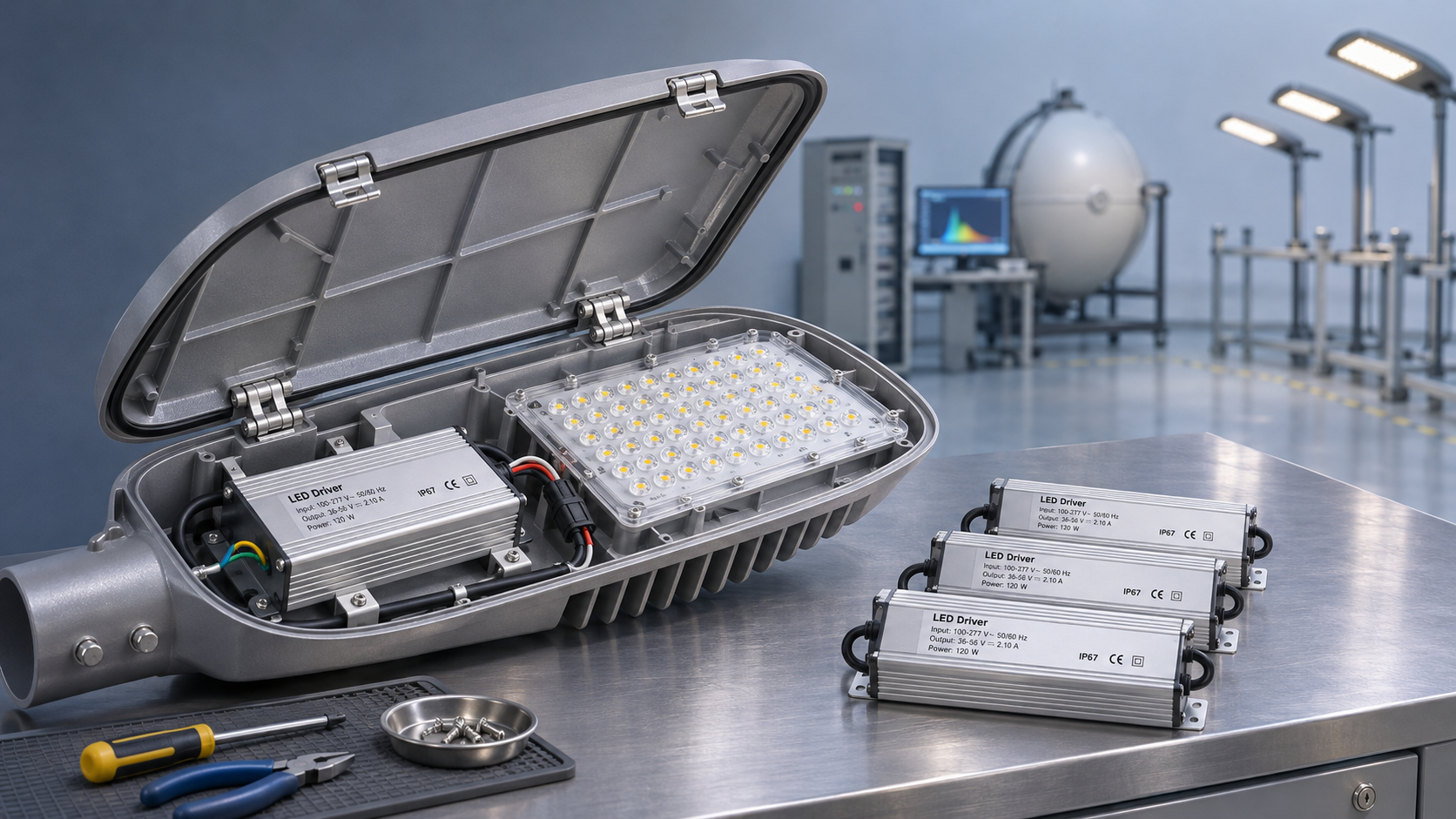
A long warranty does not necessarily make an LED street light manufacturer the lowest-risk choice. A shorter, clearly defined agreement can offer better protection than a longer promise that excludes drivers, limits replacement costs or leaves response times open-ended. Compare the terms alongside the purchase price, expected maintenance costs and the practical support available at the installation site.
Before requesting final quotations, decide which failures would be most disruptive to the project. A failed luminaire on an accessible urban road presents a different maintenance problem from a battery or controller failure on a remote, off-grid route. The warranty and support package should reflect those differences.
Read the coverage by component, not just by year
Street lighting systems contain parts with different operating conditions and replacement requirements. Ask for a written schedule identifying what is covered, for how long and by whom. At a minimum, consider the LED module, driver, housing, seals, surge protection device and any control or communication equipment included in the purchase.
For solar or hybrid systems, the review also needs to cover the battery, charge controller, solar panel and, where applicable, wind turbine. A headline warranty for the luminaire may not apply to these components. Separate terms are not automatically a problem, but they should be clear enough to compare across bids.
Check what constitutes a covered failure. Does the agreement address a complete outage only, or also abnormal dimming, water ingress and control failures? If light output degradation is covered, the contract should explain the assessment method and the threshold for a claim. A statement such as “performance guaranteed” is difficult to use without a measurable basis for deciding whether the product has failed.
Also identify when coverage starts. A warranty beginning at shipment leaves less protection after storage, phased installation and commissioning than one beginning at acceptance. For projects with long delivery or construction schedules, the start date can materially change the value of the offer.
Find out what a replacement actually costs
A supplier may provide a replacement part while the project owner pays for removal, access equipment, traffic management, shipping, customs charges and reinstallation. On a road with restricted access, those costs can exceed the value of the component itself.
Ask each bidder to describe its remedy and cost responsibilities for a valid claim. The answer should distinguish between supplying a part, repairing a unit, replacing a complete luminaire and issuing a credit. A credit may be useful for a commercial purchase, but it does not by itself restore a road to service.
- Who pays to ship a failed unit or replacement part, and where must it be sent?
- Are on-site labor, lifting equipment and traffic control included or excluded?
- Can an approved local contractor carry out the replacement without affecting coverage?
- Must the failed unit be returned before a replacement is dispatched?
- Does a replacement retain the original warranty end date or receive separate coverage?
Use those answers to estimate the project’s likely out-of-pocket exposure. The lowest quoted luminaire price may still be suitable when local maintenance is inexpensive and spare parts are readily available. Where access is difficult or outages carry higher operational consequences, a more comprehensive support arrangement may justify a higher initial price.
Exclusions can shift risk back to the project
Installation errors, unauthorized modifications, unsuitable electrical supply and conditions outside the product’s specified operating limits are common areas to examine. The practical question is not simply whether exclusions exist, but whether the project team can meet the stated conditions and document compliance.
For example, a manufacturer may require a particular surge protection arrangement or grounding configuration. If those requirements are not passed to the electrical contractor, a later failure may become a dispute between the owner, installer and supplier. Include the relevant installation instructions in the contract documents and retain commissioning records.
Environmental exposure deserves the same attention. Coastal sites, industrial areas and locations with high winds can impose demands beyond those of a sheltered road. Specify the actual site conditions during tendering and obtain a written statement of the proposed configuration and its applicable warranty conditions. A general outdoor-use description is less useful than an agreement tied to the project environment.
Test the claim process before signing
A claim procedure should tell the maintenance team whom to contact, what evidence to submit and how a decision is made. Ask suppliers to describe a typical claim from notification through diagnosis, approval and dispatch. Request commitments in the contract for acknowledgment, technical assessment and the proposed remedy, including how each period is measured.
The evidence requirements should be manageable in the field. Photographs, serial numbers, installation records and electrical measurements can help diagnose a failure, but retrieving detailed information from every pole may be difficult. Agree on a process for inaccessible locations and for cases where several units show the same fault.
Response time and resolution time are not the same. A quick acknowledgment is useful, but it does not establish when a replacement will arrive. Ask where spare parts are held, whether critical components are available for the project and what happens when a part is discontinued. For a large installation, consider purchasing an agreed quantity of compatible spares at the outset.
Define how repeated failures will be handled. If several drivers fail in similar conditions, replacing them one at a time may leave the owner exposed to repeated site visits. A contract can establish an escalation process for investigating a potential common cause and agreeing on corrective action.
Match technical support to the system
For a conventional grid-connected installation, support may center on electrical diagnosis, driver replacement and luminaire compatibility. Connected lighting adds questions about control devices, communications, software access and the division of responsibility between equipment suppliers. Identify who will troubleshoot an issue that could originate in either the luminaire or the control system.
Off-grid projects need a broader component-level discussion. For example, Wind-Solar Hybrid Street Lighting | SHL-007 combines solar and wind generation with a lithium battery and an MPPT hybrid controller. On a remote road, the ability to diagnose whether an outage originates in generation, storage, control or the luminaire affects how quickly a crew can bring the correct part to site. Ask for separate component warranty terms, diagnostic guidance and spare-part availability.
Hybrid generation can be relevant where grid connection is difficult, but it does not remove the need for site-specific design. Available sunlight and wind, energy consumption, battery sizing and maintenance access all affect suitability. A warranty should sit alongside a documented system design, not substitute for one.
Put support commitments into the purchase decision
Send competing manufacturers the same project information and request their warranty documents with the quotation. Compare the proposed equipment configuration, coverage period and start date, exclusions, claim procedure, spare parts and allocated costs. Record any verbal assurances in the purchase agreement before award.
It is also worth identifying the entity responsible for honoring the warranty, particularly when a distributor, contractor and manufacturer are all involved. The project should have a clear route for submitting a claim if the original sales contact changes, as well as a defined escalation path for unresolved issues.
Lishida Smart Lighting provides outdoor lighting products, smart control systems and project-based support. For a proposed project, the useful next step is to request the applicable component warranty and support arrangements in writing, then compare them against the site conditions and maintenance responsibilities. The best offer is the one whose coverage, response process and total expected cost fit how the installation will actually be operated.
◉ MESSAGE

Blog
- Urban Lighting Solutions: Comparing Grid and Solar-Powered Systems
- Lawn Streetlight EPC Contractors: Assessing Installation Capability
- Dusk-to-Dawn Urban LED Lighting: Photocells vs Astronomical Timers
- Waterfront Pedestrian LED Lighting: Addressing Glare and Salt Air
- LED Street Light Manufacturers: Evaluating Warranty and Support
- Connected Smart Poles: How Connectivity Enables Remote Monitoring
- Solar Highway Lighting: Managing Battery Failures on Remote Roads
Message