
LED Pattern Projector Specs Explained: Brightness, Lens, IP Rating, and Gobos
What procurement teams usually get wrong about LED pattern projector specs
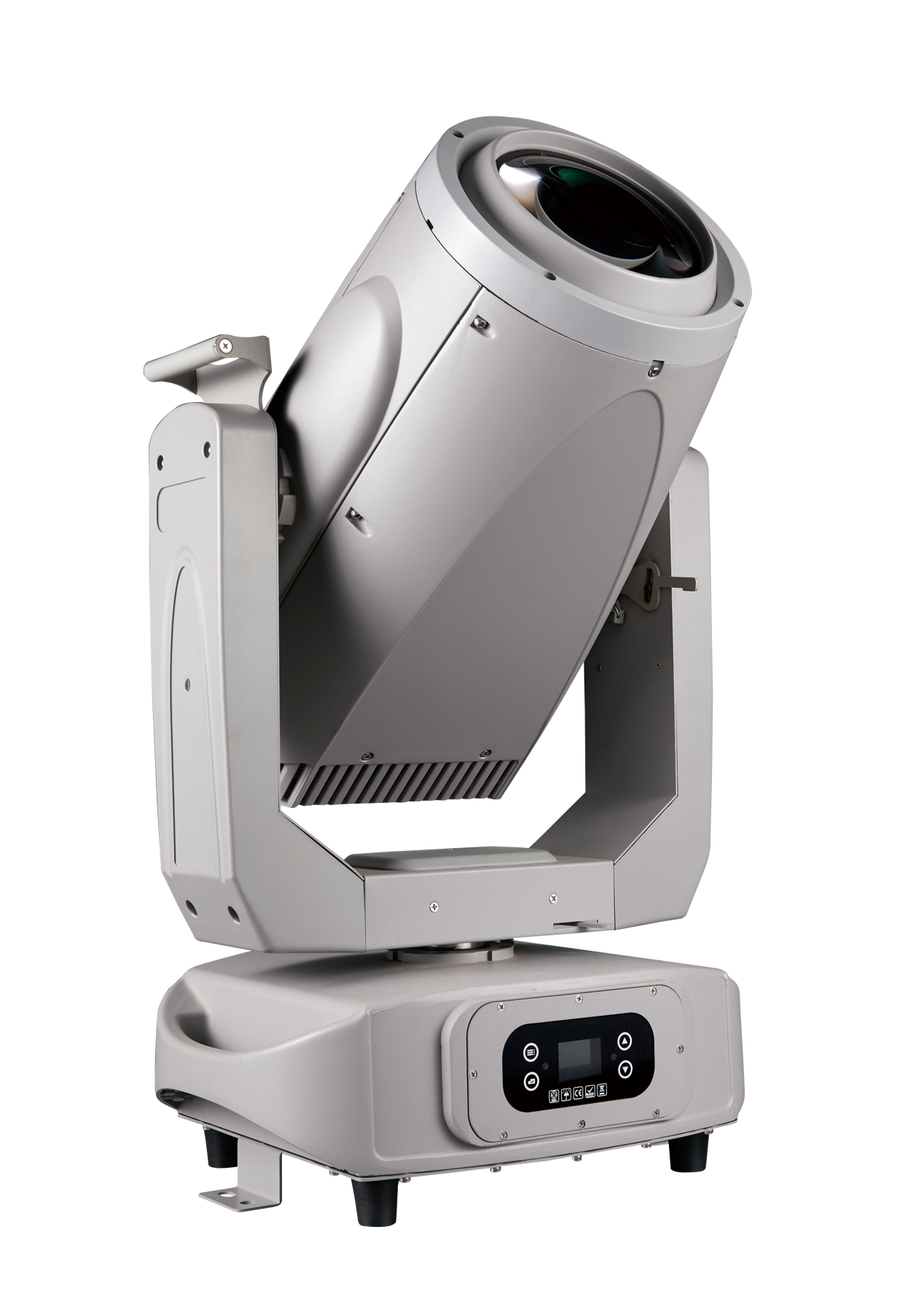
Brightness, lens angle, IP rating, and gobos are often listed side by side on a datasheet, but they do not carry the same decision weight. In outdoor projects, the biggest mistake is treating an LED pattern projector like a decorative fixture with a simple wattage comparison. It is an optical projection device. That means the result on the ground, wall, pavement, or facade depends not only on how much light the unit produces, but on how that light is shaped, how far it travels, how well the housing survives weather, and whether the projected pattern remains legible after months of use.
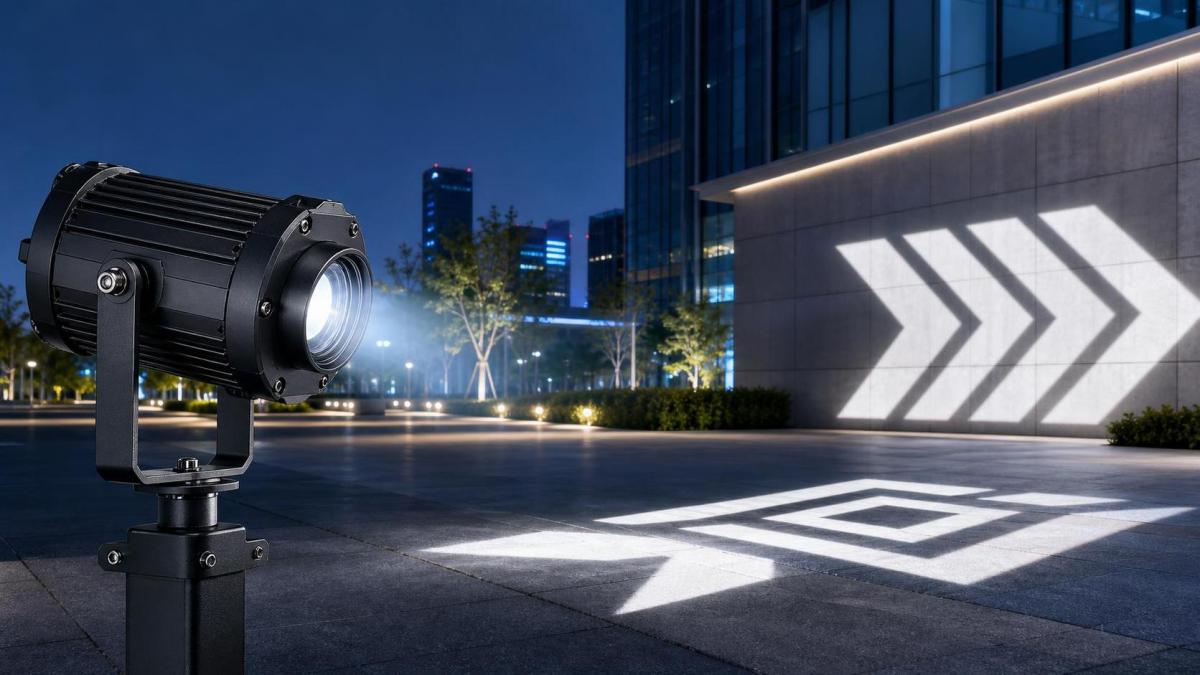
For roads, plazas, municipal spaces, parks, underpasses, and commercial outdoor zones, a good specification review starts with one practical question: what must people actually see? A logo, directional symbol, warning mark, decorative motif, or branded wayfinding element all place different demands on the projector. A fixture that looks acceptable in a catalog image may fail on-site because the pattern washes out, the edge softens at distance, or moisture compromises the optics.
This is why the term LED pattern projector should be understood as a system of interacting specifications rather than a single luminaire category. The core specs only make sense when read together.
Brightness is not just output. It is visible pattern performance.
Many buyers begin with wattage or lumen figures, which is understandable but incomplete. For a pattern projector, brightness only matters if the projected image remains recognizable under real ambient conditions. A 30W unit and a 60W unit may both be described as suitable for outdoor use, yet the usable result can differ sharply depending on projection distance, beam control, mounting height, and surrounding light levels.
In low-ambient environments such as parks or building perimeters, lower output may still deliver a crisp image. In transport corridors, public squares, or mixed-use urban sites with streetlights, traffic, and storefront spill light, the same projector can appear weak even if the nominal lumen value looks reasonable. That is why procurement teams should ask for the expected projection distance and recommended application conditions, not just rated power.
Another detail often missed: a projector with tighter optical control can produce a more readable pattern than a higher-lumen fixture with poor focus or an unsuitable lens. In other words, brightness on paper does not automatically translate into contrast on the target surface.
Lens selection determines image size, edge sharpness, and installation flexibility
If brightness answers whether the pattern can be seen, the lens answers how it will look. This is one of the most important parts of evaluating an LED pattern projector, especially for projects where mounting positions are constrained by architecture, poles, road geometry, or pedestrian flow.
A narrow lens projects farther and usually keeps the image more concentrated. A wider lens covers a larger area but spreads the available light. That tradeoff is straightforward, but in practice it affects several procurement decisions:
- Whether the fixture can be mounted where the site actually allows
- Whether the projected symbol will fit the target surface without distortion
- Whether the edge remains sharp enough for safety markings or directional graphics
- Whether future maintenance teams can replace units without reworking brackets and aiming angles
For example, a decorative projection on a wide plaza may tolerate some edge softness. A directional arrow at a pedestrian crossing or transport hub may not. If the application depends on fast recognition, lens choice should be reviewed alongside mounting height, setback distance, and target dimensions. This is also where experienced project support matters. In large outdoor lighting schemes, optical mismatch causes more site adjustment than many teams expect.
IP rating is about enclosure protection, not total outdoor suitability
IP rating is one of the most quoted specifications and one of the most misunderstood. An IP rating indicates protection against solids and water ingress under defined test conditions. It is useful, but it does not by itself guarantee long-term field reliability in a demanding outdoor environment.
For LED pattern projectors installed outdoors, buyers usually look for ratings such as IP65 or above, depending on exposure conditions. That is a reasonable starting point. But a projector mounted near roads, coastal zones, fountains, or polluted urban corridors also needs attention to housing material, sealing quality, thermal management, coating durability, and the way the optical chamber is designed. Condensation, dust accumulation on lenses, and repeated temperature cycling can affect projection quality even when the unit nominally meets a suitable IP level.
This is familiar territory in broader outdoor lighting procurement as well. In integrated project environments, enclosure protection is only one part of survivability. For comparison, products used in off-grid municipal lighting, such as Solar Street Lighting | SL-008, are typically evaluated not only by protection level like IP65 or IP66, but also by wind resistance, operating temperature range, surface treatment, and long service life expectations. Pattern projectors should be screened with the same mindset: the spec sheet should describe real environmental resilience, not just one code.
Gobos are not a decorative accessory. They define the message.
The gobo is the template that creates the projected image. In procurement discussions, gobos are sometimes treated as a late-stage customization detail, but they directly affect usability. Material, resolution, contrast, and compatibility with the projector all matter.
For simple symbols or single-color directional marks, the requirement may be straightforward. For detailed branding, text, or multi-element graphics, the design can quickly exceed what the projector can render clearly at a given distance. Fine lines that look sharp in artwork files may break down once projected onto textured pavement or uneven stone. This becomes more critical outdoors, where the target surface is rarely ideal.
There is also a maintenance angle. If a project depends on replaceable gobos for seasonal events, temporary branding, or wayfinding updates, teams should confirm replacement lead time, interchangeability, and whether re-focusing is needed after gobo changes. These are not dramatic technical issues, but they can affect operating cost and service response across a large rollout.
A short spec check that is more useful than comparing wattage alone
What this means in real project evaluation
On large outdoor jobs, specification review is rarely about finding the “highest” number. It is about reducing mismatch between product capability and site conditions. Contractors and project owners dealing with public-space lighting already know this from other fixture categories: installation constraints, maintenance access, control integration, and environmental exposure often determine success more than brochure claims.
That is also where experienced engineering support becomes valuable. Teams involved in complex urban projects tend to look beyond isolated component specs and check how products will behave across the full project lifecycle. Lishida Smart Lighting works in that broader project-delivery context, where product selection, system integration, and long-term reliability must line up with execution realities on site. For a projector, that means reviewing not only the optical and protection specs, but also how consistently the unit can perform after installation, cleaning cycles, environmental stress, and replacement work.
A well-chosen LED pattern projector is not simply bright, waterproof, and customizable. It is correctly matched to the target image, the mounting geometry, and the exposure conditions of the project. If procurement teams keep that hierarchy in mind, the core specs become much easier to read, and the risk of expensive on-site correction drops with it.
◉ MESSAGE
Blog
- What Is an LED Pattern Projector and Where Is It Most Commonly Used?
- LED Pattern Projector Specs Explained: Brightness, Lens, IP Rating, and Gobos
- How Demand for LED Pattern Projectors Is Changing in Commercial Lighting
- How to Compare Modern Street Lighting Options for Main Roads and Side Streets
- How Smart StreetLightingIssL-CC Improves Streetlight Management Efficiency
- Common Deployment Issues with Smart StreetLightingIssL-CC and Practical Fixes
- LED Pattern Projector for Outdoor Branding: What to Consider Before Installation
Message