
Why the Market Is Rethinking the LED Pattern Projector
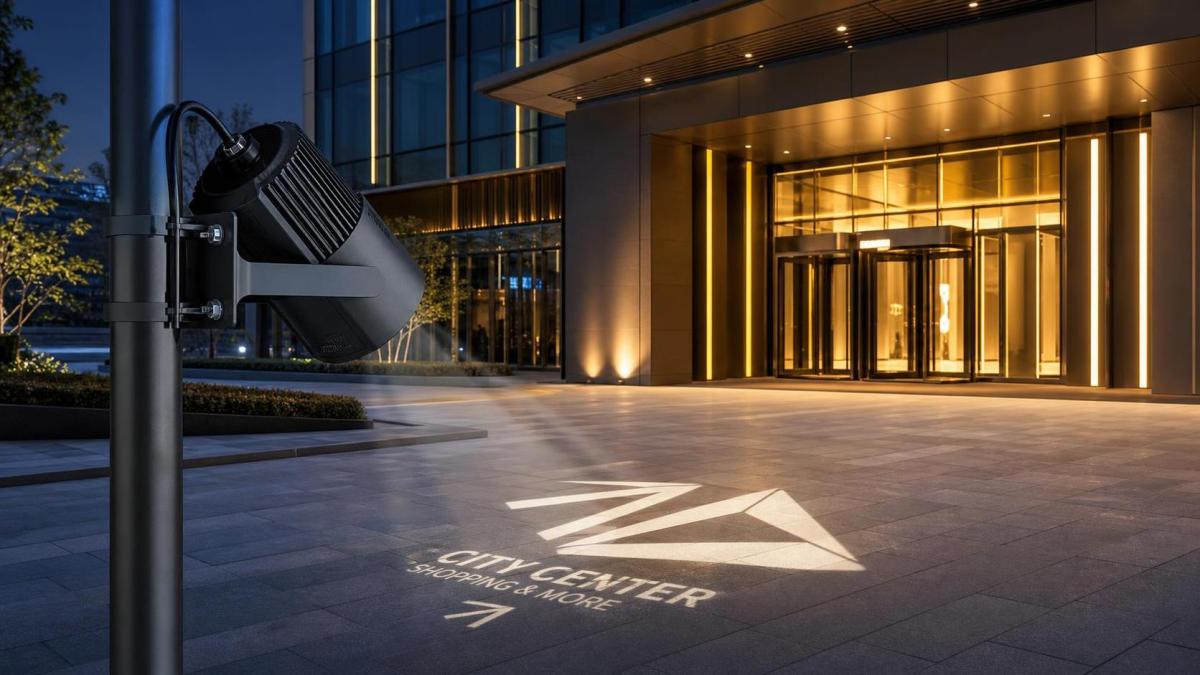
The biggest change in demand for the LED pattern projector is that buyers are no longer treating it as a novelty fixture. In commercial lighting, it used to be specified mainly for short-term visual effect: a logo on pavement, a festive motif on a facade, a directional symbol in an event plaza. That still matters, but the conversation has become more demanding. Project teams now ask whether the projector can survive outdoor exposure, integrate with control systems, maintain image clarity over time, and fit into a broader lighting plan instead of competing with it.
That shift is especially relevant in public-space and urban-commercial work, where lighting is expected to do more than decorate. A projected pattern may support branding, guide movement, mark entrances, reinforce place identity, or create a programmable layer for seasonal campaigns. In other words, the fixture is increasingly judged as part of infrastructure, not just as a visual accessory.
This matters for channel partners because end users are becoming more precise in what they mean when they request an LED pattern projector. They are rarely buying “a light that projects an image” in the abstract. They are buying a certain outcome: repeatable brand presentation, controlled operating cost, stable outdoor performance, and fewer site-level surprises.
What Buyers Mean by “Better” Has Changed
A few years ago, visual brightness could dominate the conversation. Now brightness alone is not enough, because pattern projection is sensitive to several variables at once: throw distance, mounting angle, ambient light, lens quality, projected surface, and maintenance conditions. A projector that looks impressive in a showroom can disappoint on a windswept entrance road or a textured public plaza.
That is why more buyers are evaluating these products in application terms. Can the pattern remain legible from the real installation height? Does the housing resist rain, dust, and temperature swings? Is the optical performance still acceptable after long operating hours? Can the driver and controls work with the rest of the outdoor system? In large projects, these questions often carry more weight than the initial effect demo.
Another change is the growing expectation for flexibility. Retail districts, mixed-use developments, tourism sites, and municipal commercial spaces increasingly want content that can evolve. One client may want a permanent wayfinding symbol; another may want seasonal graphics or rotating promotional imagery. This has pushed interest toward solutions that can adapt operationally, even when the physical fixture remains fixed.
The Outdoor Context Is Driving the Real Demand
In outdoor lighting, pattern projection succeeds or fails on context. A shopping street, civic square, transport-adjacent public area, and hotel approach road may all use projection, but they do not ask the same thing from the fixture. Some need strong recognition at a distance. Some need subtle visual branding that does not create glare or visual clutter. Some need equipment that can run reliably in exposed urban conditions with limited maintenance windows.
This is one reason demand is converging around more project-oriented purchasing. Distributors and agents are seeing fewer buyers who want an isolated product and more who want a coordinated solution. In practice, that means projection fixtures are often discussed alongside street lighting, architectural lighting, poles, control strategies, and installation conditions. In a commercial district upgrade, for example, a projected identity element may work only when the base lighting already creates consistent visibility and comfortable contrast.
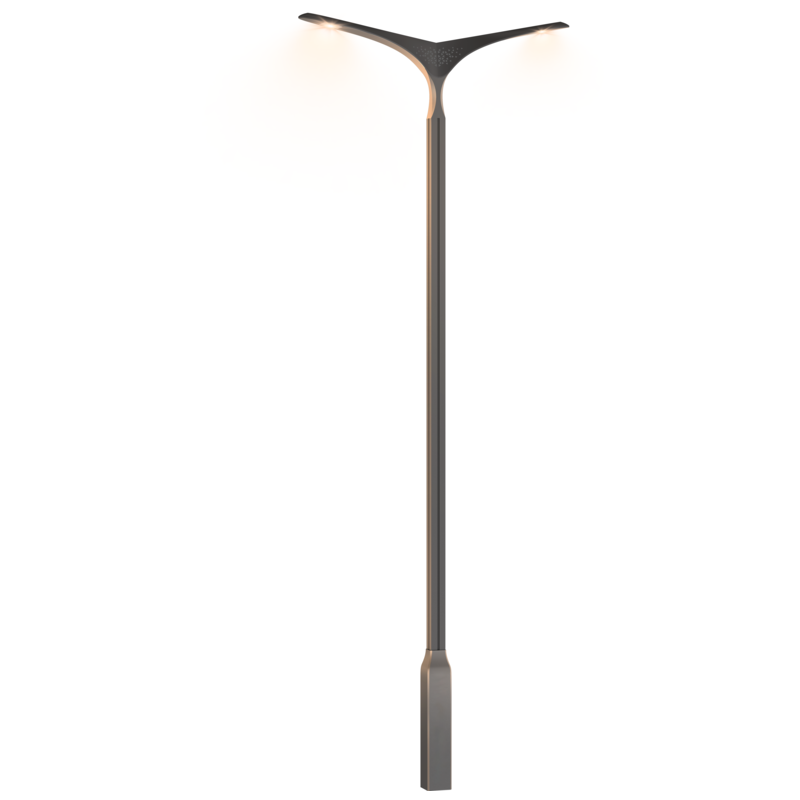
That broader project view also explains why some buyers compare projector options against surrounding infrastructure products rather than against decorative fixtures alone. A street lighting system such as Modern Street Lighting|MSL-XY, with IP67 protection, wind resistance rated at at least 150 km/h, luminous efficacy of at least 140 lm/W, and service life of at least 50,000 hours, reflects the kind of reliability benchmark many outdoor projects now expect across the site. Even when a pattern projector serves a different function, it enters the same conversation about durability, maintenance planning, and control compatibility.
Common Misunderstandings Still Distort Purchasing Decisions
One persistent misunderstanding is that an LED pattern projector is simply interchangeable with any gobo-style effect light. In reality, commercial outdoor use imposes different demands than temporary entertainment or indoor display use. Optical precision, ingress protection, thermal management, mounting stability, and long-term consistency become more important when the fixture is expected to operate as part of a built environment.
Another mistake is assuming that higher wattage automatically means better projection. It may increase output, but image quality depends on more than power. If the projected surface is uneven, the ambient lighting is too strong, or the installation distance is poorly matched to the optics, the result can still look weak or blurred. Experienced buyers therefore pay closer attention to application matching than to a single headline parameter.
There is also a tendency to underestimate the role of maintenance. Pattern projection is often specified during concept development because it photographs well and communicates brand personality quickly. But after handover, the fixture has to live in the same reality as the rest of the outdoor system: dust, moisture, vibration, electrical coordination, and replacement planning. Demand is shifting toward products that can survive that transition from concept image to operating asset.
What Channel Partners Should Watch in the Trend
For the market side, the practical signal is clear: buyers want fewer standalone promises and more evidence that a solution can hold up in project conditions. That changes how LED pattern projector products should be presented and supported. The strongest offers are no longer just about effect samples. They are about installation logic, environmental suitability, control options, and how the fixture fits into a site-level lighting strategy.
This is where engineering support becomes commercially relevant. In large-scale outdoor work, product selection is rarely isolated from pole height, beam distribution, surrounding luminaires, electrical layout, and long-term maintenance access. Teams with experience in roads, public spaces, and complex urban environments tend to understand that the specification conversation starts earlier than the fixture order. It starts with project constraints.
That is also why integrated suppliers are attracting more attention. A partner that understands not only decorative projection but also outdoor system delivery, smart controls, and the reliability expectations of public projects is often better positioned to support specification decisions. In many cases, the value is not in selling more fixture types. It is in reducing coordination risk across the project lifecycle.
A Useful Way to Read the Market
If demand for the LED pattern projector looks stronger in some segments and more selective in others, that is not a contradiction. It reflects a maturing market. Visual impact still opens the door, but reliability, control compatibility, and project fit increasingly decide the order. Buyers have become less interested in projection as a gimmick and more interested in projection as a manageable, durable part of commercial outdoor lighting.
For distributors and agents, that means the better question is no longer “Is this product attractive?” It is “Under what conditions will this projection solution continue to perform, and how does it fit the rest of the site?” Teams that can answer that question with technical clarity will usually be closer to where the market is moving.
◉ MESSAGE
Blog
- How Demand for LED Pattern Projectors Is Changing in Commercial Lighting
- How to Compare Modern Street Lighting Options for Main Roads and Side Streets
- How Smart StreetLightingIssL-CC Improves Streetlight Management Efficiency
- Common Deployment Issues with Smart StreetLightingIssL-CC and Practical Fixes
- LED Pattern Projector for Outdoor Branding: What to Consider Before Installation
- How to Fix Blurry Images and Uneven Output in an LED Pattern Projector
- What Gobo Size and Projection Distance Work Best for an LED Pattern Projector?
Message