
What Is an LED Pattern Projector and Where Is It Most Commonly Used?
What an LED Pattern Projector Actually Does
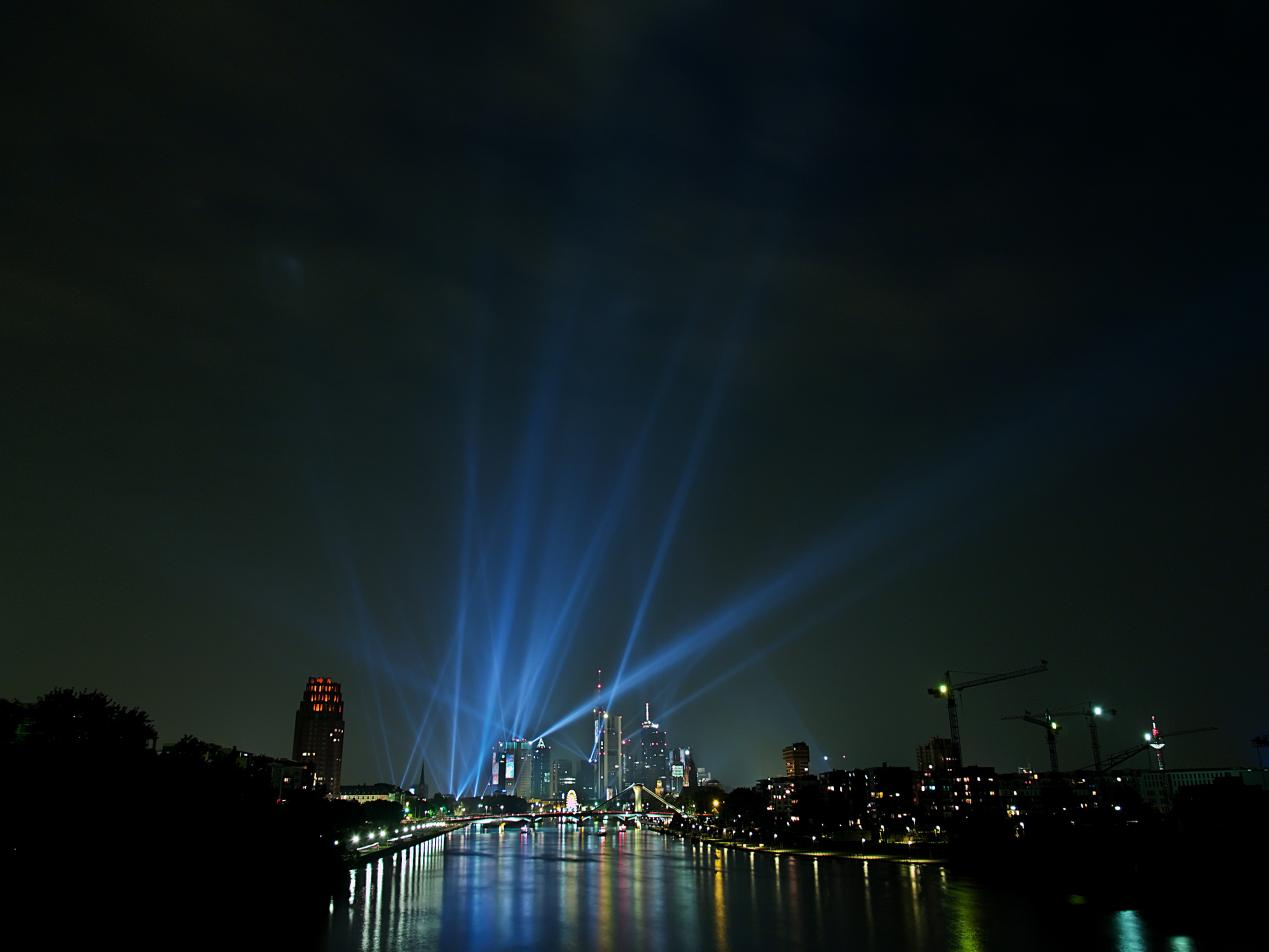
An LED pattern projector is not just a bright outdoor lamp with a stencil inside. In practical use, it is a projection fixture built to throw a controlled image onto a surface outdoors, where distance, ambient light, rain, dust, and maintenance limits all matter. The projected image might be a logo, directional arrow, festival motif, warning sign, or decorative texture, but the real value is not the graphic itself. It is the ability to place a visible message exactly where people look: on pavement, walls, facades, entrance zones, or gathering areas.
That distinction matters because many people confuse this product with landscape spotlights, gobo projectors for indoor events, or simple advertising lights. An outdoor LED pattern projector is closer to a purpose-built visual communication tool. The fixture, optics, heat management, ingress protection, and mounting method all affect whether the image stays readable over time.
In outdoor lighting projects, clarity is usually the first benchmark. A pattern that looks sharp in a dark showroom can lose definition quickly on textured concrete, uneven stone, painted walls, or wet paving. So when professionals evaluate an LED pattern projector, they are not only asking how bright it is. They are asking whether the optics match the throw distance, whether the installation angle distorts the image, and whether the target surface supports good contrast.
Where It Is Most Commonly Used
The most common use cases are places where lighting needs to do more than illuminate. Commercial entrances use projected logos or welcome marks to create brand recognition without adding bulky physical signage. Public plazas and pedestrian streets use pattern projection to strengthen identity during holidays, cultural programs, or city events. Parks and waterfronts use it more selectively, often for wayfinding, themed decoration, or low-glare visual interest along paths and gathering nodes.
Building facades are another frequent application, but usually when the design intent is controlled and architectural. A projector can place symbols or textured light on a wall far more precisely than a floodlight can. In transport-adjacent spaces, such as station forecourts, drop-off areas, or large campus approaches, projected arrows and symbols can also support navigation, especially where conventional sign placement is difficult or visually cluttered.
Temporary and semi-permanent event spaces are common too. The reason is simple: projection is flexible. The light source may stay in place while the pattern changes with seasons, promotions, festivals, or venue programming. That adaptability is one reason the category has become useful in outdoor public environments rather than remaining a niche decorative product.
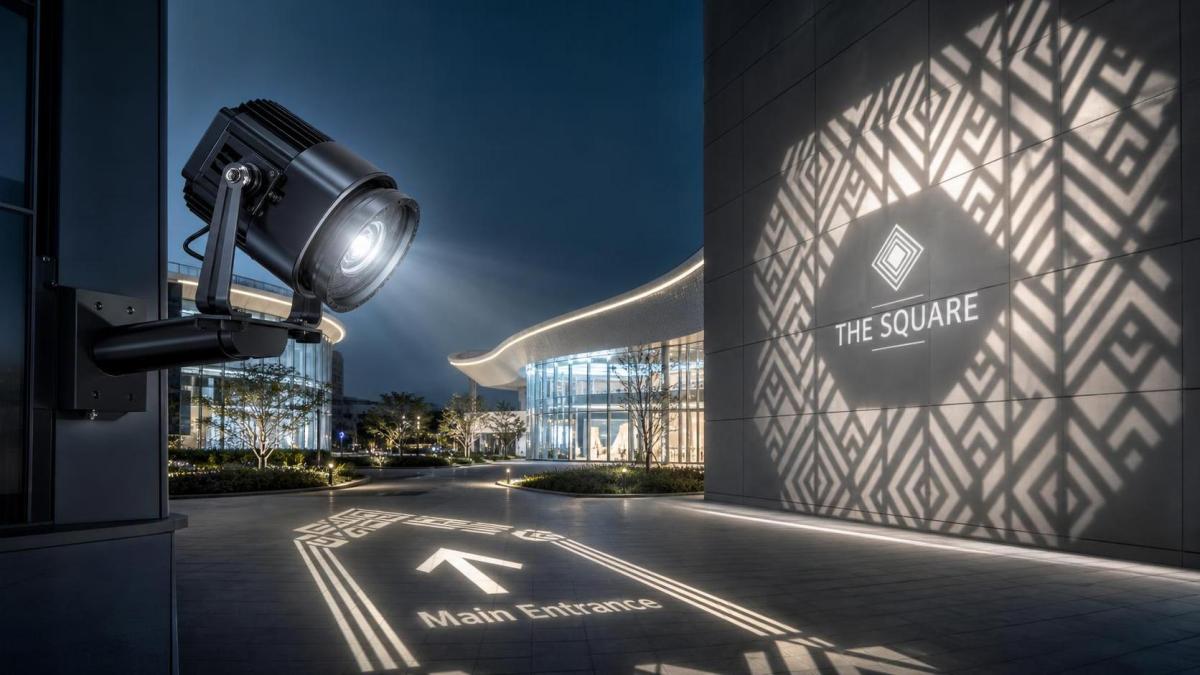
Still, not every outdoor site is suitable. If the target area is exposed to strong competing light, if the mounting distance is excessive, or if the surface is highly irregular, the effect may be weak or visually messy. In that sense, an LED pattern projector works best where the projected image has a clear visual field and a defined purpose.
Why It Is Different from Decorative Lighting
A decorative light generally adds atmosphere. A pattern projector can do that, but it also carries information. That is why fixture selection should start with the job the image needs to do. If the goal is branding, edge sharpness and color consistency matter. If the goal is wayfinding, legibility matters more than visual richness. If the goal is seasonal ambiance in a plaza, the design may tolerate softer edges but still needs stable output and weather resistance.
This is also where people make a common mistake: they judge the product from a catalog image rather than from installation conditions. Outdoor lighting performance is always contextual. A narrow beam may look impressive but cover too little area. A wide projection may fill the space but wash out the graphic. The right answer depends on mounting height, projection distance, surface reflectance, and the amount of surrounding light.
For project teams working in larger outdoor environments, this kind of judgment is routine. Companies that support roads, public spaces, and urban lighting systems tend to look beyond fixture appearance and focus on long-term reliability, system compatibility, and what happens after handover. That broader project view is often more useful than the product label itself.
What to Check Before Choosing One
If you are trying to understand whether an LED pattern projector is the right fit, a few checks matter more than marketing language:
- Target surface: smooth, moderately even surfaces usually produce cleaner results than rough stone, planting, or heavily jointed paving.
- Viewing purpose: logos, arrows, symbols, and decorative motifs do not demand the same level of precision.
- Ambient light: nearby streetlights, facade lighting, shopfronts, and vehicle light spill can reduce contrast sharply.
- Fixture position: throw distance and angle directly affect image distortion, coverage, and maintenance access.
- Outdoor protection: for permanent exterior use, ingress protection and thermal performance are not optional details.
Power supply conditions can also shape the solution. In some off-grid or hard-to-wire locations, designers may pair visual lighting elements with independent infrastructure. For example, a site that already relies on solar-based pathway or area lighting may evaluate products such as Solar Street Lighting | SL-008 for surrounding illumination, especially where trenching is undesirable. That does not replace a pattern projector, but it shows how projection often sits inside a broader outdoor lighting scheme rather than operating alone.
Common Misunderstandings
One misunderstanding is that brighter always means better. In projection, optical control matters as much as raw output. Another is that any outdoor projector can serve as signage. In reality, decorative projection and functional projection are not the same thing. If the image must communicate direction or identity clearly, the tolerance for blur, glare, and misalignment becomes much lower.
There is also a tendency to treat projected graphics as permanent replacements for all physical signs. That is rarely the right way to think about them. They work best as a complement: strengthening arrival experience, highlighting routes, marking temporary uses, or adding flexibility where static signage would be awkward or visually heavy.
And while the fixture category sounds specialized, the decision logic is fairly practical. If the space needs a visible message, if the surface can carry that message clearly, and if the environment allows stable projection, an LED pattern projector can be a strong fit. If those conditions are missing, another lighting or signage method may do the job better.
A Useful Way to Think About It
The simplest way to understand an LED pattern projector is this: it is outdoor lighting used as a precise visual layer, not just illumination. Its most common uses are the places where people need recognition, orientation, or atmosphere without adding clutter to the built environment. That is why it appears so often in plazas, facades, parks, entrances, and event-oriented public spaces.
When evaluating one, focus less on the graphic alone and more on whether the projected image will remain readable, durable, and appropriate in the real site conditions. In outdoor lighting, that is where a concept stops being attractive in theory and starts working in practice.
◉ MESSAGE
Blog
- What Is an LED Pattern Projector and Where Is It Most Commonly Used?
- LED Pattern Projector Specs Explained: Brightness, Lens, IP Rating, and Gobos
- How Demand for LED Pattern Projectors Is Changing in Commercial Lighting
- How to Compare Modern Street Lighting Options for Main Roads and Side Streets
- How Smart StreetLightingIssL-CC Improves Streetlight Management Efficiency
- Common Deployment Issues with Smart StreetLightingIssL-CC and Practical Fixes
- LED Pattern Projector for Outdoor Branding: What to Consider Before Installation
Message