
Installation Planning for SL-004 Solar Street Lighting on Remote Sites

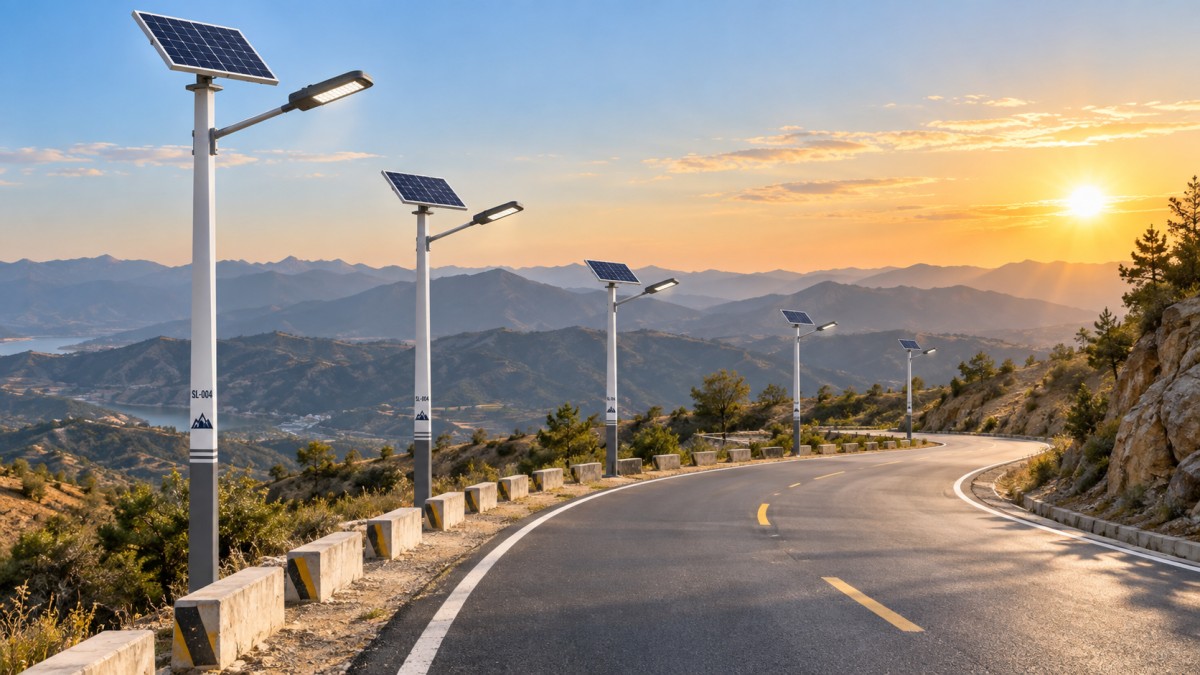
Remote-site lighting often fails at the planning stage rather than at the point of installation. A fixture may appear suitable on paper, yet the finished system can underperform when solar exposure is weaker than expected, access roads delay maintenance, or the pole location is shaded for part of the day. For procurement teams planning SL-004 Solar Street Lighting, the practical question is not simply whether the unit is durable. It is whether the complete lighting system can maintain the required illumination through local weather, seasonal changes, and long periods without service access.
The right approach is to define site conditions before comparing product quotations. Solar resource, operating profile, pole spacing, battery autonomy, freight constraints, and maintenance responsibility should all be checked as connected decisions. A higher-output luminaire cannot compensate for inadequate charging conditions, and a large battery does not solve a layout that leaves parts of the road outside the intended light coverage.
Start with the operating conditions, not the fixture appearance
Remote installations vary widely. A rural access road, a construction camp perimeter, a parking area near a utility facility, and a mountain service route may all be described as off-grid sites, but their lighting requirements are different. Before specifying SL-004 units, establish what the lighting must support after dark: vehicle movement, pedestrian safety, security observation, wayfinding, or intermittent operational work.
This initial definition affects the lighting schedule. A road used only during early evening may be suitable for programmed dimming after peak activity. A site with overnight vehicle access may require a more stable output profile. Motion sensing can reduce energy consumption in selected areas, but it should not be treated as an automatic answer for every road. Where drivers need to see road edges, turning points, gates, or hazards in advance, abrupt changes between low and high output may be unsuitable.
Procurement documents should ask the project team to confirm the following conditions before final selection:
- Daily operating hours and whether output can be reduced during low-traffic periods.
- Required visibility at junctions, entrances, crossings, loading zones, and sharp bends.
- Seasonal weather patterns, including long cloudy periods, fog, dust, snow, or heavy rain.
- Nearby obstructions such as trees, ridgelines, buildings, containers, telecom towers, or future structures.
- Access limitations for delivery vehicles, lifting equipment, concrete work, and later maintenance visits.
- Local environmental exposure, particularly corrosion, wind, loose soil, flooding, or vandalism risk.
Assess solar availability where the pole will actually stand
Solar lighting performance depends on usable sunlight at the installed position, not only on the region’s general climate description. A route may have strong average solar conditions while individual poles sit beside tall vegetation or terrain that blocks morning or afternoon sunlight. Since charging opportunities are cumulative, partial shading across several poles can create uneven performance along the same road.
A site survey should record shading at different times of day and consider seasonal sun angles. Trees that appear harmless during one visit may cast longer shadows in another season. Dust accumulation and bird activity can also reduce effective panel output over time, particularly in dry, open locations. Where cleaning access is difficult, panel orientation and tilt should allow rain to assist with runoff while avoiding configurations that collect debris.
Do not approve a lighting layout solely from satellite imagery or a general site plan. Field verification is especially important near hills, forest edges, industrial storage areas, and temporary work compounds. If a planned pole position cannot receive adequate sunlight, moving the pole a short distance may be more effective than increasing battery capacity or selecting a larger light source.
Match battery autonomy to the site’s real risk period
Battery autonomy is the period during which the system can continue operating with limited solar charging. It should be evaluated against the site’s likely sequence of low-sun days, the programmed output curve, and the consequences of reduced lighting. A remote service road may tolerate controlled dimming during extended poor weather. A critical access point, security gate, or isolated pedestrian path may need a more conservative operating reserve.
When reviewing an SL-004 proposal, request the assumptions behind its autonomy claim. The useful questions are not limited to the stated number of nights. Clarify the nightly lighting schedule, the assumed solar input, the level of dimming, the battery discharge range, and whether the calculation accounts for temperature effects. Battery performance can be affected by sustained heat or cold, so a design that works in a moderate climate may need adjustment in exposed desert, high-altitude, or northern locations.
It is also important to distinguish between maintaining some light and maintaining the intended lighting level. A system may remain switched on during an extended cloudy period but operate at reduced output. That may be acceptable where basic orientation is sufficient; it may not meet the project requirement at a junction or high-risk area. Procurement specifications should state the minimum acceptable operating mode, rather than assuming that “all-night operation” has one universal meaning.
Plan pole spacing from light distribution and road geometry
Remote roads are often installed with wide pole spacing to reduce equipment and civil-work costs. That can be reasonable on straight, low-speed routes, but it should be tested against the luminaire’s distribution, mounting height, road width, and the presence of curves or level changes. Overly wide spacing can leave dark transitions between poles, while lighting aimed only at the road center may leave shoulders, drainage edges, or pedestrian paths poorly defined.
Prepare a layout that identifies each lighting zone rather than applying one spacing rule to the entire route. Straight sections, intersections, gates, bridge approaches, slopes, and turning areas should be reviewed separately. At curves, the visual need is often directional guidance rather than simply higher brightness. A revised pole position can improve continuity without adding unnecessary wattage.
Mounting structure selection also deserves early attention. The pole must suit the foundation, wind exposure, transportation limits, and service approach. In projects that combine off-grid sections with locations where mains power or a separate electrical infrastructure is available, the structural and visual requirements may differ. For a conventional high-mast or dual-lighting section, Modern Street Lighting | MSL-GH offers a 12 m hot-dip galvanized Q235 steel pole option with 4–8 mm pole thickness, wind resistance of at least 150 km/h, and a slotted-hole flange arrangement intended to simplify installation. Its application should be assessed as part of the overall road-lighting layout, rather than substituted for an off-grid solar system where independent operation is required.
Installation access changes the technical decision
On a city street, a maintenance team may reach a faulty light quickly. Remote sites have a different cost structure. A failed component may require travel over unpaved roads, coordination with site security, specialized lifting equipment, or access during a limited work window. This makes maintainability a procurement issue, not a post-installation concern.
Ask suppliers how the solar panel, battery, controller, LED module, and mounting hardware are accessed and replaced. Clarify whether components can be serviced individually or whether a major assembly must be removed. Standardized fasteners, clear wiring identification, and practical lifting points reduce avoidable delays. Spare parts planning should focus on the components most likely to require intervention, not on a generic box of unused accessories.
Delivery planning should also include packaging dimensions, pole-section length, foundation materials, and the ability of local equipment to unload and erect each unit. Some remote projects face a simple but costly problem: the selected pole or assembled lighting head cannot safely pass along the access route. Checking this before purchase can prevent redesign after materials arrive on site.
Confirm the foundation and environmental exposure early
Solar street lights combine a pole, luminaire, panel, battery housing, and support hardware into one wind-loaded structure. Foundation design must reflect local soil conditions, pole height, exposure, and the installed assembly. Loose fill, saturated ground, erosion-prone shoulders, and flood-prone land require particular attention. A foundation that appears adequate during dry construction conditions may be compromised after heavy rain or repeated runoff.
Corrosion protection should match the actual environment. Coastal air, fertilizer storage, industrial dust, and persistent humidity can affect hardware and structural components differently. The equipment enclosure should also be selected for local dust and water exposure, while cable entries and seals need careful installation. A high ingress-protection rating is useful only when field assembly does not introduce gaps, damaged gaskets, or poorly secured cable routes.
Turn the procurement package into an installation-ready specification
A reliable purchase order should describe more than quantity, power rating, and pole height. It should include the approved operating profile, site coordinates or solar assessment basis, layout drawings, mounting details, foundation responsibilities, control settings, battery-autonomy assumptions, environmental conditions, and inspection requirements. This prevents a supplier from pricing one operating condition while the installer expects another.
Before commissioning, verify pole verticality, foundation cure status, panel orientation, battery connection, controller programming, luminaire aiming, fastening torque, and the absence of shading from newly installed structures. The system should then be observed through its programmed evening cycle, not merely checked at switch-on. This confirms that dimming, sensing, and timing settings reflect the agreed operating need.
For remote sites, the strongest installation plan is one that treats solar collection, stored energy, light distribution, structure, and service access as a single system. That is the basis for selecting and deploying SL-004 Solar Street Lighting with fewer avoidable performance gaps after handover.
◉ MESSAGE

Blog
- How to avoid vendor lock-in in a government smart lighting project
- Sizing the communications power budget for smart city solar street lights
- How energy-saving mode affects solar bollard light operating time
- Comparing lead times from LED street light luminaire suppliers in Europe
- What spare parts support should a smart street light exporter offer?
- Where to place a solar garden light in a partially shaded garden
- Which battery alerts matter in remotely monitored solar street lighting?
Message