
How to evaluate battery warranties for wholesale solar garden lights
How to evaluate battery warranties for wholesale solar garden lights
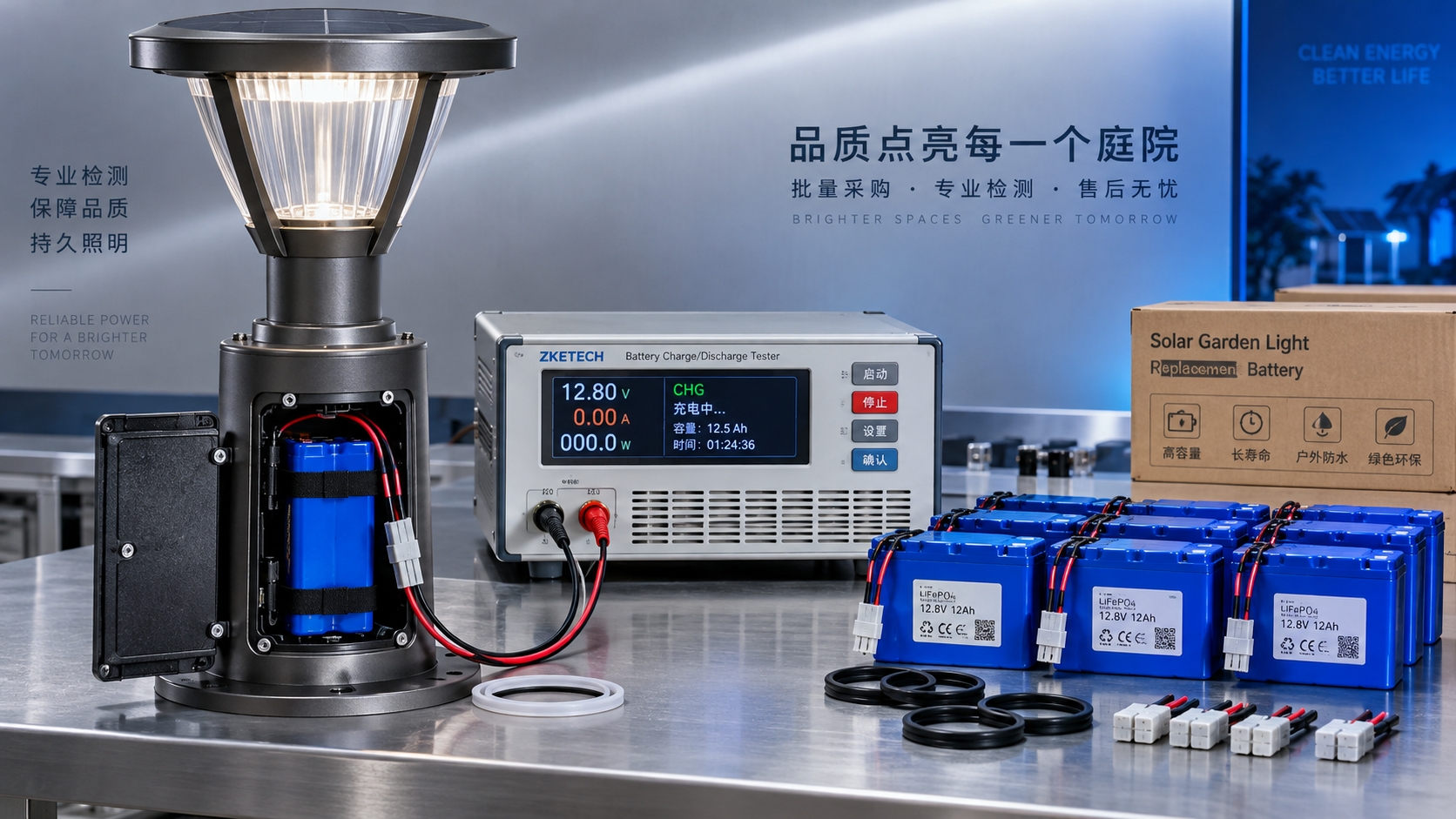
A battery warranty can look reassuring on paper yet leave distributors covering replacement costs when solar garden lights fail in the field. For buyers comparing solar powered garden light wholesale offers, the real value lies in the details: battery coverage, capacity retention thresholds, operating conditions, exclusions, and claim procedures. Those terms determine whether a warranty protects your margin or simply gives you another supplier dispute to manage.
Start with a practical question: if a customer reports that lights no longer last through the evening, what exactly must happen before the supplier provides a remedy? A useful warranty should make that answer reasonably clear before you place a bulk order.
Separate battery coverage from the headline warranty
A fixture warranty does not automatically cover its battery for the same period. The housing, LED module, solar panel, controller, and battery may have different terms. A claim about LED service life is not a promise about battery endurance, either.
Ask for a component-specific warranty attached to the quotation or purchase agreement. It should identify the battery chemistry, nominal voltage, rated capacity, pack configuration, and covered model. Compare energy in watt-hours where possible: amp-hour figures alone are not directly comparable when battery voltages differ.
The starting date matters for distributors holding inventory. Coverage beginning at shipment may expire considerably earlier than customers expect after installation. Confirm how warehouse time is treated, whether there is an installation deadline, and which records establish the warranty start date. Your customer-facing promise should not exceed the supplier’s support unless you have priced that additional exposure.
Define failure before discussing warranty length
“Battery defects covered” is narrower than a capacity-retention commitment. A battery might still charge and discharge while storing too little energy to support the intended lighting schedule. If normal degradation is excluded without a measurable threshold, reduced runtime can become difficult to claim.
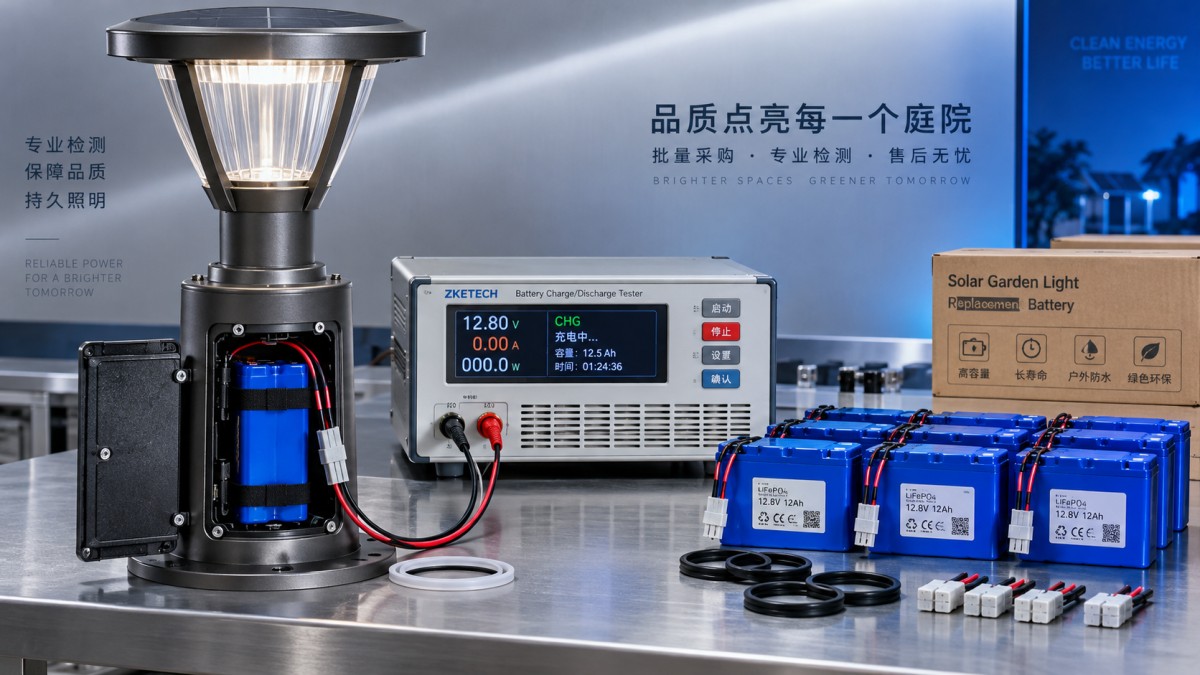
Request a written minimum retained-capacity threshold, if offered, and the conditions used to measure it. Any percentage needs a reference: the agreed rated capacity, a defined initial measurement, or another stated baseline. The test should specify charging procedure, temperature, discharge current, cutoff voltage, and measuring equipment.
Also distinguish cycle-life specifications from warranty obligations. A laboratory cycle-life figure applies under stated test conditions; it does not independently guarantee years of outdoor service. Depth of discharge, heat, charging behavior, and storage history all affect the comparison.
Short runtime alone does not prove battery failure. A shaded or dirty panel, changed dimming settings, seasonal sunlight, or controller faults can produce similar symptoms. Agree on a diagnostic sequence that separates insufficient charging from actual capacity loss.
Check whether the exclusions match the installation
Outdoor suitability is not a single specification. Battery charging and discharging temperature limits may differ, and enclosure temperature can differ from ambient air temperature. Ask how the proposed battery and controller behave at the site’s expected extremes, including any charging protection or shutdown behavior.
Read environmental exclusions alongside installation instructions. Terms excluding moisture damage deserve particular attention in equipment intended for gardens. An ingress-protection rating applies under defined test conditions; it does not establish battery warranty coverage or make every installation detail irrelevant.
- Check whether coastal exposure, irrigation spray, flooding, or condensation changes coverage.
- Confirm storage temperature, recharge intervals, and maximum storage duration for unsold stock.
- Identify whether approved battery replacement preserves the remaining fixture warranty.
- Ask which lighting schedules, controller settings, or modifications fall outside permitted use.
Exclusions should distinguish misuse from defects. If water enters because an approved factory seal fails, the contract should explain how that claim is handled rather than leaving all moisture-related failures automatically excluded.
Calculate the cost left with your business
A free replacement battery is not a free repair. Someone still diagnoses the fault, visits the site, opens the fixture, restores the seal, and checks operation. Freight, import charges, customer administration, and disposal may also remain with the distributor.
Compare offers using landed purchase cost plus expected service costs minus realistically recoverable warranty support. Without reliable failure data, use clearly labeled scenarios rather than treating assumptions as forecasts. Model occasional individual claims and a batch-related problem separately; their logistics and cash-flow consequences differ.
Check whether remedies are full replacement, prorated credit, repair, or a discount against a future purchase. Credit requiring another order may be less useful than an immediately available replacement. Confirm whether replacement parts receive fresh coverage or only the balance of the original term.
Serviceability can outweigh a modest price difference. Request replacement instructions and verify connector compatibility, battery availability, access to seals, and the tools required. Where the battery is not serviceable, establish whether the supplier replaces the whole fixture and who pays the associated freight.
Test the claims process before ordering volume
Ask the supplier to walk through a hypothetical reduced-runtime claim using the documents they actually require. This reveals more than a general promise of after-sales support. Useful evidence may include serial numbers, batch codes, installation photographs, controller settings, and agreed diagnostic results.
Agree on response and resolution timeframes, who authorizes replacements, and whether parts can ship before returned items are inspected. If batteries must be returned, clarify packaging, carrier acceptance, transport documentation, and costs for the applicable chemistry and route. Do not assume they can travel as ordinary parcels.
For repeat orders, request batch traceability and written approval before changes to cells, protection electronics, or connectors. A sample test establishes little if later shipments use a materially different battery pack without notice. Retaining an agreed reference sample and specification helps resolve such disagreements.
Keep warranties specific across mixed lighting projects
Projects combining garden paths, public spaces, and roads need separate acceptance criteria for each lighting category. For example, Modern Street Lighting|MSL-XY is a street-lighting product with specified 150–250W light power and IP67 protection. Those specifications should not be transferred to a solar garden light, nor treated as evidence of battery coverage.
Lishida Smart Lighting supports contractors and project owners with lighting products, smart control systems, and project-based solutions, drawing on large-scale project experience across China. For procurement, the relevant discipline is coordinating product selection, controls, installation conditions, and maintenance responsibilities—not assuming one warranty statement covers the entire site.
Before approving a solar powered garden light wholesale order, obtain a signed warranty schedule, agreed battery specification, diagnostic procedure, and replacement-cost allocation. If any of these remain unclear, resolve them while comparing quotations. A shorter, measurable warranty with workable support may protect margins better than a longer promise that is difficult to enforce.
◉ MESSAGE

Blog
- How to avoid vendor lock-in in a government smart lighting project
- Sizing the communications power budget for smart city solar street lights
- How energy-saving mode affects solar bollard light operating time
- Comparing lead times from LED street light luminaire suppliers in Europe
- What spare parts support should a smart street light exporter offer?
- Where to place a solar garden light in a partially shaded garden
- Which battery alerts matter in remotely monitored solar street lighting?
Message