
2026 Smart Street Lighting Trends in Urban Infrastructure
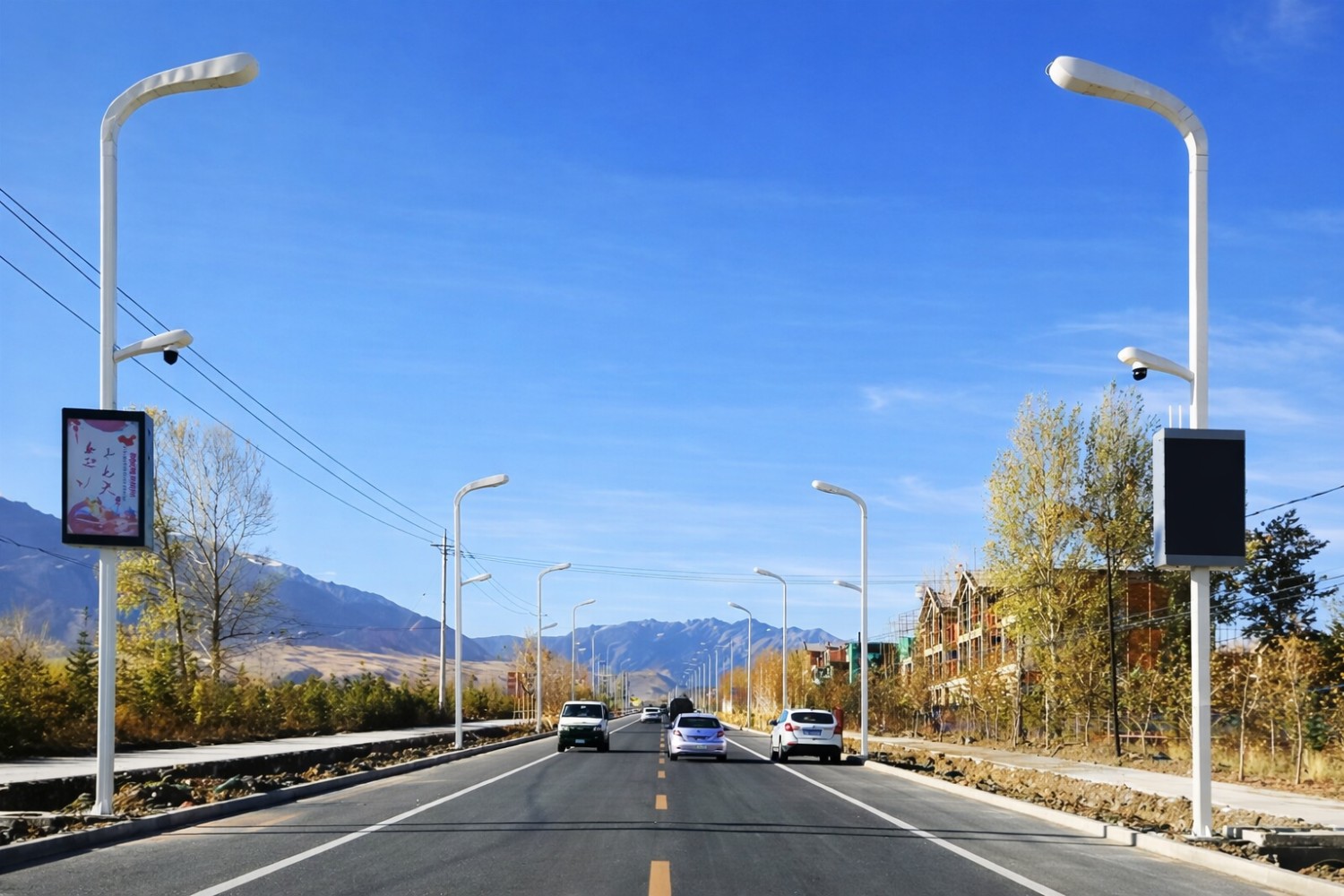
Smart street lighting is moving from equipment upgrade to infrastructure strategy
By 2026, smart street lighting will be judged less by novelty and more by operational value.
Cities want safer roads, lower energy use, and stronger digital control across outdoor assets.
That shift is changing project priorities.
The discussion is no longer limited to luminaire efficiency or pole appearance.
It now includes system uptime, remote management, data visibility, and long-term maintenance planning.
In outdoor lighting, this matters because street networks are public assets with long service cycles.
A poor decision at specification stage can create years of service issues later.
That is why smart street lighting is becoming a board-level infrastructure topic, not a simple lighting replacement.
The strongest signal is coming from integration demands
Recent projects show a clear pattern.
Owners increasingly expect lighting systems to connect with broader urban control platforms.
Smart street lighting is being evaluated as part of transport, security, energy, and public space management.
This changes how value is measured.
Instead of counting fixtures delivered, projects are judged by dimming response, fault reporting, and stable system coordination.
- Centralized control is replacing isolated switching schedules.
- Asset monitoring is expected to reduce site visits and reactive repair work.
- Open or adaptable architectures are becoming more attractive than closed systems.
- Reliability in harsh outdoor conditions is now part of digital planning, not only structural planning.
For large-scale roads and public zones, integrated support has become a practical advantage.
Teams handling complex urban environments usually need product supply, controls, and project coordination to work together from the start.
Why this trend is accelerating in 2026
Several forces are pushing smart street lighting forward at the same time.
The important point is that these drivers reinforce each other.
Energy savings alone may justify an upgrade.
But when savings combine with maintenance visibility and networked control, smart street lighting becomes much easier to prioritize.
Demand is shifting toward durable systems, not just smart features
One of the more meaningful changes is the return of physical performance to the center of procurement decisions.
Digital control has value only when the outdoor hardware stays dependable for years.
This is especially true on arterial roads, coastal routes, and exposed public spaces.
In those settings, smart street lighting must pair controls with structural resilience, corrosion resistance, and serviceable design.
A practical example is Modern Street Lighting|MSL-HCH.
Its configuration reflects what many 2026 projects now favor.
That includes 8-14 m pole options, Q235 steel, hot-dip galvanized and powder-coated surfaces, and wind resistance of at least 150 km/h.
On the lighting side, efficacy above 140 lm/W, IP67 protection, and LED lifespan above 50,000 hours align with lower lifecycle risk.
These details matter because failed hardware can quickly erase the benefits promised by smart street lighting software.
The impact is spreading across the whole delivery chain
This market shift does not affect one stage only.
It changes planning, specification, installation, commissioning, and after-service routines.
During planning
Teams need earlier alignment between lighting goals and control logic.
If that step is delayed, later integration costs usually rise.
During specification
Performance parameters should include environmental durability, communication compatibility, and maintenance access.
Smart street lighting decisions now need both electrical and operational thinking.
During operation
The focus turns to fault visibility, spare part consistency, and predictable long-term performance.
This is where experienced project support becomes valuable.
In large-scale work across China, execution problems often come from mismatched components or weak coordination between hardware and controls.
What deserves closer attention before the market moves further
The next phase of smart street lighting will likely reward disciplined evaluation more than aggressive feature chasing.
A few checks are becoming especially useful.
- Review whether the control system can scale beyond one pilot corridor.
- Compare energy models with actual maintenance assumptions, not theoretical dimming curves alone.
- Check pole structure, coating, and ingress protection against local climate exposure.
- Confirm that component selection supports long service life and replacement continuity.
- Assess whether the solution can fit different road classes and public space layouts without redesign pressure.
More projects are also favoring tailored configurations over one standard package.
That reflects a simple reality.
Smart street lighting works best when control strategy, fixture output, and structural format match the site condition.
A practical reading of 2026
By 2026, smart street lighting will increasingly be judged as part of urban infrastructure resilience.
The winners will not be the systems with the longest feature list.
They will be the ones that combine dependable outdoor performance, manageable controls, and smoother project delivery.
That is also why integrated execution support is becoming more relevant in this market.
When product selection, smart controls, and engineering coordination move together, long-cycle outcomes are easier to protect.
The next useful step is to compare current project assumptions against these market signals.
Review control compatibility, lifecycle durability, and site-specific performance requirements before standards tighten further.
That approach gives smart street lighting a better chance to deliver lasting value, not just a faster approval.
◉ MESSAGE
Blog
- LED Street Luminaire Specifications That Matter for Roadway Projects
- What to Evaluate When Selecting a Smart Street Lamp Manufacturer
- How to Prepare a Compliant Solar Lighting Bid for Public Infrastructure Projects
- LED Street Lighting Solutions for Urban and Municipal Roads
- LED Street Light Installation Guide for Road Projects
- LED Street Light Lifespan: How Long Do LED Road Lights Last?
- LED Street Light IP Rating: What Should Buyers Choose?
Message