
Smart Street Lighting or Standard LED: Which Fits Better
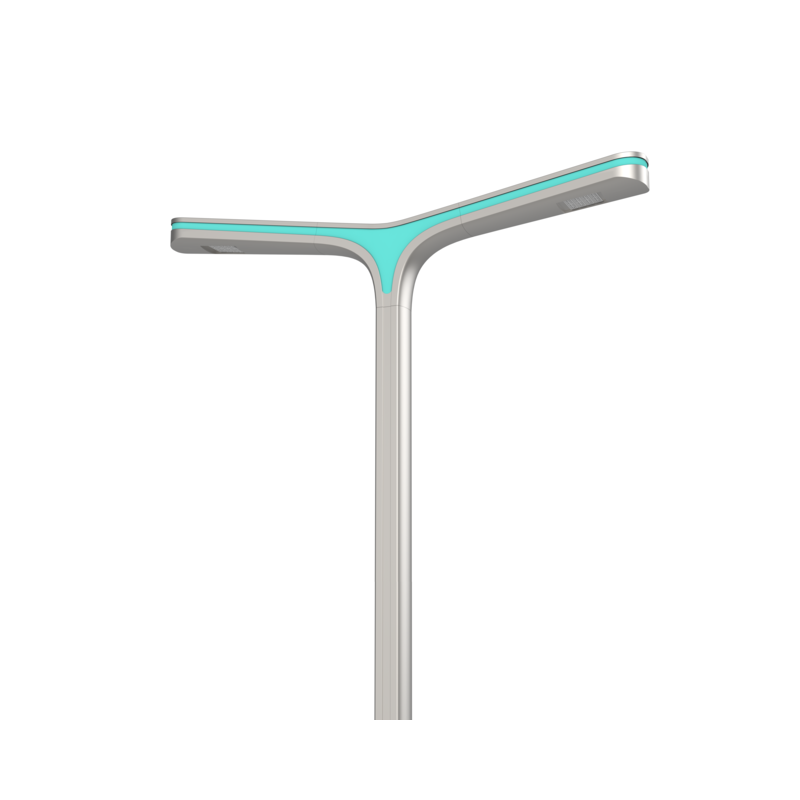
Choosing between smart street lighting and standard LED systems shapes far more than nighttime visibility. In outdoor lighting projects, that decision affects capital planning, maintenance cycles, fault response, and long-term operating control. For roads, public spaces, and complex urban environments, the better fit depends on how the system will actually be managed after installation, not only on fixture efficiency at the time of purchase.
Two options built on the same LED foundation
Standard LED street lighting uses efficient luminaires with fixed or limited operating modes. It improves energy performance compared with conventional light sources and usually keeps system design straightforward.
Smart street lighting starts from that same LED base, then adds communication, monitoring, and control functions. This can include dimming schedules, remote switching, energy reporting, and fault alerts.
So the real comparison is not LED versus non-LED. It is controlled lighting infrastructure versus a simpler standalone lighting approach.
Why the market pays closer attention to smart street lighting
Electricity costs remain under pressure, but that is only part of the story. Project teams now also care about inspection efficiency, outage visibility, and how quickly a city can diagnose failures.
In large-scale deployments, manual checks become expensive and slow. A single dark section on a road can trigger service issues, safety concerns, and avoidable fieldwork.
That is where smart street lighting gains attention. It turns lighting assets into manageable nodes instead of fixed points that require physical verification.
From a project delivery perspective, this matters most when sites are spread across districts, when uptime targets are strict, or when operation teams are limited.
Where standard LED still makes strong sense
Standard LED remains a practical choice for many outdoor lighting applications. It usually works well where operating schedules are stable and advanced controls add little measurable value.
Examples include short road sections, smaller industrial parks, local access roads, or projects with limited digital infrastructure.
- Lower initial system complexity
- Simpler commissioning and training
- Fewer integration requirements
- Suitable when basic on-off scheduling is enough
For straightforward replacements, standard LED can offer a faster route to efficiency gains without changing operating processes too much.
When smart street lighting creates better long-term value
Smart street lighting becomes more compelling when the lighting network is large, performance visibility matters, and maintenance needs to be proactive rather than reactive.
The strongest value often appears in projects with varying traffic patterns, mixed-use urban zones, or public spaces that need flexible lighting levels at different hours.
A connected system can dim output during lower-demand periods, identify abnormal power use, and shorten fault discovery time. Over years, those operating gains can outweigh a higher starting cost.
The hardware still matters as much as the control system
Control features only deliver value when the physical lighting structure is reliable. In outdoor lighting, poles, coatings, optics, and ingress protection directly influence service life and maintenance exposure.
A project may adopt smart street lighting, but weak structural durability will still create avoidable downtime. The same is true for standard LED installations.
One useful reference is Modern Street Lighting|MSL-HCH, designed for street lighting applications with pole heights from 8 to 14 meters and pole thickness from 4 to 8 millimeters.
Its Q235 steel structure, hot-dip galvanizing, powder coating, and wind resistance of at least 150 km/h show the kind of baseline durability that supports long project cycles.
With LED options using CREE or OSRAM chips, efficacy of at least 140 lm/W, IP67 protection, and LED lifespan above 50,000 hours, it reflects how performance and reliability should be assessed together.
How project teams usually evaluate the better fit
The most reliable decision process starts with operating conditions, not product catalogs. A road network with fixed usage patterns may not need advanced controls.
A multi-zone urban project usually does. There, smart street lighting can support dimming strategies, reporting, and better response coordination across a broad asset base.
Questions worth clarifying early
- How large is the lighting network, and how dispersed are the sites?
- Will lighting levels need to change by time, traffic, or zone?
- How quickly must failures be detected and addressed?
- Is there a platform or team ready to manage smart controls?
- What are the expectations for corrosion resistance and service life?
These points often separate a technically attractive option from one that is operationally suitable.
Looking beyond fixture price
A lower purchase price can be misleading if inspection costs, outage complaints, and replacement cycles are ignored. Total project value comes from the combined behavior of equipment, controls, and maintenance routines.
This is why integrated support matters in outdoor lighting. Lishida Smart Lighting works with contractors and project owners on product supply, smart control systems, and project-based solutions for large-scale applications.
That experience across roads, public spaces, and urban environments is relevant because real project risks rarely sit in one component alone. They usually appear in system coordination, installation quality, and long-term reliability.
A practical next step
If the project is simple, stable, and budget-sensitive, standard LED may be the better fit. If the network is large, maintenance-heavy, or performance-driven, smart street lighting deserves closer review.
A useful next step is to compare both options against the same checklist: control needs, fault visibility, structural durability, expected lifetime, and operating effort over several years.
That kind of side-by-side review usually leads to a clearer decision than comparing wattage or unit price alone.
◉ MESSAGE
Blog
- LED Street Luminaire Specifications That Matter for Roadway Projects
- What to Evaluate When Selecting a Smart Street Lamp Manufacturer
- How to Prepare a Compliant Solar Lighting Bid for Public Infrastructure Projects
- LED Street Lighting Solutions for Urban and Municipal Roads
- LED Street Light Installation Guide for Road Projects
- LED Street Light Lifespan: How Long Do LED Road Lights Last?
- LED Street Light IP Rating: What Should Buyers Choose?
Message