
What to Look for in an LED Street Light Manufacturer
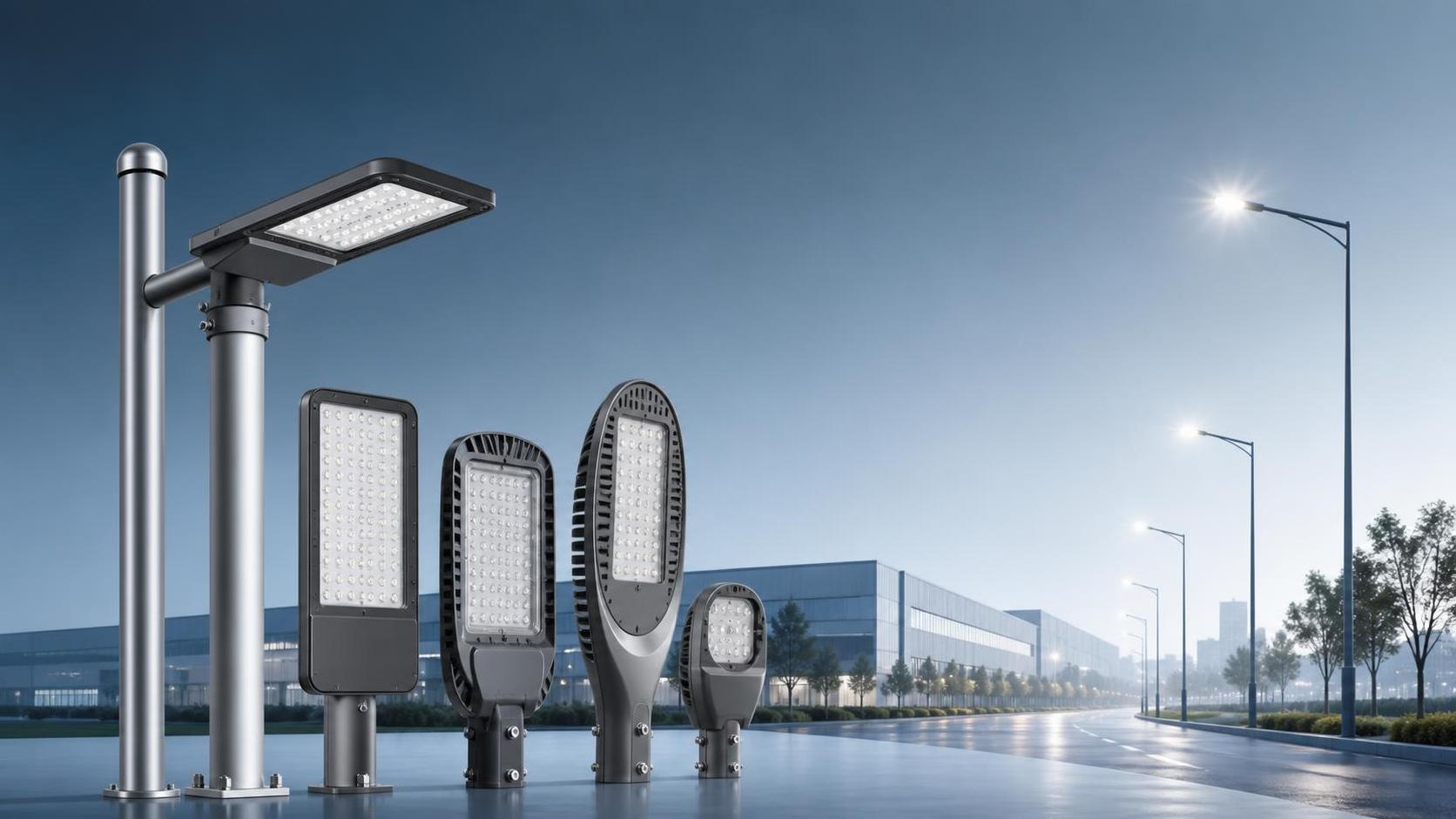
Choosing an LED street light manufacturer is not just about finding the lowest unit price. In real projects, the wrong supplier usually shows up later through delayed delivery, difficult installation, unstable quality, or maintenance issues that were easy to miss during procurement. If you are comparing manufacturers, the key question is simple: can this company support the full life of the project, not just ship luminaires?
That matters even more for roads, municipal upgrades, industrial parks, and public-space lighting, where reliability, consistency, and coordination are often more important than a dramatic product brochure. A good manufacturer should help you reduce risk before installation starts, not leave every technical and site decision to the contractor.
What an LED street light manufacturer should really be able to do
A capable manufacturer does three things well. First, it delivers stable product quality. Second, it understands how outdoor lighting projects work in practice. Third, it can support system-level decisions such as pole configuration, lighting layout, control compatibility, and long-term maintenance planning.
Many buyers focus heavily on wattage, lumen output, or housing appearance. Those specs matter, but they are only part of the picture. Street lighting is used outdoors for years under wind, rain, heat, dust, vibration, and sometimes uneven installation conditions. A manufacturer that only talks about brightness and price is usually not the one you want for a large project.
In practical terms, look for evidence that the manufacturer can handle product engineering, production consistency, and project support together. That is often where the real difference lies between a trading-style supplier and a true manufacturing partner.
Check manufacturing strength before you compare samples
A good sample can be misleading. It may look solid, perform well in a short test, and still tell you very little about whether the supplier can deliver 500 or 5,000 units with the same standard.
Ask how the manufacturer controls material selection, production tolerances, coating quality, and component consistency. For street lights, corrosion protection and structural durability are not side issues. They directly affect service life. If a supplier cannot clearly explain its process for galvanizing, powder coating, sealing, and quality inspection, that is a warning sign.
You should also pay attention to whether they understand local environmental demands. A coastal road, a windy bridge section, and a residential street do not create the same requirements. Wind resistance, pole thickness, ingress protection, and surface treatment should match the project environment rather than be treated as generic specs.
For example, in projects where aesthetics and durability both matter, a configuration like Modern Street Lighting|MSL-HCH makes sense as a reference point because it combines structural considerations with lighting performance: 8-14 m pole height options, 4-8 mm pole thickness, hot-dip galvanized plus powder-coated finish, and wind resistance rated at 150 km/h or above. That does not automatically make it right for every site, but it shows the level of detail a serious manufacturer should be ready to discuss.
Product specs are only useful if they fit the application
One of the most common mistakes in street lighting procurement is comparing products as if all roads behave the same way. They do not. Main roads, branch roads, pedestrian-priority streets, and mixed-use urban areas need different optical distribution, mounting heights, color temperature choices, and control logic.
A manufacturer worth working with should ask questions, not just send a quotation. They should want to know road width, pole spacing, installation height, target illuminance, local climate, maintenance access, and whether the project needs smart control integration.
Here is the short answer many buyers are looking for: choose an LED street light manufacturer that can match product performance to your actual site conditions, provide consistent build quality, and support installation and maintenance decisions with clear technical communication.
Take luminous efficacy as one example. A high number looks attractive on paper, but it does not guarantee better project results if the optical design is poor or the fixture is oversized for the road classification. The same goes for LED chip brands. CREE and OSRAM are familiar names, but the full fixture performance depends on thermal management, driver stability, lens design, and housing protection, not just the chip label.
If a supplier presents values like 140 lm/W or above, IP67 protection, 50,000-hour LED life, and 3000K or 4000K options, that is useful. But the right next question is whether those figures are supported by test documentation and whether they fit your project standards.
Engineering support is where many suppliers fall short
This is the part buyers often underestimate. A manufacturer may offer a decent product but still be hard to work with once the project moves beyond purchasing.
Street lighting projects involve drawings, mounting details, anchor bolt coordination, foundation alignment, cable access, and in many cases smart controls. If the manufacturer cannot communicate clearly with contractors, consultants, or project owners, small issues become site delays.
It helps when the supplier understands project-based delivery rather than simple product export. Lishida Smart Lighting, for instance, positions its support around contractors and project owners handling large-scale outdoor lighting work, including roads, public spaces, and more complex urban environments. That kind of model is useful because real projects rarely fail due to a single luminaire spec; they usually fail at the handoff points between product, control system, and execution.
Ask whether the manufacturer can support:
- lighting configuration recommendations
- pole and fixture matching
- smart control compatibility
- project documentation
- delivery coordination for phased installations
- after-sales response for technical issues
If those answers are vague, expect extra work on your side later.
Do not ignore long-term maintenance cost
Some buyers still treat street lighting as a one-time purchase decision. That is usually a budgeting mistake.
The cheaper fixture is not cheaper if it leads to more failures, harder replacement, inconsistent spare parts, or visible coating deterioration after a few seasons. Outdoor lighting maintenance is expensive because labor, access equipment, and traffic control often cost more than the component itself.
This is why experienced project teams look beyond initial price and ask about driver replacement strategy, sealing performance, corrosion resistance, and expected service life for both fixture and pole. A product with a claimed 30-year pole lifespan and robust surface protection can be a strong fit in municipal or infrastructure work, provided the specification is aligned with site conditions and verified by the supplier’s documentation.
Another detail people miss: standardization. If your manufacturer can keep dimensions, mounting interfaces, and component quality consistent across batches, future maintenance becomes much easier. If every batch changes slightly, even simple repairs can turn into a headache.
Smart control compatibility is no longer optional in many projects
Not every road needs an advanced smart lighting system, but many urban projects now expect at least some level of control integration. Dimming schedules, fault monitoring, energy reporting, and grouped management are becoming part of normal project requirements rather than premium extras.
An LED street light manufacturer does not need to own every part of the control platform, but they should be able to work cleanly with it. That means the luminaire, driver, wiring approach, and control node arrangement should be considered early, not added as an afterthought.
If a manufacturer also understands integrated project delivery, that usually reduces coordination issues. This is especially relevant in larger city projects where lighting products and smart systems need to operate as one package instead of separate purchases.
Signs you may be choosing the wrong supplier
There are a few patterns that come up again and again:
- They quote quickly but ask almost nothing about the project.
- They rely on generic brochures instead of project-relevant technical answers.
- They talk about chip brand and wattage but avoid discussion of corrosion, wind load, or mounting details.
- They cannot explain quality control or production consistency.
- They treat after-sales support as separate from the original supply decision.
None of these automatically disqualify a supplier, but together they usually point to a higher-risk choice.
What to ask before making a final decision
Before selecting an LED street light manufacturer, ask for clear answers on five points: product certification and testing, structural and environmental suitability, production consistency, project support capability, and spare parts or after-sales planning.
If your project includes decorative urban streets or upgraded public areas, you may also want to review a solution such as Modern Street Lighting|MSL-HCH as a benchmark for what a balanced specification looks like: efficient output, IP67 protection, branded LED chips, durable steel structure, and tailored configurations for different road needs. The product itself is only one part of the decision, but it helps illustrate what serious project-grade discussion should look like.
In the end, the best LED street light manufacturer is usually the one that helps you avoid preventable problems. Good outdoor lighting is not only about how a fixture performs on day one. It is about whether the manufacturer can support reliable results across procurement, installation, system integration, and years of operation.
◉ MESSAGE
Blog
- LED Street Luminaire Specifications That Matter for Roadway Projects
- What to Evaluate When Selecting a Smart Street Lamp Manufacturer
- How to Prepare a Compliant Solar Lighting Bid for Public Infrastructure Projects
- LED Street Lighting Solutions for Urban and Municipal Roads
- LED Street Light Installation Guide for Road Projects
- LED Street Light Lifespan: How Long Do LED Road Lights Last?
- LED Street Light IP Rating: What Should Buyers Choose?
Message