
What Certifications Should Solar Street Lighting SL-008 Meet for Public Projects?
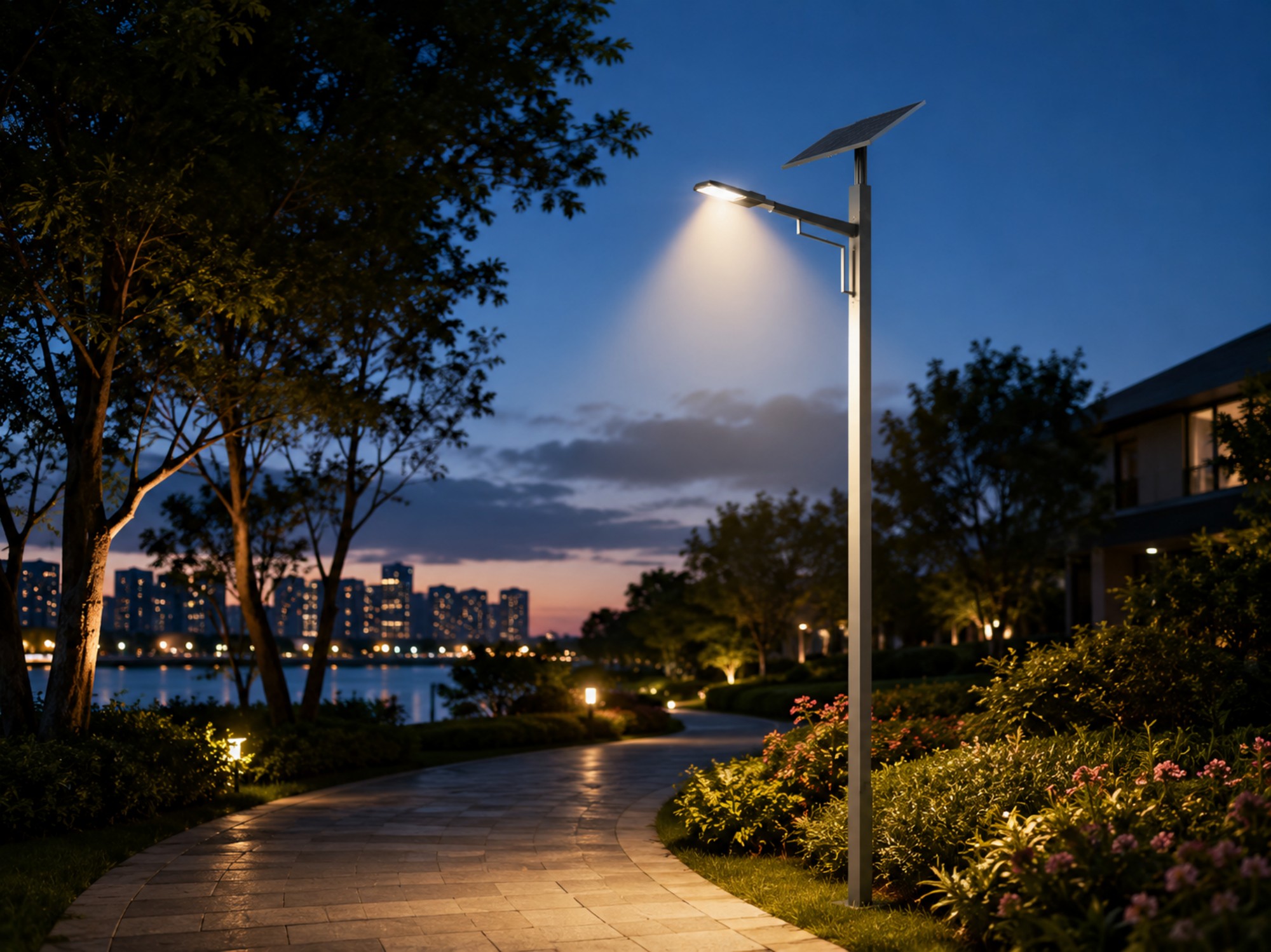
For public infrastructure, Solar Street Lighting | SL-008 is judged by more than brightness or energy savings. It must prove electrical safety, structural reliability, weather resistance, and consistent performance under real operating conditions.
That is why certification matters. In roads, parks, campuses, and municipal spaces, the right approvals reduce compliance risk, support acceptance procedures, and help prevent failures that become expensive after installation.
In outdoor lighting projects, documentation is often as important as hardware. A compliant system gives project teams a clearer basis for inspection, supplier comparison, and long-term maintenance planning.
Why certification is a practical issue, not a paperwork exercise
Solar Street Lighting | SL-008 combines several subsystems in one product. The luminaire, pole, battery, controller, solar panel, and foundation all affect safety and service life.
If one part lacks proper validation, the whole installation can become difficult to approve. This is especially true in public projects with formal tender requirements and post-installation audits.
From an execution standpoint, experienced suppliers look beyond a single certificate. Lishida Smart Lighting supports large-scale outdoor lighting delivery by aligning products, smart controls, and project-based solutions with actual site requirements.
The core certifications and standards to review
The exact list depends on the project location, but several categories usually deserve close attention when reviewing Solar Street Lighting | SL-008 for public use.
Electrical and luminaire safety
- IEC or equivalent luminaire safety standards, such as IEC 60598, for overall fixture safety.
- Protection ratings like IP65, IP66, or IP67, depending on exposure and enclosure design.
- Battery and controller safety compliance, especially for lithium systems used in integrated solar lighting.
- Surge protection and insulation test records for unstable outdoor electrical conditions.
Performance and energy claims
- Photometric test reports from recognized laboratories.
- LED efficacy, lumen maintenance, and operating-hour data.
- Solar panel and battery cycle performance verification.
- Autonomy testing that shows how many rainy or low-sunlight days the system can support.
Material and structural compliance
- Galvanization and corrosion-resistance standards for steel poles and brackets.
- Wind-load calculations and structural test data.
- Material traceability for pole steel, anchor bolts, and load-bearing parts.
- RoHS or similar environmental compliance, when required by the project.
What public projects usually expect in tender review
A public buyer rarely looks at certificates in isolation. The more important question is whether the documents match the delivered configuration of Solar Street Lighting | SL-008.
This is where many bid submissions weaken. A certificate may be real, but it may cover a different wattage, battery chemistry, or enclosure level than the product offered.
Beyond the certificate: the field conditions still decide success
Public environments are rarely uniform. Coastal roads need stronger corrosion resistance. Open highways need better wind resistance. Urban areas may require smart control compatibility and faster maintenance access.
That is why document review should be paired with application review. In some projects, a conventional road lighting solution can also inform quality benchmarks.
For example, Modern Street Lighting | MSL-GH reflects the kind of structural and durability detail often expected in municipal lighting: Q235 steel, hot-dip galvanizing, wind resistance of at least 150 km/h, and IP67 protection.
Even when reviewing Solar Street Lighting | SL-008, this level of specification thinking is useful. It helps teams ask whether the solar product is equally prepared for corrosion, impact, water ingress, and long-term lumen stability.
How to evaluate Solar Street Lighting | SL-008 more effectively
A strong review process usually combines certificates, test reports, and site logic. That approach is more reliable than relying on a compliance checklist alone.
- Check whether safety and performance documents cover the complete assembled system.
- Compare battery, panel, LED brand, controller, and housing details with the tendered bill of materials.
- Review autonomy claims against local sunlight data and seasonal weather patterns.
- Ask for corrosion, ingress, and wind-resistance evidence suited to the exact installation zone.
- Confirm after-sales support, spare-part consistency, and smart control integration if remote management is planned.
This matters even more in large deployments. Lishida Smart Lighting works on roads, public spaces, and complex urban environments where product selection must align with execution reality, not just brochure data.
A practical next step for project review
When assessing Solar Street Lighting | SL-008, start with a certification matrix rather than a simple pass-or-fail check. Map each certificate to the luminaire, battery, pole, solar module, and control system.
Then compare those documents with the actual project environment, installation method, and maintenance plan. That step often reveals more than the certificate title itself.
If the goal is dependable public lighting, the best decision usually comes from combining compliance evidence, engineering detail, and realistic site judgment before approval moves forward.
◉ MESSAGE
Blog
- LED Street Luminaire Specifications That Matter for Roadway Projects
- What to Evaluate When Selecting a Smart Street Lamp Manufacturer
- How to Prepare a Compliant Solar Lighting Bid for Public Infrastructure Projects
- LED Street Lighting Solutions for Urban and Municipal Roads
- LED Street Light Installation Guide for Road Projects
- LED Street Light Lifespan: How Long Do LED Road Lights Last?
- LED Street Light IP Rating: What Should Buyers Choose?
Message