
How to Choose Modern Street Lighting MSL-GH by Wattage, Beam Angle, and Pole Height
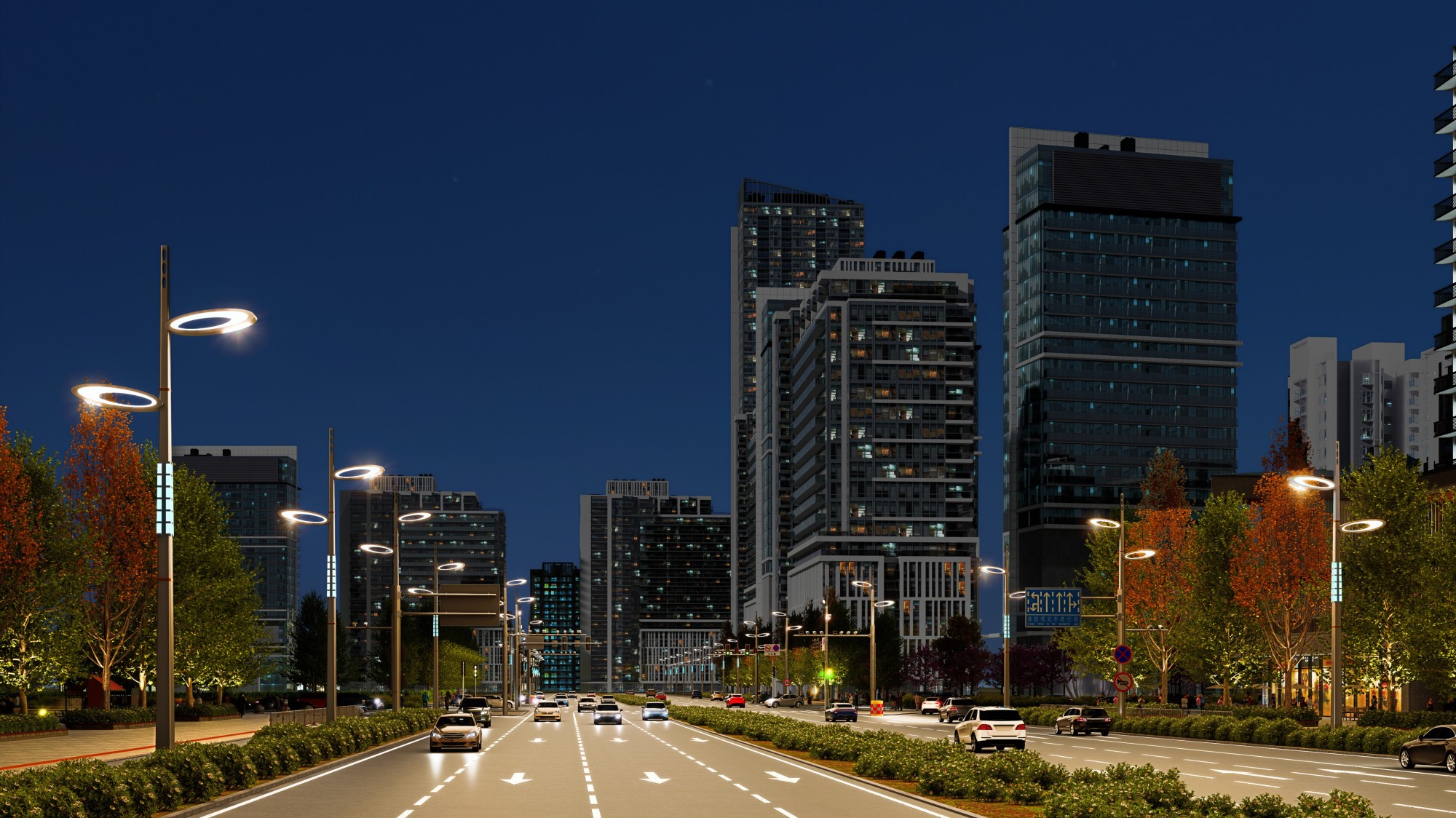
How to Choose Modern Street Lighting MSL-GH by Wattage, Beam Angle, and Pole Height
Choosing the right Modern Street Lighting MSL-GH setup requires more than matching lumen output to road type.
Wattage, beam angle, and pole height shape coverage, uniformity, glare control, and long-term operating cost.
In real projects, these three factors also affect installation spacing, maintenance planning, and smart control performance.
That is why Modern Street Lighting decisions should be based on field conditions, not only on catalog values.
Start with Road Function and Lighting Target
Before selecting MSL-GH, define the road function first.
A main urban road, access street, parkway, and industrial lane need different lighting behavior.
The practical goal is not maximum brightness.
The goal is stable visibility, balanced distribution, and efficient power use.
A reliable evaluation usually checks these points:
- Road width and lane count
- Pole arrangement and spacing
- Vehicle speed and pedestrian presence
- Surrounding buildings, trees, and overlap zones
- Local requirements for uniformity and glare
This first step makes later MSL-HC choices faster and more accurate.
How Wattage Affects MSL-GH Performance
Wattage is often the first filter in Modern Street Lighting selection.
Still, higher wattage does not automatically mean a better result.
If wattage is too low, dark zones appear between poles.
If wattage is too high, glare rises and energy waste becomes hard to justify.
A practical wattage view
Use wattage together with efficacy, distribution type, and mounting height.
For example, a high-efficiency fixture may achieve the target with less input power.
That reduces operating cost without compromising road visibility.
- Lower wattage works better on narrower roads and lower poles.
- Mid-range wattage often suits collector roads and mixed-use urban routes.
- Higher wattage fits wider carriageways, larger spacing, or elevated mounting points.
When reviewing Modern Street Lighting proposals, compare actual layout performance, not only the power label.
Beam Angle Decides Coverage and Uniformity
Beam angle is where many MSL-GH evaluations become more precise.
It directly affects how light spreads across lanes, sidewalks, and crossing areas.
A beam that is too narrow leaves gaps.
A beam that is too wide can push light outside the useful area.
How to judge beam angle
Check lane width, pole setback, arm outreach, and pole spacing together.
Then review whether the optical distribution matches the road geometry.
This is especially important in urban roads with medians, curves, or pedestrian edges.
- Use narrower distributions for focused throw and longer reach.
- Use wider distributions where side coverage matters more.
- Use asymmetric optics where roadway direction must be prioritized.
In short, beam angle determines whether Modern Street Lighting looks bright or actually performs well.
Pole Height Changes Everything
Pole height has a major influence on MSL-GH layout efficiency.
Higher poles can extend coverage and reduce the number of lighting points.
But if optics are not matched correctly, uniformity can still fail.
Lower poles improve local control, yet may require tighter spacing.
Pole height and specification logic
Think of pole height as the frame for wattage and beam angle.
For many street projects, the right answer is a balanced combination, not an extreme one.
A practical reference can be seen in Modern Street Lighting|MSL-XM, which supports pole heights from 8 to 14 meters.
Its 150-250W range and efficacy of at least 140 lm/W show how layout flexibility supports project-level decisions.
Do Not Ignore Reliability and Structural Conditions
Modern Street Lighting selection is not only about photometrics.
Project reliability depends on housing protection, wind resistance, corrosion control, and service life.
This becomes more important in coastal areas, open roads, and long maintenance cycles.
For instance, hot-dip galvanized steel, powder coating, IP67 protection, and strong wind resistance improve long-term consistency.
These factors also reduce replacement frequency and support stable lifecycle cost planning.
A Simple Evaluation Process for MSL-HC Selection
A structured process makes Modern Street Lighting decisions easier to defend.
- Define the road class, target area, and compliance requirements.
- Set a suitable pole height based on geometry and spacing.
- Select wattage according to coverage and efficiency goals.
- Match the beam angle to lane layout and side coverage needs.
- Review reliability items such as IP rating, wind load, and lifespan.
- Confirm compatibility with smart control and future expansion.
In actual delivery work, this method reduces rework and helps align design with installation realities.
It also supports projects that need integrated products, controls, and execution support.
Making the Final Modern Street Lighting Decision
The best MSL-HC choice is usually the one that balances performance with project practicality.
That means the wattage is appropriate, the beam angle is controlled, and the pole height supports efficient spacing.
It also means the system can hold up under weather, maintenance pressure, and future control upgrades.
Lishida Smart Lighting supports large-scale outdoor lighting delivery with product supply, smart control systems, and project-based coordination.
From roads to public spaces, the focus stays on dependable results and smoother execution.
If a project needs a benchmark for durability, efficiency, and adaptable configuration, reviewing MSL-HC alongside Modern Street Lighting|MSL-XM is a practical next step.
◉ MESSAGE
Blog
- LED Street Luminaire Specifications That Matter for Roadway Projects
- What to Evaluate When Selecting a Smart Street Lamp Manufacturer
- How to Prepare a Compliant Solar Lighting Bid for Public Infrastructure Projects
- LED Street Lighting Solutions for Urban and Municipal Roads
- LED Street Light Installation Guide for Road Projects
- LED Street Light Lifespan: How Long Do LED Road Lights Last?
- LED Street Light IP Rating: What Should Buyers Choose?
Message