
Buyer Checklist for Modern Street Lighting MSL-XM in Municipal Lighting Tenders
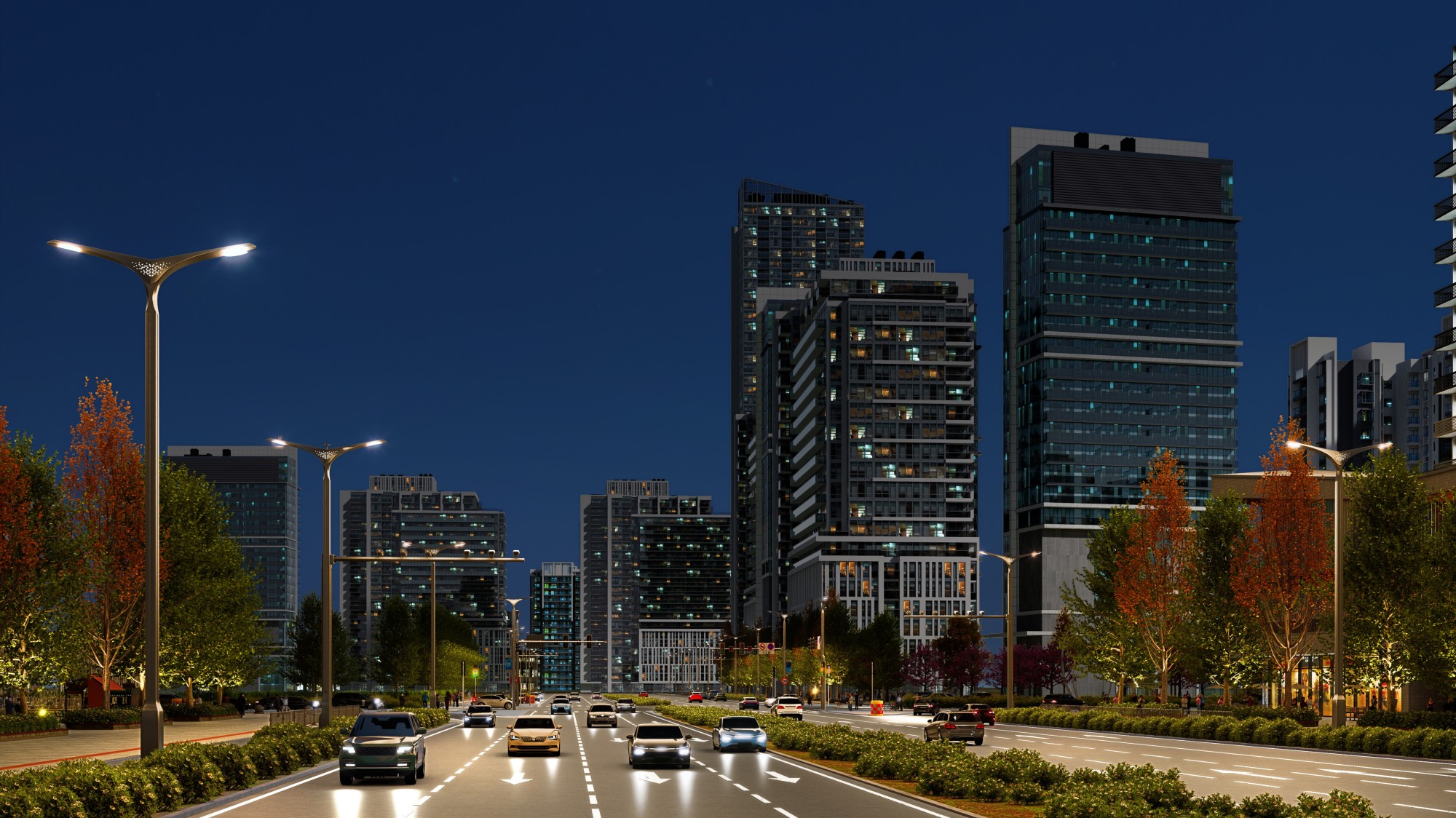
Why does Modern Street Lighting selection in tenders need a checklist?
Price is rarely the full story in municipal lighting tenders.
A lower bid can create higher maintenance costs, slower installation, or control system problems later.
That is why Modern Street Lighting decisions should be checked against performance, structure, controls, and service life.
In practical outdoor lighting projects, the better question is not only “What does it cost now?”
It is also “What will it require over ten or twenty years?”
For roads, public spaces, and dense urban corridors, reliability matters because replacement work affects traffic, labor, and project schedules.
Teams with large-scale project experience usually evaluate lighting as a system, not as a single fixture line item.
What should be checked first when comparing MSL-XM proposals?
Start with the operating conditions, not the brochure headline.
For municipal use, the first screening points are usually pole structure, optical efficiency, ingress protection, and wind resistance.
A practical example is Modern Street Lighting|MSL-XM, which combines pole and lighting parameters relevant to tender evaluation.
Its common range includes 8-14 m pole height, 4-8 mm pole thickness, and main light power from 150-250W.
Those numbers only become useful when matched with road width, mounting plan, and illumination targets.
Surface treatment also deserves attention.
Hot-dip galvanizing plus powder coating generally supports corrosion resistance better in exposed outdoor environments.
For coastal, humid, or polluted areas, this is not a small detail.
Is higher luminous efficacy always the better choice?
Not always, and this is where many tender reviews become too narrow.
High efficacy is valuable because it lowers power demand and long-term operating cost.
But roadway lighting still needs balanced output, useful distribution, and acceptable visual comfort.
A fixture rated at at least 140 lm/W is attractive on paper.
Still, if beam performance does not suit the road layout, efficiency alone will not deliver good results.
Color temperature is another practical choice.
3000K may fit public spaces seeking a warmer visual feel.
4000K is often preferred for traffic routes where visibility and neutral color appearance are priorities.
A CRI of Ra≥70 is usually sufficient for standard street lighting, but the surrounding environment should guide the final decision.
How important is smart control compatibility in a municipal lighting bid?
It is becoming one of the most practical decision points.
Many cities no longer evaluate outdoor lighting only by wattage and pole count.
They also look at dimming capability, remote monitoring, fault reporting, and future integration.
In real projects, control compatibility can influence commissioning time as much as hardware quality.
This is especially true in complex urban environments with multiple road classes and operating schedules.
- Confirm whether the lighting solution can work with planned smart control architecture.
- Check how dimming, fault alerts, and energy reports will be managed after handover.
- Review whether system integration support is available during deployment.
Providers with project-based engineering support often reduce coordination issues during installation and acceptance.
That matters more than a simple component comparison.
Where do tender risks usually hide: in price, structure, or service life?
Usually in the gaps between them.
A bid may look competitive, yet still carry hidden risk through vague technical wording or incomplete support scope.
For example, a stated LED lifetime of 50,000 hours is useful, but only when thermal management and enclosure protection are credible.
Likewise, a pole lifespan of 30 years means little without durable coating and sound base flange design.
The more dependable review method is to test claims against execution realities.
- Ask whether anchor bolt installation details are clearly defined.
- Check if square or circular base plates match civil design conditions.
- Review chip brand consistency when CREE or OSRAM is specified.
- Confirm spare parts, failure response, and commissioning support.
In large projects across China, many delivery problems come from coordination failures rather than from headline specifications.
That is why integrated support, from product selection to system alignment, often protects project value.
How can you compare long-term value instead of just initial cost?
A useful comparison looks at the full operating picture.
This includes energy use, replacement frequency, corrosion resistance, maintenance access, and smart control benefits.
Modern Street Lighting should support both urban appearance and stable project execution.
That balance is often stronger when the solution allows tailored configuration for different road and public space conditions.
For reference, Modern Street Lighting|MSL-XM combines structural durability, IP67 protection, and options suited to varied street lighting layouts.
Still, the right choice depends on whether those strengths match the actual tender scope.
A short final check before bid confirmation
If the goal is a confident municipal lighting decision, build the comparison around fit, not just price.
Check structural specifications, optical performance, control compatibility, and service expectations together.
Then compare how each proposal supports installation, system integration, and long-term maintenance.
That approach usually leads to better tender outcomes, fewer site surprises, and more dependable outdoor lighting performance.
The next practical step is to turn these points into a project-specific checklist, then test every offer against the same criteria.
◉ MESSAGE
Blog
- LED Street Luminaire Specifications That Matter for Roadway Projects
- What to Evaluate When Selecting a Smart Street Lamp Manufacturer
- How to Prepare a Compliant Solar Lighting Bid for Public Infrastructure Projects
- LED Street Lighting Solutions for Urban and Municipal Roads
- LED Street Light Installation Guide for Road Projects
- LED Street Light Lifespan: How Long Do LED Road Lights Last?
- LED Street Light IP Rating: What Should Buyers Choose?
Message