
What After-Sales Support to Expect From a Solar Street Lamp Manufacturer
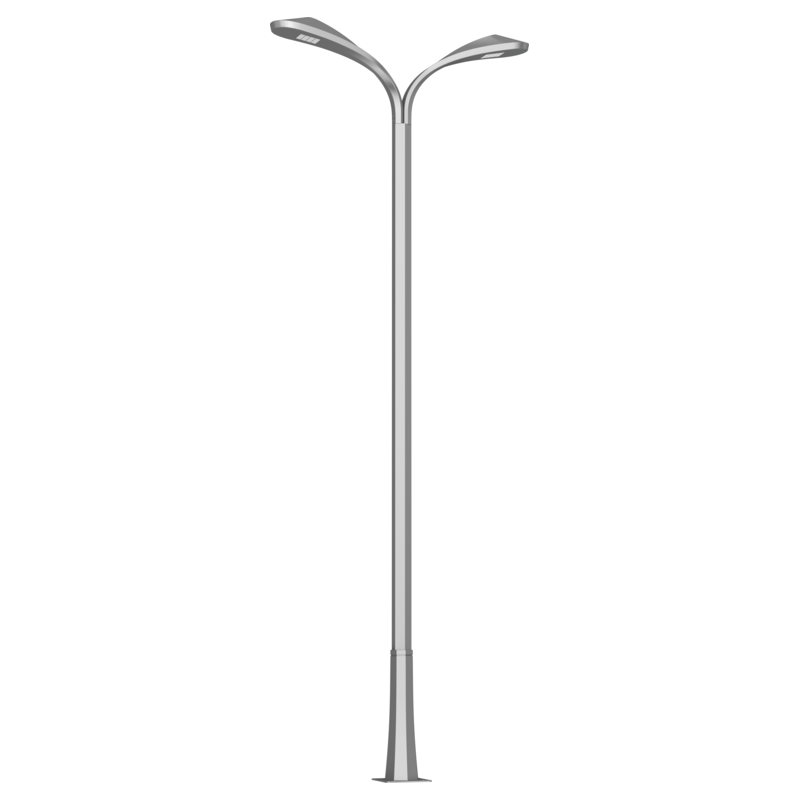
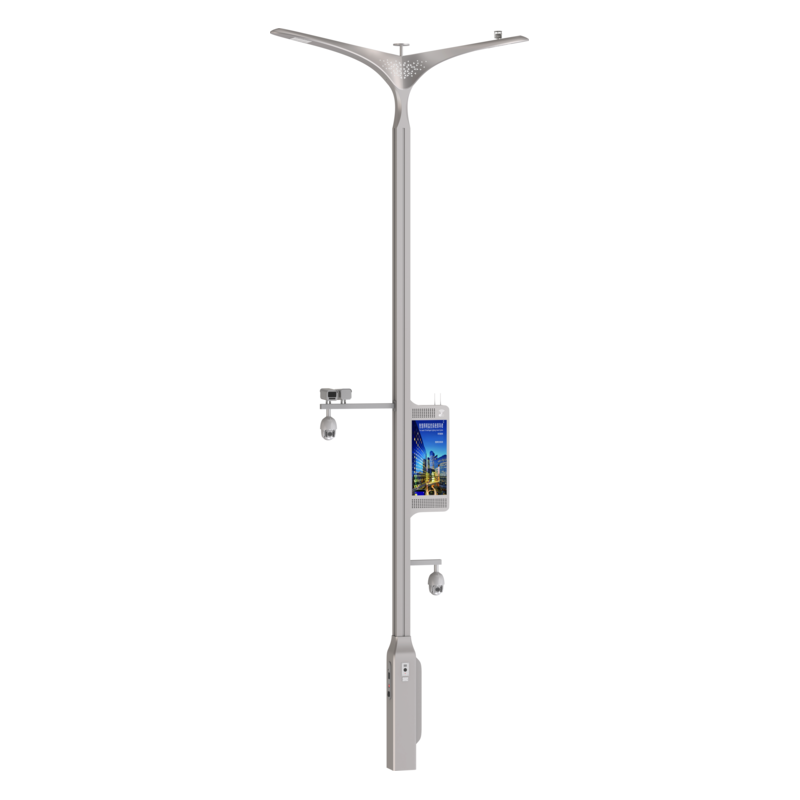
Choosing the right solar street lamp manufacturer is not only about product quality—it is also about the after-sales support that keeps systems running smoothly over time. For after-sales maintenance teams, reliable technical guidance, spare parts supply, fault response, and long-term system compatibility can directly affect project performance and service efficiency. Understanding what support to expect helps reduce downtime and ensures more stable outdoor lighting operations.
In outdoor lighting projects, after-sales support is often treated as a procurement appendix. In practice, maintenance teams know it is closer to a risk-control system. A lamp may meet the specification sheet on delivery, yet still become difficult to maintain if the manufacturer cannot provide clear fault logic, matching replacement parts, firmware continuity, or remote diagnostics support. That gap becomes more visible in solar systems because the lamp is not a single device. It is a combination of LED module, battery, solar panel, controller, pole structure, and increasingly, communication and control components.
For teams responsible for keeping installations operational, the real question is not whether a solar street lamp manufacturer offers “after-sales service” in a general sense. Nearly every supplier says it does. The more useful question is what kind of support can be expected once the project enters routine operation, seasonal stress, component aging, and field failure conditions.
After-sales support starts with documentation, not with failure response
A strong support system begins before the first fault occurs. Maintenance teams need complete technical records that make troubleshooting possible without repeated back-and-forth communication.
This usually includes wiring diagrams, controller settings, battery parameters, solar charging logic, replacement instructions, and a clear parts list by model and batch. If the manufacturer cannot provide these in a usable format, even minor faults can turn into long service interruptions. This is especially important when projects are handed over from contractors to operating teams, or when multiple maintenance vendors become involved later.
One common problem in solar lighting projects is that field technicians know a luminaire is underperforming but cannot quickly determine whether the issue comes from battery degradation, charging inefficiency, controller configuration, LED driver failure, or environmental shading. Without structured support documents, diagnosis becomes guesswork.
Good manufacturers reduce this uncertainty by offering not just manuals, but fault trees and decision logic. For example, they should be able to explain what to check first when runtime drops unexpectedly, how to distinguish a battery issue from a panel issue, and whether a controller alarm corresponds to component failure or temporary environmental conditions.
Spare parts availability matters more than warranty wording
Warranty terms attract attention during purchasing, but maintenance teams usually care more about whether replacement parts are actually available when needed. A five-year warranty is less useful if the supplier cannot ship a matching controller, LED module, or battery pack within a workable timeframe.
Solar street lamps are particularly sensitive to spare-part mismatch. Not every battery chemistry, charging controller, or LED driver is interchangeable. Even when two parts appear similar, small differences in voltage window, communication settings, mounting dimensions, or firmware can create repeat failures.
That is why a dependable solar street lamp manufacturer should offer:
- clear spare-part coding and version control;
- advice on which parts are field-replaceable and which require factory confirmation;
- reasonable lead times for common maintenance items;
- guidance on safety stock planning for large projects.
For large municipal or road lighting deployments, the support discussion should include a spare-parts strategy at project handover. This is often more important than waiting for faults to happen and then asking for emergency supply. In remote installations or export projects, shipping time alone can turn a manageable issue into a service backlog.
Remote technical support should help isolate faults, not just repeat manuals
One of the biggest differences between weak and capable manufacturers is the quality of technical response after installation. Maintenance teams do not need generic answers. They need someone who can interpret field symptoms and narrow down likely causes.
This may involve reviewing photos, controller logs, commissioning settings, operating profiles, or local weather conditions. In more advanced systems, remote diagnostics can also include online monitoring, alarm records, power consumption trends, and communication status.
Where smart control is integrated, support expectations should be higher. If a project uses remote control, real-time alerts, or connected management platforms, after-sales service should cover both the lighting hardware and the communication layer. A smart lighting product such as Smart Street Lighting | SSL-CC, with options such as 4G / 5G / NB-IoT connectivity and local communication like PLC or LoRa, changes the maintenance model significantly. In that case, support is no longer limited to lamp replacement. It also includes network troubleshooting, protocol compatibility, alert interpretation, and platform continuity.
For maintenance teams, this means asking a practical question: if the lamp does not respond, who determines whether the root cause is power, controller, communication module, platform setting, or network coverage? The manufacturer should have a defined support path for that.
Battery support is one of the clearest tests of manufacturer reliability
In solar street lighting, many operational complaints eventually connect to battery performance. Runtime reduction, unstable lighting hours, seasonal outages, and repeated low-voltage protection events often point in that direction. Yet battery issues are not always simple product defects. They may be linked to sizing assumptions, local irradiance, shading changes, temperature extremes, or operating profile mismatch.
A manufacturer with serious after-sales capability should be able to support maintenance teams in interpreting battery behavior over time. That includes explaining expected degradation patterns, cycle-life limits under the actual control strategy, and acceptable runtime variation by season.
This is where many misunderstandings appear. Some operators expect the lamp to perform the same way year-round, regardless of winter sunlight, dust accumulation, or nearby construction shading the panel. Others replace batteries too early because they lack baseline performance data. Strong after-sales support helps separate normal performance decline from abnormal failure.
It should also clarify whether battery replacement requires controller recalibration, whether the replacement unit must match the original configuration exactly, and how disposal or transport compliance is handled for export markets. If a manufacturer cannot answer those questions clearly, long-term maintenance becomes harder than it should be.
Software and compatibility support are becoming part of basic service
As outdoor lighting becomes more connected, after-sales support is increasingly tied to software stability and protocol management. This matters even more when projects are expected to integrate with wider smart city platforms, traffic systems, or centralized municipal control environments.
For connected solar lighting, maintenance teams should expect support in areas such as firmware updates, communication protocol documentation, account permissions, platform migration, and alarm threshold configuration. If the system uses MQTT, TCP/IP, HTTP, or other communication frameworks, the manufacturer should define what remains stable over time and what may change between software versions.
Compatibility risk is often underestimated at the procurement stage and discovered only during maintenance. A component may be available physically but not function properly because the platform no longer supports an older communication module, or because replacement hardware ships with a different firmware generation. This is why version tracking and backward compatibility support deserve attention from the start.
In more integrated smart pole applications, where structural durability, LED performance, environmental resistance, and communication functions are combined, maintenance support becomes cross-disciplinary. For example, systems built for harsh conditions with IP67 protection, operating temperature ranges such as -40℃ to +70℃, and wind resistance claims should still be supported with field inspection criteria. Teams need to know what signs indicate normal weathering and what suggests structural or sealing failure.
Response time should be defined by issue type, not by a vague service promise
Many suppliers state that they provide quick after-sales service, but maintenance teams need more precise expectations. Not every issue requires the same response level. A single lamp outage in a low-traffic area is different from widespread controller failure after extreme weather, or a communication failure affecting centralized control.
Useful after-sales frameworks usually classify support by severity:
- routine technical consultation;
- single-point product failure;
- batch quality suspicion;
- system-level communication or platform interruption;
- safety-related structural or electrical concerns.
For each category, the manufacturer should indicate expected response time, escalation path, and what information the maintenance team must provide to speed up diagnosis. Without that structure, support requests often stall because field teams submit incomplete data and the supplier replies with generic questions.
In reality, maintenance efficiency depends as much on process clarity as on product quality.
Training is part of after-sales support, especially for project handover
One overlooked area is operational training. Even a well-designed system can create maintenance problems if the receiving team does not understand controller behavior, dimming profiles, battery protection logic, or platform alarms.
Manufacturers that support large-scale projects typically provide some form of commissioning guidance and handover training. For maintenance personnel, the value of that training is practical: how to inspect a failed unit safely, how to identify whether a panel is undercharging, how to reset or replace a controller, how to verify communication recovery after replacement, and what records should be kept for recurring faults.
This is not just a convenience. It affects lifecycle cost. Poorly trained teams may replace complete units when only one component is faulty, or misjudge site conditions as product defects. On the other side, they may also overlook early signs of water ingress, battery swelling, or communication instability.
What maintenance teams should look for before problems start
When evaluating a solar street lamp manufacturer from an after-sales perspective, it helps to move beyond broad claims and check whether the support model is operationally credible.
Useful signs include consistent model traceability, clear documentation, spare-part planning, technical staff who can discuss fault isolation in detail, and evidence of supporting similar project environments. If the lighting system includes smart functions, support should also cover communication, control logic, and platform-level diagnostics rather than stopping at hardware replacement.
In many cases, the most reliable manufacturer is not the one promising zero failure, but the one that makes failure manageable. Outdoor solar lighting systems operate in real environments—heat, dust, rain, seasonal variation, unstable site conditions, and years of component aging. Maintenance teams do not need perfection. They need predictable support, accessible parts, clear technical logic, and continuity over the life of the project.
That is what after-sales support should mean in this sector: not a warranty slogan, but a practical maintenance framework that helps keep lights on with less uncertainty and less field disruption.
◉ MESSAGE
Blog
- LED Street Luminaire Specifications That Matter for Roadway Projects
- What to Evaluate When Selecting a Smart Street Lamp Manufacturer
- How to Prepare a Compliant Solar Lighting Bid for Public Infrastructure Projects
- LED Street Lighting Solutions for Urban and Municipal Roads
- LED Street Light Installation Guide for Road Projects
- LED Street Light Lifespan: How Long Do LED Road Lights Last?
- LED Street Light IP Rating: What Should Buyers Choose?
Message