
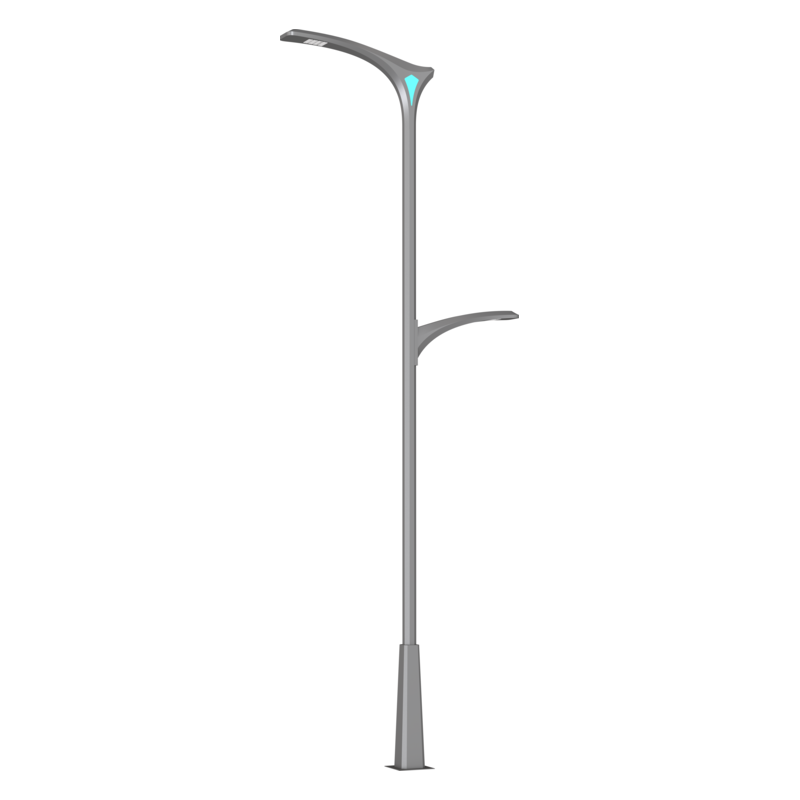
Solar Street Lamp Manufacturer Lead Times and MOQ Factors to Check
A common procurement problem in outdoor lighting is that the quotation looks acceptable, but the delivery reality does not. Many teams compare wattage, battery size, and unit cost first, then discover later that the chosen solar street lamp manufacturer cannot match the project schedule, packaging requirements, or order volume expectations.
That gap creates practical pressure fast. Installation windows get compressed, civil work coordination becomes harder, and budget control weakens when emergency substitutions start. If you are evaluating suppliers for roads, public spaces, or other large projects, it helps to check lead time and MOQ logic before discussing final pricing.
Why lead time issues usually show up later than expected
Lead time problems often do not begin at the shipping stage. They usually start much earlier, when procurement assumes that “production time” means the same thing for every manufacturer. In practice, it may include different things: raw material preparation, solar panel sourcing, battery assembly, pole fabrication, controller testing, fixture aging, packaging, and export handling. Two suppliers can both say “30 days,” while one is referring only to fixture assembly and the other is referring to the full order readiness date.
For outdoor lighting projects, that distinction matters because solar street lamp systems are made up of multiple parts with different supply rhythms. The lamp head, solar panel, battery, controller, bracket, and pole may not all come from the same production line. If even one of those components has a longer replenishment cycle, the entire order schedule can slip.
Another common issue is that custom configuration quietly extends the timeline. Changes in pole height, finish, battery capacity, smart control features, mounting style, or packaging format may seem minor during quotation review, but they often move the order away from standard production. Once that happens, the manufacturer may need extra engineering confirmation, sample checks, or purchasing time for non-stock materials.
What MOQ tells you about a solar street lamp manufacturer
MOQ is often treated as a price negotiation point, but it is also a signal about how the factory actually operates. A high MOQ may indicate that the manufacturer relies on batch purchasing of key components, standardized tooling, or fixed packaging arrangements. A lower MOQ may look more flexible, but it can also mean higher unit cost, fewer finish options, or longer waiting time until production is grouped with similar orders.
For buyers, the mistake is assuming MOQ only affects the first order quantity. It can influence spare parts planning, phased delivery, pilot installation, and future maintenance consistency. If your project will be released in sections, or if approval depends on a mock-up before full deployment, MOQ needs to be discussed together with split shipment options and repeat-order consistency.
This is especially important in municipal and contractor-led work, where quantities may change after site verification. A supplier that only gives a simple MOQ number without explaining what changes when the order goes below or above that threshold is leaving out useful decision information.
The checks that help avoid procurement surprises
When comparing suppliers, it helps to move from “What is your lead time?” to “What exactly drives your lead time?” The second question gives you a much clearer picture. Ask whether the timeline is based on standard configuration or project-specific design. Ask which components are normally stocked and which are purchased after order confirmation. Ask whether the lead time starts from deposit, drawing approval, sample approval, or final technical confirmation.
On MOQ, ask the manufacturer to break the answer into categories. The MOQ for a complete solar street lamp set may differ from the MOQ for poles, luminaires, control accessories, or packaging customization. That matters if your project needs staged procurement or mixed configurations.
You should also verify whether different wattages or mounting structures can be combined into one order batch. Some factories allow mixed models under one container or one production schedule, while others treat each variation as a separate MOQ calculation. This affects both cost planning and delivery coordination.
Another useful check is whether the supplier has engineering support strong enough to align product selection with the project environment. In large outdoor jobs, procurement does not happen in isolation. It connects with installation method, wind conditions, maintenance access, and visual requirements. Companies with broader project experience, such as teams that support integrated outdoor lighting delivery and smart control coordination, are usually better at identifying where timeline risk may come from before production starts.
A practical review process before placing the order
- Confirm the exact bill of materials. Do not evaluate lead time from a general product brochure alone. Ask for the configuration tied to your project scope, including panel type, battery specification, controller function, pole details, and mounting method.
- Separate standard items from custom items. A supplier may have standard lamp heads available quickly, while custom poles or brackets require a different schedule. This separation shows where the real bottleneck may be.
- Request a production timeline by stage. Instead of accepting one total number, ask for the estimated sequence: material preparation, fabrication, assembly, testing, packaging, and shipment readiness. You do not need exact promises; you need visibility.
- Clarify MOQ by component and by variant. Check whether the MOQ applies to the whole system, one model, one finish, one pole type, or one packaging specification. This is where many comparisons become inaccurate.
- Check sample policy and approval timing. If the project requires a pre-production sample, include that step in the delivery plan. Sample confirmation can affect not only schedule but also final MOQ treatment if changes are made afterward.
- Discuss partial shipment options early. For projects with tight installation phases, it may be practical to split delivery between ready components and later custom items. Not every manufacturer can support this smoothly.
- Review after-sales consistency. Ask whether future repeat orders can match the same configuration and whether core parts remain stable across production batches. For solar systems, long-term maintenance planning matters as much as the first shipment.
How related product lines can reveal manufacturing depth
Even when your main purchase is solar street lighting, it is useful to look at whether the supplier also handles other outdoor lighting categories with clear engineering detail. That often shows how mature the manufacturing system is in areas like pole fabrication, weather protection, optics, and installation structure.
For example, a product such as LED Garden&Lawn Lighting | GLL-LGYC reflects some practical indicators worth checking across a supplier’s broader portfolio: stainless steel construction, 3-4 m pole height options, 2-3 mm pole thickness, base flange choices for anchor bolt installation, wind resistance at or above 150 Km/h, IP67 protection, and operating stability from -40℃ to +70 ℃. Those details do not replace solar-specific evaluation, but they do help you judge whether the manufacturer is used to outdoor conditions, structural requirements, and long-service applications in parks, landscapes, and public environments.
If a supplier can explain those details clearly across multiple outdoor product types, that is usually more useful than polished marketing language. It suggests the team understands how product design connects with installation and long-term field use.
Common mistakes when comparing lead times and MOQ
One mistake is comparing quotations from different manufacturers without normalizing the scope. A short lead time may exclude the pole, battery enclosure, or control system. A low MOQ may apply only to one finish or one standard wattage. Unless the scope is aligned, the comparison is weak.
Another mistake is treating every project as if it should follow the same purchasing rhythm. For some jobs, the better approach is to secure technical confirmation early and place phased production orders. For others, it is more efficient to lock one complete batch if the site schedule is stable. The right method depends on installation sequence, storage conditions, and approval process.
Buyers also sometimes focus so heavily on the first shipment that they ignore replacement and expansion needs. If future matching units, poles, or control accessories are likely to be needed, ask how the solar street lamp manufacturer manages repeat production and material consistency. That question can prevent difficult maintenance gaps later.
Frequently Asked Questions
Should I always choose the supplier with the shortest stated lead time?
Not automatically. A shorter lead time only helps if it covers the full order scope and realistic approval steps. It is more useful to compare how each supplier defines the timeline than to compare one number by itself.
Can MOQ usually be negotiated for project orders?
Sometimes, but the more important question is what changes when MOQ changes. Lower quantity may affect unit price, finish options, packaging, or delivery schedule. A negotiated MOQ is only helpful if those tradeoffs are visible.
What is the best way to verify a manufacturer’s production capability?
Ask for a breakdown of product scope, production stages, and configuration limits. Clear answers about materials, structural options, testing steps, and order batching are more useful than broad claims about capacity.
Does product range matter if I only need solar street lamps?
Yes, to a degree. A broader outdoor lighting range can indicate experience with poles, corrosion resistance, optics, mounting systems, and environmental protection. It is not proof by itself, but it helps you evaluate engineering depth.
Final takeaway
When choosing a solar street lamp manufacturer, lead time and MOQ are not side notes. They are early indicators of whether the supplier can support your project rhythm, configuration needs, and long-term maintenance expectations. A better buying decision usually comes from asking more precise questions, aligning order scope carefully, and checking how the factory handles real production constraints rather than relying on headline numbers alone.
For procurement teams working on outdoor lighting projects, that approach reduces avoidable delays and makes supplier comparison much more reliable.