
NEWS
Street Light price in nigeria
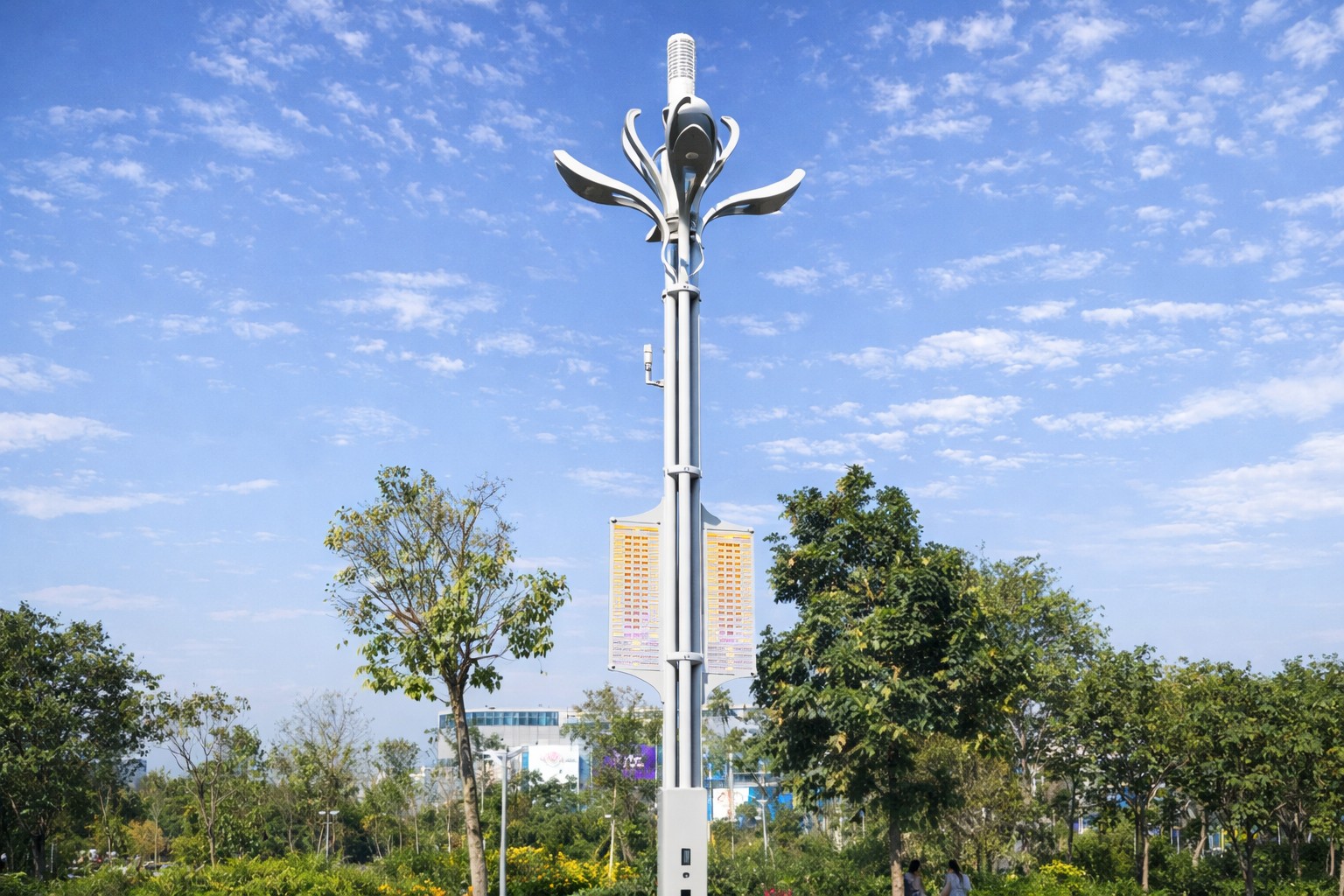
Street Light price in Nigeria usually depends on the full street lighting assembly rather than the lamp head alone. A low quote may cover only the luminaire, while a complete project price can also include the pole, bracket, anchor bolts, foundation design, cable, control gear, battery in solar configurations, transport, installation, and future replacement parts. Without separating these items, two offers that look similar on paper may refer to very different scopes.
The first cost driver is configuration. Grid-powered street lights and solar street lights are priced differently because their hardware structure is different. A grid system may require trenching, armored cable, distribution boxes, and protection devices. A solar system may avoid some civil and cable work, but it adds photovoltaic panels, battery storage, charge control, and a larger mounting structure. In many locations, the final comparison should consider local grid stability, site accessibility, and maintenance conditions instead of only the initial supply price.
Wattage changes price, but not in a simple linear way
Many people start by asking the price of a 100W, 150W, or 200W street light. That is useful, but wattage alone does not define value. Optical design, chip quality, driver reliability, heat dissipation, and housing protection all affect how much usable light reaches the road and how long the fitting can remain stable outdoors. A lower-grade 200W fixture may not perform better than a well-designed lower-wattage unit with higher luminous efficacy and better light distribution.
For road lighting, the correct question is often whether the fitting can meet the required mounting height, road width, pole spacing, and uniformity target. If the beam angle is poorly matched to the roadway, a higher wattage may be used to compensate for bad distribution, which increases both purchase and operating cost.
Poles often explain a large part of the budget gap
In Nigeria, street light price discussions frequently focus on luminaires, but the pole can be a major cost element, especially for taller installations or coastal and high-wind areas. Pole height, wall thickness, base plate size, welding quality, and corrosion protection directly influence cost. Q235 steel or equivalent structural steel is commonly used, but thickness and galvanizing quality matter as much as the raw material specification.
A pole with 4-8 mm thickness, hot-dip galvanized surface treatment, and a wind resistance rating suitable for exposed roads will not be priced the same as a lighter decorative pole for a sheltered estate road. Foundation bolts, flange machining, door openings for maintenance access, and bracket design also add cost. Even transport becomes more expensive as pole length increases, because longer poles require different loading arrangements and more handling care.
Some project specifications use 10 m to 12 m poles for wider roads or divided carriageways. In that range, structural details become more important. A 12 m hot-dip galvanized pole with slotted flange holes for easier installation, for example, may cost more upfront, but it can reduce alignment trouble on site and improve corrosion resistance over time. That has a practical impact on overall project cost, especially where replacement work is difficult.
Solar street light price depends heavily on battery and autonomy
Solar street lights are widely discussed because they can be suitable for areas with unreliable power supply or sites where trenching is difficult. Their pricing varies sharply according to battery chemistry, battery capacity, panel size, controller quality, autonomy days, and dimming strategy. Two solar lights with the same LED wattage can have very different prices if one is designed for shorter nightly operation and the other for longer runtime during cloudy conditions.
A common mistake is to compare solar products by lamp wattage only. That can be misleading because the system should be sized from the lighting schedule, local solar resource, battery discharge limit, and reserve days. If those parameters are undersized to reduce the initial price, the result may be unstable operation, reduced battery life, or poor lighting continuity in rainy periods.
Material finishing is not a minor detail
Outdoor lighting in humid, dusty, or coastal conditions needs proper surface protection. Powder coating alone may look acceptable at delivery, but for steel poles the underlying anti-corrosion treatment is often the more important factor. Hot-dip galvanizing is commonly preferred where long service life is expected. In lower-quality assemblies, the visible finish may be neat while weld areas, pole interiors, or cut edges are less protected. That difference may not be obvious in a quotation, yet it affects long-term maintenance cost.
Luminaire housings also vary. Die-cast aluminum is common for heat dissipation, but sealing quality, gasket material, and hardware finish matter. A fixture rated at IP67, with a driver compartment and optical chamber designed for weather exposure, is typically positioned differently in price than a basic enclosure with weaker sealing.
Controls can raise the unit price and lower the operating cost
Street lighting with timers, photocells, dimming schedules, or remote monitoring usually costs more than a simple on-off setup. However, control components should be evaluated in relation to energy use, fault detection, and maintenance visits. On a long road, the ability to identify failed fittings or adjust operating schedules remotely may reduce service disruption and repeated inspection work.
That does not mean every road needs a smart control layer. In some cases, a robust photocell and surge protection package is more practical than a more complex control architecture. The right balance depends on the project scale, maintenance discipline, and local operating conditions.
In some specifications, a decorative yet heavy-duty assembly is chosen to combine roadway lighting with urban design. An example of this type is Modern Street Lighting | MSL-GH, which combines a galvanized steel pole structure with high-power main and auxiliary lighting. Configurations in this class tend to be priced by the total structural and electrical package rather than by LED wattage alone.
Transport and installation are frequently underestimated
Street Light price in Nigeria can shift considerably once logistics are added. Port handling, inland transport, road conditions, unloading equipment, and site distribution all affect the final number. Long poles and fragile solar panels need careful packing and handling. If the project site has limited crane access or poor road approach, installation cost can rise even when the product price remains unchanged.
Foundation work is another source of mismatch between quotation and reality. Soil condition, base design, rebar, concrete volume, anchor bolt positioning, and curing time should be treated as part of the real project cost. In soft ground or flood-prone areas, the civil portion may increase more than expected.
- On a narrow internal road, a simpler single-arm arrangement may be sufficient.
- For wider carriageways, higher poles or stronger brackets may be needed, which affects steel weight and transport volume.
- At junctions and public spaces, lighting layouts often require different optics or additional fixtures instead of repeating one standard pole everywhere.
Comparing quotations requires line-by-line reading
When one offer is much cheaper than another, the difference is often hidden in omitted items or downgraded specifications. The driver brand may be unspecified. Surge protection may be excluded. Pole thickness may be reduced. Galvanizing may be thinner than expected. Cable tails, junction boxes, anchor bolts, and brackets may be listed separately or left out entirely. In solar projects, battery capacity and controller settings are especially easy to obscure in brief quotations.
It is also useful to check whether the stated lifespan refers to the pole structure, the LED module, or the driver. These are not the same. A steel pole may remain serviceable for decades if properly galvanized, while LED and driver replacement cycles can be much shorter depending on thermal management and operating conditions.
For projects where both performance and appearance matter, some assemblies are specified with details such as 150-250W main lighting, 140-210W auxiliary lighting, color temperatures selected for different visual tasks, luminous efficacy at or above 140 lm/W, and galvanized poles built for high wind exposure. Products in that category, including Modern Street Lighting | MSL-GH, usually sit in a different pricing range from basic roadway fixtures because the structure, optics, and installation demands are broader.
A realistic view of street light cost comes from matching the lighting class, mounting condition, corrosion exposure, and maintenance plan to the actual site. Street Light price in Nigeria is rarely a single number. It is a combination of structural steel, lighting performance, protection level, electrical design, logistics, and service life assumptions. Once those parts are separated clearly, price comparisons become much more reliable.
◉ MESSAGE
Blog
- LED Street Luminaire Specifications That Matter for Roadway Projects
- What to Evaluate When Selecting a Smart Street Lamp Manufacturer
- How to Prepare a Compliant Solar Lighting Bid for Public Infrastructure Projects
- LED Street Lighting Solutions for Urban and Municipal Roads
- LED Street Light Installation Guide for Road Projects
- LED Street Light Lifespan: How Long Do LED Road Lights Last?
- LED Street Light IP Rating: What Should Buyers Choose?
Message