
SL-004 Solar Street Lighting: Is It Suitable for Rural Access Roads?
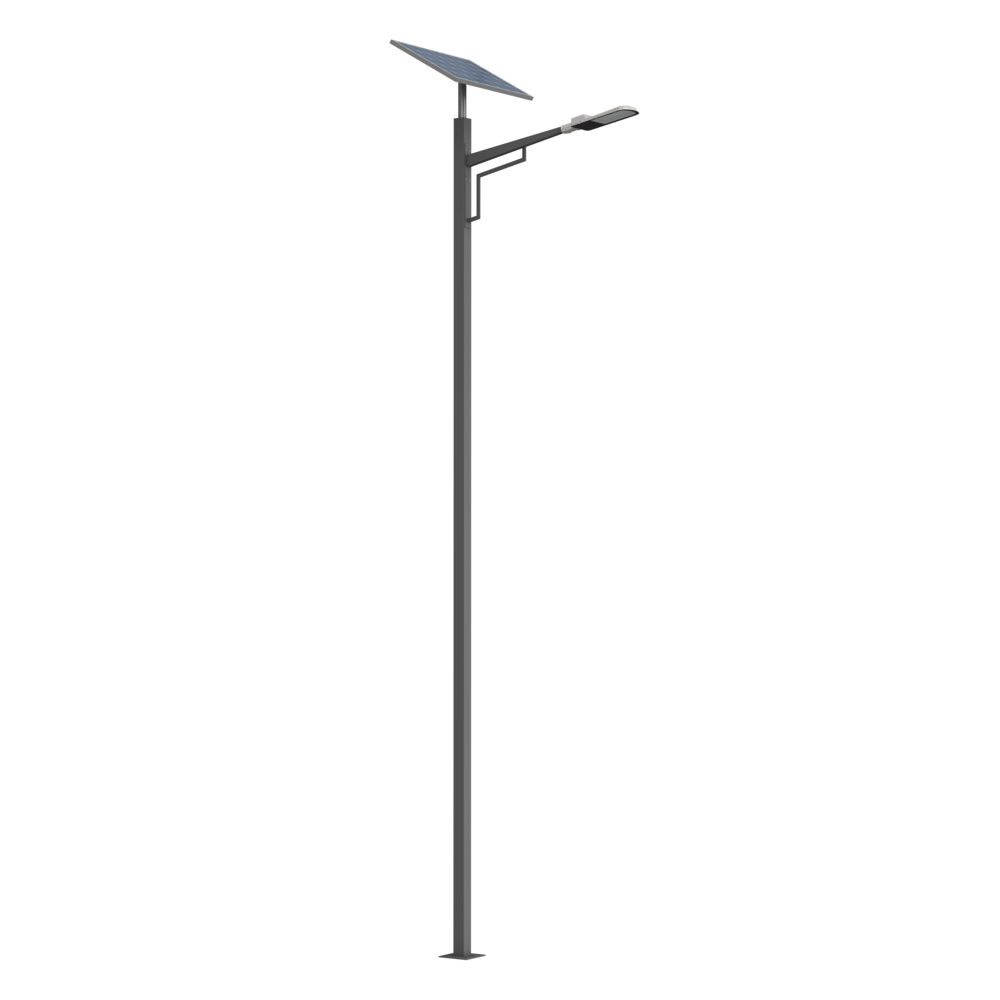
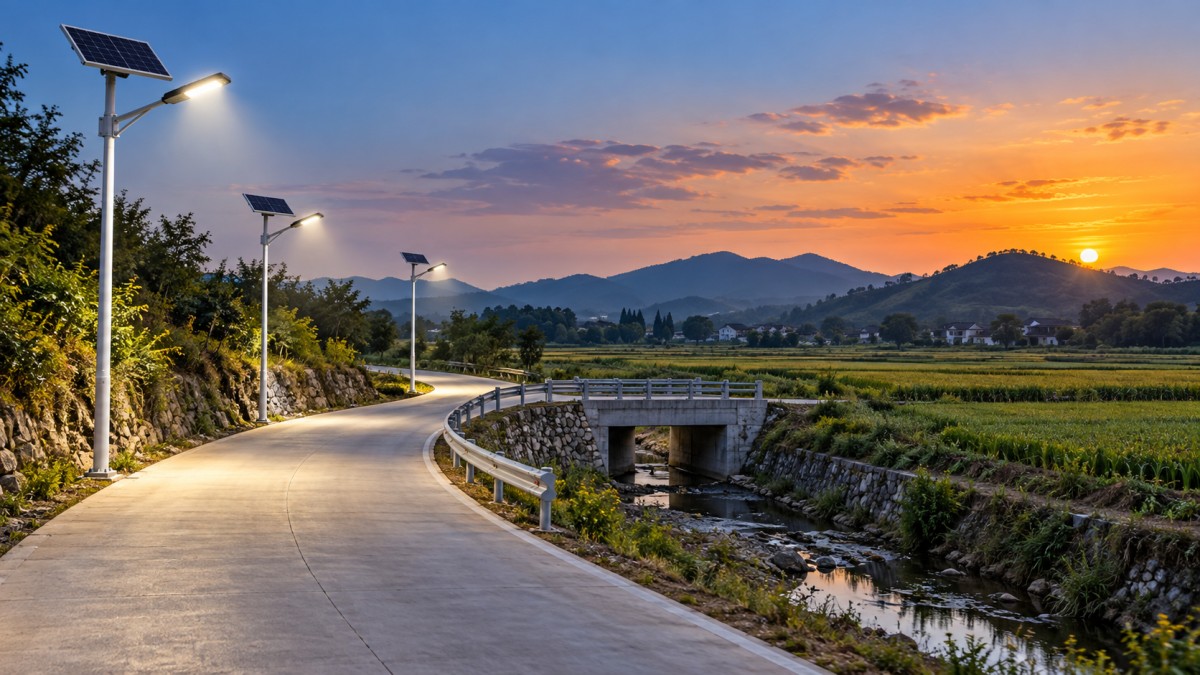
SL-004 Solar Street Lighting is suitable for rural access roads when the road has dependable solar exposure, a lighting layout matched to actual traffic conditions, and a battery reserve sized for the local weather pattern. It is often a stronger fit for dispersed roads where extending the utility grid would require long cable routes, trenching, road reinstatement, or new distribution equipment. The absence of grid connection reduces civil work, but it also shifts project performance onto the solar module, battery, controller logic, luminaire efficiency, pole stability, and installation quality.
Suitability should therefore be assessed route by route rather than by treating every rural road as the same application. A short village approach road with intermittent pedestrian and motorcycle traffic needs a different lighting strategy from a farm access route used by trucks before dawn, or a hilly connector with sharp bends and roadside vegetation. SL-004 should be specified around the places where visibility changes driving behavior: junctions, culverts, bridge approaches, steep grades, bends, bus stops, pedestrian crossings, and entrances to clustered homes.
Where Solar Lighting Fits the Road Condition
A solar street lighting system performs best on open road sections with limited shading throughout the day. Trees, nearby buildings, ridge lines, utility structures, and seasonal crop growth can reduce charging far more than a brief site visit suggests. A pole that receives direct sun in one season may be partly shaded when foliage is dense or when the sun path is lower. For this reason, site review should consider the likely shadow path rather than simply confirming that the location appears sunny at midday.
Road width and alignment also affect the answer. On a narrow, low-speed rural lane, well-spaced single-sided poles may provide useful orientation lighting. On a wider road, a curve, or an area with pedestrian conflict, the optics and mounting height must place light on the relevant pavement area without leaving a dark transition between poles. Adding wattage alone does not correct poor spacing or an unsuitable distribution pattern. It can increase battery demand while still failing to improve edge visibility.
SL-004 is less appropriate as a direct substitution for high-output, continuously illuminated road lighting where traffic is heavy through the night, the road corridor is shaded, or the required pole positions cannot face usable solar exposure. Those conditions do not automatically rule out solar deployment, but they require a more detailed energy model, revised operating profile, or a different power architecture.
Battery Reserve Determines Reliability After Sunset
The visible LED fixture is only one part of the system. The battery has to store enough energy to support the intended lighting schedule after periods of weak irradiation. A specification that states panel power and lamp power without showing the dimming program, battery capacity, controller settings, and reserve expectation leaves a major gap in the evaluation.
For rural access roads, a staged output profile is often more practical than operating at full output from dusk to dawn. Higher illumination can be scheduled for the evening arrival period, early morning movement, and defined traffic windows, with reduced output during the quietest hours. That profile must be based on the road's actual use. A route serving early agricultural transport or night-shift travel may retain meaningful traffic after midnight, so aggressive dimming could undermine the reason for installing the lights.
Battery behavior also changes with temperature. Cold conditions reduce available discharge performance, while high enclosure temperatures accelerate battery aging. The mounting arrangement, battery enclosure location, ventilation, and thermal exposure deserve review alongside nominal battery capacity. A system with a large stated capacity can still provide disappointing service if it repeatedly operates at deep discharge or remains hot for long periods.
Do Not Treat Pole and Luminaire Specifications Separately
Rural roads commonly expose poles to open wind, soft shoulders, drainage erosion, and uneven ground. Foundation design must reflect soil condition, pole height, fixture area, solar panel area, and local wind exposure as one structural arrangement. The solar module changes the wind load and center of gravity compared with a conventional road luminaire. A stable pole selection cannot be inferred from lamp wattage alone.
Where the project uses conventional grid-connected sections alongside solar sections, the structural requirements can be compared with road-lighting equipment such as Modern Street Lighting|MSL-HCH. Its Q235 steel construction, hot-dip galvanized and powder-coated finish, IP67 protection level, and pole options from 8 to 14 m illustrate the types of corrosion protection, enclosure sealing, and structural configuration that should be aligned with the site. The final solar pole arrangement still needs its own foundation and wind-load verification because the panel and integrated energy components alter the assembly.
Hot-dip galvanizing is particularly relevant near irrigation channels, standing water, fertilized agricultural land, and coastal-influenced air, where moisture and chemical exposure can attack unprotected steel. Powder coating improves the finished surface but should not be mistaken for a replacement for durable base corrosion protection. Damage from unloading, transport, or installation should be inspected before commissioning, especially around base plates, door openings, cable entries, and panel brackets.
Installation Savings Can Be Lost Through Poor Layout Control
Solar lighting avoids the need to run power cable between every pole, yet the installation still requires disciplined civil work. Pole locations should be set against drainage routes, road widening plans, overhead obstacles, turning paths, and maintenance access. Placing a pole too close to an eroding shoulder creates a long-term structural problem. Positioning it behind dense vegetation may protect it from vehicle contact while severely reducing solar collection.
- Confirm the pole orientation before concrete is poured. A small orientation error can reduce module exposure or direct the luminaire away from the useful roadway zone.
- Verify anchor bolt projection, base-plate level, and door access after the foundation has cured. Slotted base-plate holes allow installation adjustment, but they do not compensate for a foundation that is out of level or incorrectly located.
- Keep the controller, battery compartment, and cable glands sealed after field wiring. Water ingress often appears later as intermittent charging faults rather than an immediate lamp failure.
- Record each installed location, component serial reference, commissioning setting, and initial battery status. This information shortens fault isolation when a section later performs differently from the rest of the route.
Transport planning is also relevant on remote roads. Integrated solar poles reduce separate component handling at the installation point, but long poles and panel assemblies require adequate protection against abrasion and distortion. Rural delivery routes with narrow bridges, poor turning radii, or unpaved access can influence the preferred pole length and whether components should be assembled on site.
Maintenance Is Lighter, Not Absent
Routine maintenance focuses on the conditions that reduce energy collection or compromise enclosure integrity. Dust, bird residue, leaf accumulation, and agricultural spray deposits on a solar panel lower charging input. A panel can look generally clean from the ground while retaining a film that matters during low-sun periods. Cleaning frequency should follow the local environment, with safe access considered during pole selection and layout.
Vegetation management is equally important. A system may appear to have a battery problem when the actual cause is a newly grown branch casting shade across the panel for several hours each day. The opposite confusion also occurs: clearing shade will not correct a battery that has lost capacity through age or repeated deep discharge. Maintenance records should distinguish charging condition, battery condition, LED output, controller alarms, and physical damage rather than treating every dim lamp as the same fault.
Before release for a rural access-road project, the SL-004 configuration should be checked against the road geometry, seasonal solar availability, required operating hours, dimming schedule, structural exposure, and maintenance access. When those factors align, solar street lighting can deliver dependable guidance lighting without grid-extension work. When they conflict, the right response is to revise the layout or energy design before installation, rather than attempting to recover performance after the poles are in place.
◉ MESSAGE

Blog
- How to avoid vendor lock-in in a government smart lighting project
- Sizing the communications power budget for smart city solar street lights
- How energy-saving mode affects solar bollard light operating time
- Comparing lead times from LED street light luminaire suppliers in Europe
- What spare parts support should a smart street light exporter offer?
- Where to place a solar garden light in a partially shaded garden
- Which battery alerts matter in remotely monitored solar street lighting?
Message