
Lighting Urban Furniture in Subway Stations Without Compromising Safety
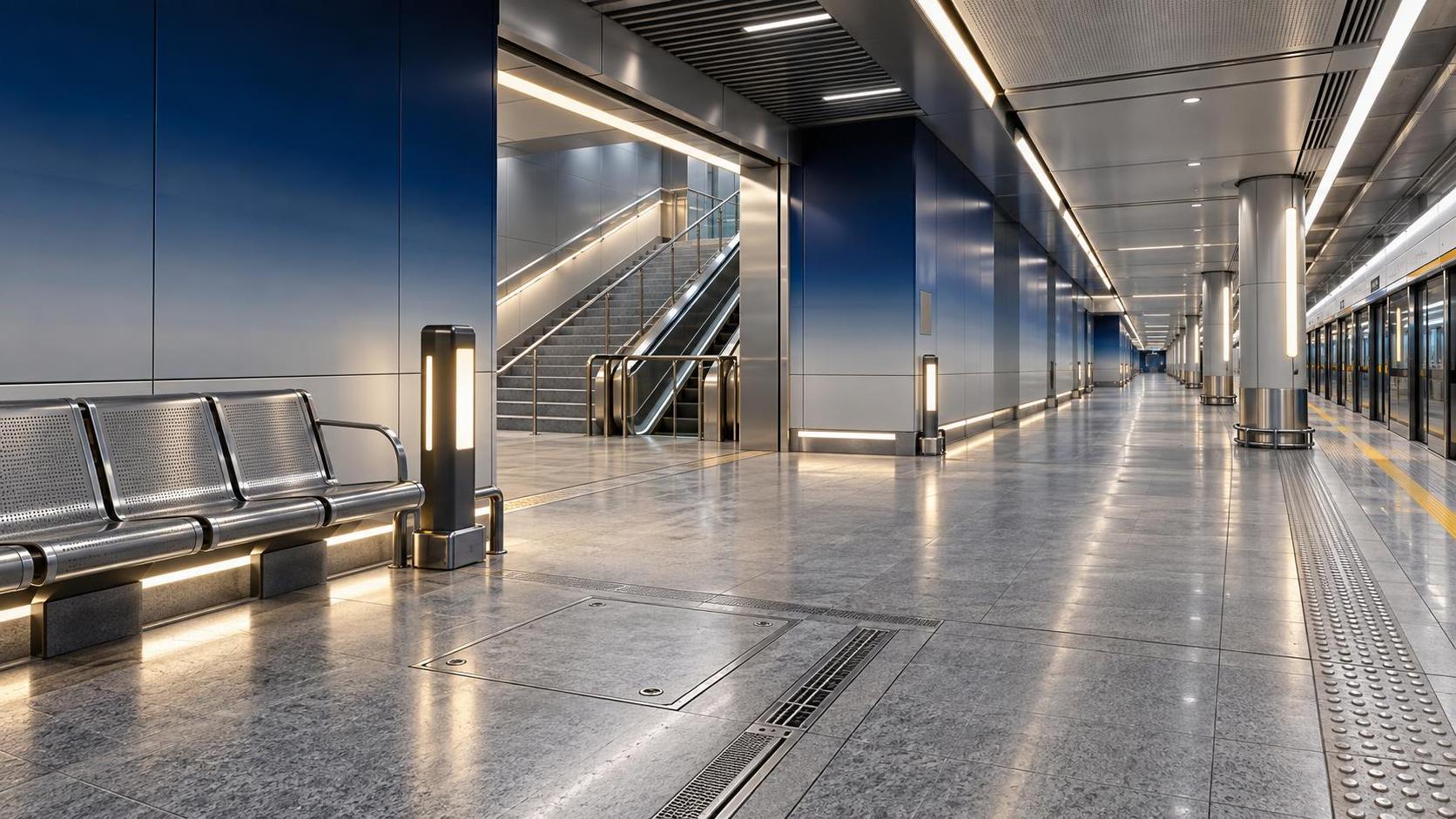
Lighting Urban Furniture in Subway Stations Without Compromising Safety
Integrating LED urban furniture lighting for subway stations can improve passenger comfort, wayfinding, and the overall identity of transit spaces—but only when safety remains the first priority. For quality control and safety managers, the challenge is balancing durable illumination, smart controls, electrical protection, fire-performance requirements, and long-term maintenance. A well-engineered lighting solution helps project teams create functional urban environments without introducing avoidable risks.
The word “urban furniture” can make the scope sound decorative: illuminated benches, bollards, handrails, signage, seating edges, planters, and information points. In a subway environment, however, these elements sit close to passengers, cleaning crews, maintenance teams, and evacuation routes. They may be exposed to vibration, crowd impact, moisture, vandalism, cleaning chemicals, and continuous operating hours. Lighting therefore cannot be assessed as a visual feature alone. It is part of the station’s safety infrastructure and must be coordinated with architecture, electrical systems, emergency planning, and maintenance access.
Start with the Station Risk Map, Not the Luminaire Catalogue
A common project mistake is selecting an attractive illuminated furniture concept before defining where it will be installed. The demands at an underground platform differ sharply from those at an entrance plaza, a transfer corridor, or an exterior station forecourt. Even within one station, wet zones, public circulation areas, staff-only zones, and emergency routes require different decisions.
For quality control teams, a practical first step is to divide the project into exposure zones. Interior concourses may require close attention to glare, accessible routes, cleaning procedures, cable concealment, and fire behavior of enclosures or diffusers. Exterior furniture near entrances must also account for rain, airborne contaminants, UV exposure, corrosion, impact, and drainage. Platform-edge applications require special care because visual clutter or uncontrolled brightness can interfere with passenger orientation and operational signage.
The purpose of this exercise is not to impose one protection level or one lighting output across the station. It is to avoid applying an outdoor specification indoors without reason—or, more dangerously, using an interior-grade assembly where water, mechanical impact, or public access creates a higher risk. The required ingress protection, impact resistance, material finish, and electrical isolation should follow the actual exposure and the applicable local requirements.
Electrical Safety Must Remain Visible in the Design Review
Urban furniture often hides drivers, junction boxes, wiring, and control devices inside metalwork, seating structures, or plinths. This improves appearance, but it can also hide poor installation practice until a fault occurs. Every concealed electrical component needs a defined inspection and replacement path. If a driver can only be reached by dismantling a heavy bench, disrupting pedestrian flow, or removing finishes, the design has created a maintenance and safety problem rather than solved one.
Reviewers should verify the segregation of power and control wiring, earthing arrangements for accessible metal parts, cable-entry sealing, strain relief, and the suitability of connectors for the installation environment. Where low-voltage lighting is used, the whole system still needs review: power supplies, cable runs, accessible terminals, and fault protection are as important as the visible LED strip or module. For mains-powered equipment, the product and installation approach should be checked against the electrical rules adopted by the project jurisdiction, rather than assumed compliant because the luminaire itself carries a familiar label.
Water management deserves particular attention at entrances and open-air station areas. A nominally sealed fixture can still fail if water collects around cable glands, enters an improperly designed access hatch, or remains trapped in the furniture body. Drainage paths, gasket compression, orientation of joints, and field-installed connections should be inspected as a system. An IP rating is useful, but it does not compensate for poor assembly on site.
Brightness, Glare, and Wayfinding Need to Work Together
Passengers do not experience lighting as isolated numbers on a datasheet. They experience contrast: between a bright seating edge and a darker floor, between a backlit sign and its surroundings, or between an entrance canopy and daylight outside. Excessively bright furniture can create discomfort, reflections on polished surfaces, and confusion around directional information. In stations used by elderly passengers, children, and people with reduced vision, harsh point sources and uneven transitions are especially undesirable.
LED urban furniture lighting for subway stations should therefore support a hierarchy of information. Emergency signs, operational signals, platform-edge markings, and formal wayfinding must remain dominant. Decorative or identity lighting should be visually subordinate. Diffused optics, shielded sources, sensible mounting positions, and lighting controls that preserve consistent luminance at key walking surfaces generally produce better results than simply increasing wattage.
Colour temperature also needs a project-specific decision. A warm appearance may suit public seating or heritage-oriented entrance areas, while neutral white can support clearer visual perception in circulation zones. Neither option is automatically safer. What matters is visual consistency, colour rendering appropriate to the task, and coordination with the station’s main lighting and signage palette.
Fire Performance and Emergency Operation Cannot Be Added Later
Subway projects usually involve strict requirements for materials, smoke control, evacuation, and operational continuity. The exact fire-performance criteria depend on local codes, the rail authority, and the location of the installation. A furniture lighting proposal should not claim suitability merely because its housing is metal. Diffusers, cable insulation, internal components, coatings, seals, and adjacent furniture materials may all be relevant to the project’s fire review.
Safety managers should also establish whether a lighting element is normal architectural lighting, part of an emergency lighting strategy, or a feature that must shut down under defined alarm conditions. These functions have different design and testing implications. Smart controls can provide dimming, schedules, and fault monitoring, but they must not undermine required emergency operation. The interface between the control system, emergency power arrangement, and fire alarm logic needs documented responsibility—not informal assumptions between suppliers.
Durability Is a Safety Issue Over the Full Service Life
A lighting installation that looks safe at handover may become unsafe if corrosion, loose covers, faded markings, or failed drivers are not anticipated. Long-life claims should be separated into their components: LED source life, driver life, housing durability, coating performance, seals, and the availability of replacement parts. They do not always age at the same rate.
At exterior station approaches, robust street and plaza lighting can complement integrated furniture lighting. For example, Modern Street Lighting|MSL-HC is designed for street-lighting applications with a hot-dip galvanized and powder-coated Q235 steel structure, IP67 protection, and a stated wind resistance of at least 150 km/h. Its 150–250 W LED configuration, 3000K or 4000K options, and rated luminous efficacy of at least 140 lm/W may be relevant to open station surroundings rather than enclosed passenger areas. Final suitability still depends on photometric design, pole foundations, local wind conditions, electrical design, and the authority’s approval criteria.
This distinction matters. A durable external pole system is not a substitute for low-level, glare-controlled lighting at a station entrance, and embedded furniture lighting is not a substitute for properly designed area illumination. Safe projects assign each lighting layer a clear job.
What Quality Teams Should Require Before Approval
Before approving a solution, request more than rendered images and a headline specification. The submittal should show fixture locations, mounting details, wiring routes, access panels, drainage provisions, control architecture, and interfaces with emergency systems. Product documentation should be matched to the exact delivered configuration, especially where custom lengths, finishes, drivers, or integrated furniture structures are involved.
Mock-ups are often valuable for exposed public areas. They allow the team to assess glare at walking height, visible fasteners, finish quality, access for servicing, and whether light competes with station information. Site acceptance should include inspection of field terminations and protective bonding, not just a nighttime visual check. A clean installation in daylight can reveal problems that a lighting demonstration misses.
Lishida Smart Lighting supports contractors and project owners working on roads, public spaces, and complex urban environments with lighting products, smart control systems, and project-based technical coordination. For large transit-adjacent schemes, the useful discussion is usually not “which fixture is brightest?” It is how structural, electrical, optical, and maintenance requirements can be resolved before site work makes changes expensive.
The strongest subway lighting schemes make the environment easier to read without asking passengers to notice the technology behind it. If the specification clearly defines safety functions, exposure conditions, service access, and system responsibility from the beginning, urban furniture can add character to a station while remaining dependable long after opening day.
◉ MESSAGE

Blog
- How to avoid vendor lock-in in a government smart lighting project
- Sizing the communications power budget for smart city solar street lights
- How energy-saving mode affects solar bollard light operating time
- Comparing lead times from LED street light luminaire suppliers in Europe
- What spare parts support should a smart street light exporter offer?
- Where to place a solar garden light in a partially shaded garden
- Which battery alerts matter in remotely monitored solar street lighting?
Message