
How to reduce glare from LED subway lighting on station platforms
How to reduce glare from LED subway lighting on station platforms
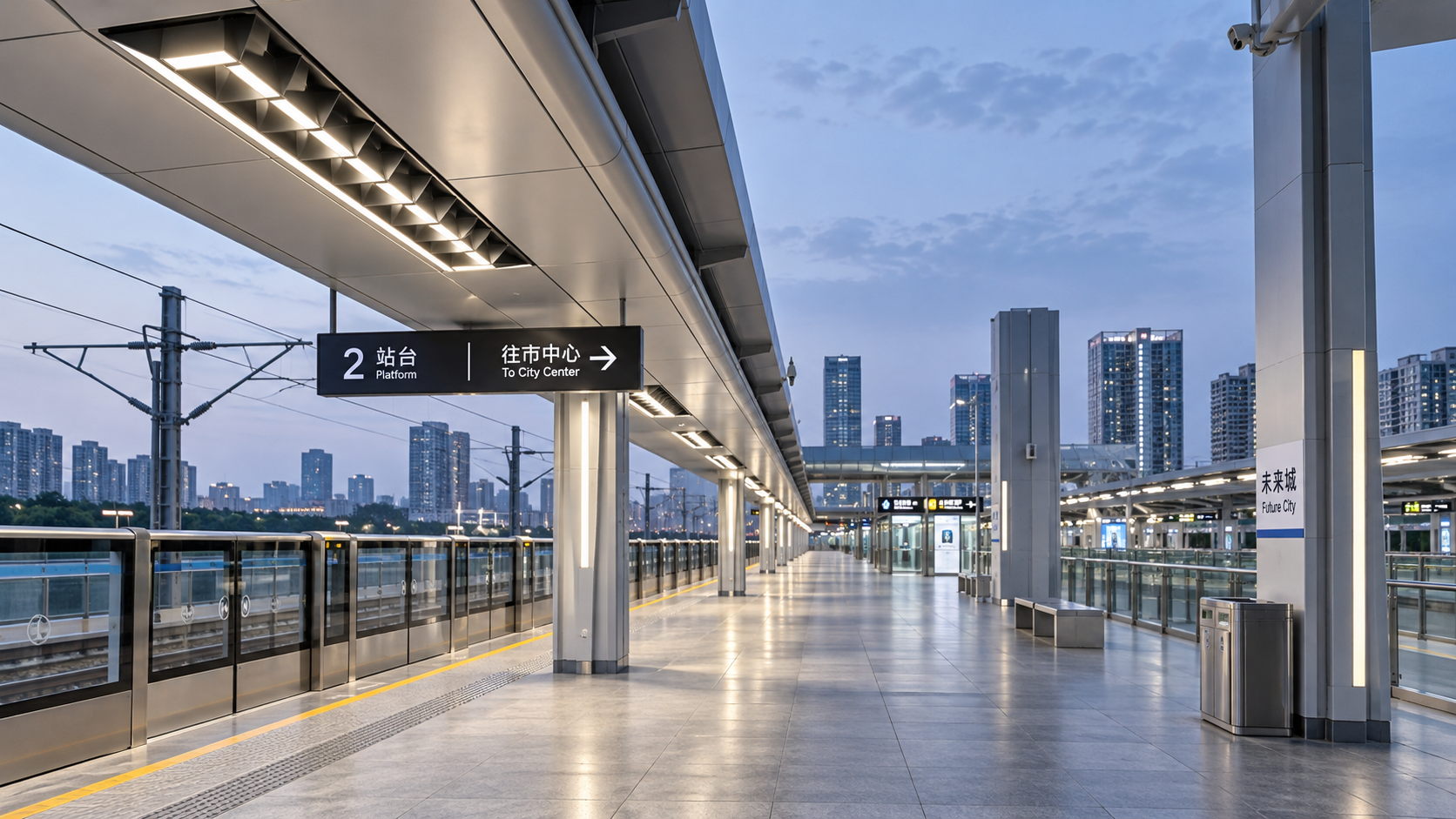
Glare from LED subway lighting can make platform signs harder to read and interfere with safety-critical tasks—even when measured illuminance meets project requirements. Simply lowering light output may reduce discomfort while leaving platform edges, faces, and obstacles inadequately lit. The better approach is to control where light travels, how bright the visible source appears, and how surrounding surfaces reflect it.
For underground stations, covered platforms, and exposed urban rail stops, that means evaluating optics, mounting geometry, finishes, and controls together. Start with what passengers and operating staff actually see, rather than treating a compliant horizontal lux reading as proof of a successful installation.
Locate the glare before changing the fixtures
Direct glare occurs when a bright luminaire enters the field of view. Reflected glare comes from surfaces such as polished floors, glazed signs, metallic panels, and platform screen doors. Discomfort glare causes annoyance; disability glare reduces visibility through scattered light within the eye. These effects can coexist, but they do not necessarily require the same correction.
Walk the platform in both directions, including approaches from stairs and escalators. Check seated and standing viewpoints, wheelchair users’ sightlines, and any driver-facing views covered by the project scope. A fitting that looks acceptable directly underneath may expose intense LED points when viewed along the platform.
- Record positions where lamps obscure signs, signals, or the platform edge.
- Separate visible-source problems from reflections that move as the observer changes position.
- Repeat checks with trains present, because windows and train bodies alter the reflected scene.
- Inspect exposed platforms after dark and, where practical, with wet surfaces.
Photographs help document locations, but automatic exposure can exaggerate or conceal brightness differences. Use calibrated luminance measurements where needed; do not approve glare performance from phone images alone.
Specify optics around sightlines, not just beam width
A narrow beam is not automatically low-glare. It can still appear extremely bright if its peak intensity points toward passengers. Conversely, a broader distribution can work well when the emitting surface is sufficiently large and high-angle light is controlled.
Ask for photometric files for the exact luminaire, optic, output setting, and accessory combination being proposed. Examine intensity toward critical viewing directions, not merely downward coverage. Recessed emitters, shielding, louvers, and asymmetric optics can limit unwanted exposure, but each changes the distribution and may require revised spacing.
Diffusers can soften visible LED images, although adding an opal cover without recalculation may reduce useful illumination. A larger luminous aperture is often preferable to concentrating the same output into a small, intensely bright opening. Check whether shielding also creates dark bands near columns, boarding zones, or the platform edge.
Treat “UGR<19” or similar catalog claims cautiously. Unified Glare Rating depends on the installation, observer position, and calculation assumptions; it is not an unconditional property of a fixture. Confirm the assessment method and limits required by the applicable rail authority and project specification, particularly for outdoor or irregular platform arrangements.
Adjust placement and surfaces together
Under low canopies, luminaires mounted along a passenger’s forward view can form a continuous line of bright sources. Moving the lighting row, recessing it behind a canopy element, or using a suitable asymmetric distribution may improve comfort without reducing useful platform illumination. Model each option: moving fixtures away from one sightline can introduce another problem at stairs or train doors.
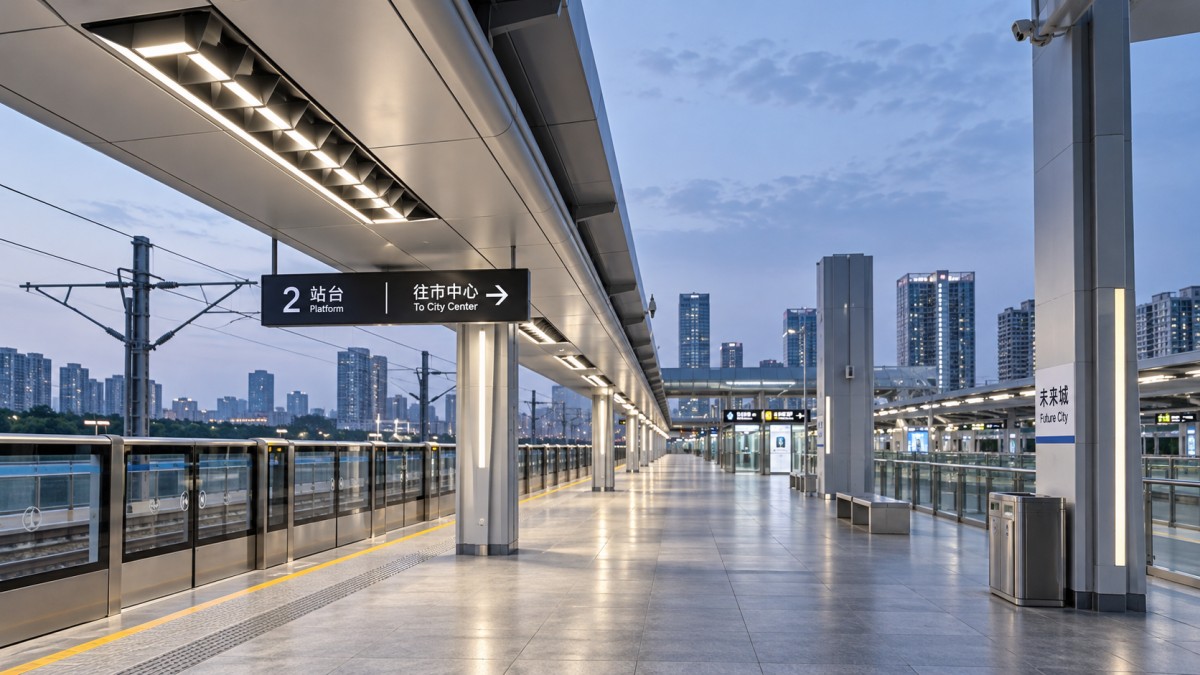
Surface finish matters as much as nominal reflectance. A light-colored matte wall can provide useful background brightness, while glossy cladding may produce sharp reflected images of luminaires. Review actual material samples under the proposed lighting angle. Floor reflections should be checked under expected cleaning and moisture conditions, not only on a dry sample board.
Indirect lighting can reduce harsh contrast where the architecture supports it, but it is not a universal replacement for task lighting. Dark or dirty surfaces absorb light, and inaccessible ledges make maintenance difficult. Platform-edge visibility and emergency lighting must remain independently verified.
Where architectural lighting can contribute
At station entrances or adjacent exterior walls, controlled wall illumination may help soften the transition between a bright platform and dark surroundings. Lishida’s LED Wall Washer, model XQD-017, is specified for facade and landscape applications, with a 36W configuration, IP66 protection, and asymmetric beam options including 10°×40° and 15°×60°.
Those characteristics make it a candidate for evaluating architectural surfaces—not evidence of suitability as primary subway platform lighting. Any station application needs separate checks for glare, mounting access, electrical compatibility, and transport-specific requirements. IP66 describes ingress protection; it does not establish rail approval or low-glare performance.
Use controls without creating new visibility problems
Dimming is useful after the optical design is sound. It cannot reliably correct an exposed emitter aimed into passengers’ eyes. Establish operating scenes around passenger activity, daylight availability, cleaning, and maintenance, while preserving the maintained illuminance and uniformity required for each condition.
Avoid abrupt brightness changes as people enter from a darker passage or a train arrives. Sensor coverage and transition behavior need testing on the platform itself. Agree on the safe response to sensor or communications failure, and ensure normal controls do not compromise required emergency operation.
Check driver behavior across the intended dimming range for flicker and compatibility with station cameras. Color temperature alone is not a glare remedy: warmer light can still be glaring when source luminance and viewing geometry are poorly controlled.
Approve a representative installation, not just a calculation
Build a mock-up covering a representative platform bay with actual mounting heights, finishes, signage, and control settings. Compare candidate optics at equivalent useful lighting levels. Otherwise, the dimmer option may appear more comfortable simply because it provides less illumination.
Acceptance should combine illuminance and uniformity measurements with relevant vertical lighting checks, glare assessment, sign legibility, and operational sightlines. Include cleaning access and replacement procedures: an approved installation can deteriorate if substitute optics or drivers alter its distribution or dimming behavior.
Lishida Smart Lighting supports large-scale outdoor projects across China with products, smart controls, and project-based engineering support. For station-related work, the useful link between these capabilities is configuration control: keeping the evaluated optic, mounting detail, driver, and control settings aligned through delivery and maintenance.
Before approving LED subway lighting, resolve the worst viewing positions and document the accepted configuration. A design is ready when passengers can read signs and recognize platform features comfortably—not merely when the average lux value passes.
◉ MESSAGE

Blog
- How to avoid vendor lock-in in a government smart lighting project
- Sizing the communications power budget for smart city solar street lights
- How energy-saving mode affects solar bollard light operating time
- Comparing lead times from LED street light luminaire suppliers in Europe
- What spare parts support should a smart street light exporter offer?
- Where to place a solar garden light in a partially shaded garden
- Which battery alerts matter in remotely monitored solar street lighting?
Message