
How to Assess a Solar Street Light Manufacturer in China Before Ordering
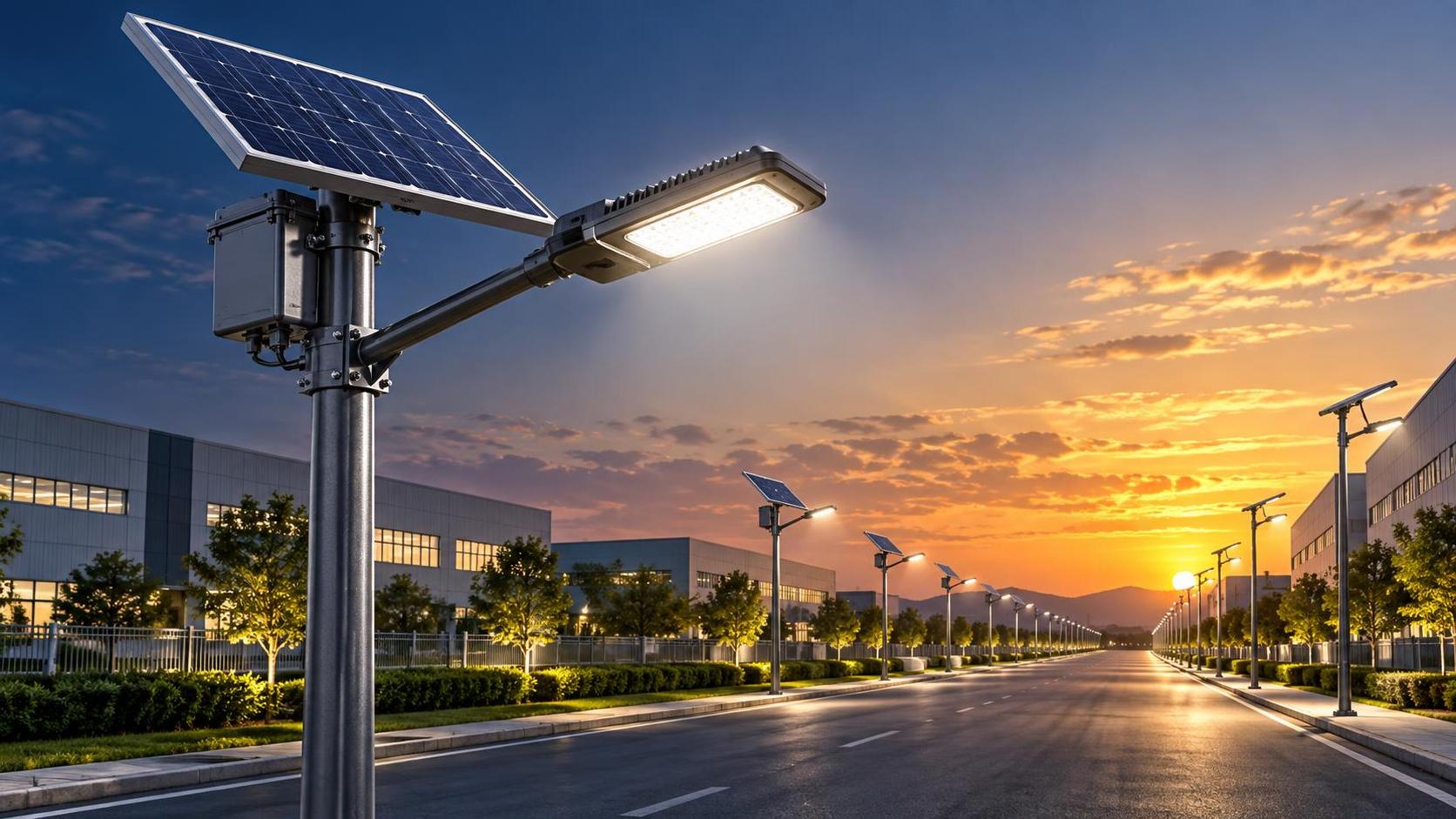
Choosing a Solar Street Light Manufacturer China is not only about comparing prices. Procurement teams must reduce delivery risk, verify technical claims, and protect long-term project performance.
For roads, public spaces, industrial parks, and urban developments, the right supplier combines manufacturing control, engineering capability, documented testing, and responsive project support.
A low quotation can become expensive when batteries fail early, poles cannot withstand local wind loads, or replacement components are unavailable after handover.
Start With Project Requirements, Not Supplier Brochures
Before contacting manufacturers, define the operating environment, lighting targets, installation conditions, local regulations, and expected maintenance responsibilities for the completed project.
Procurement professionals should prepare a clear technical brief covering road width, pole spacing, mounting height, required illumination, autonomy days, and site-specific solar conditions.
Climate data matters because solar street lighting performance depends on annual irradiation, rainy-season duration, ambient temperature, and dust, salt, or humidity exposure.
Ask whether the supplier sizes the solar panel and battery from actual location data. Generic configurations may work in brochures but underperform during local low-sunlight periods.
Also clarify whether the project needs independent off-grid units, centralized smart controls, motion-based dimming, remote fault monitoring, or integration with existing municipal systems.
A capable Solar Street Light Manufacturer China should convert these requirements into a documented design proposal, rather than simply recommending its most frequently sold model.
Verify Manufacturing Capability Beyond Factory Photos
Factory images and business certificates provide only an initial signal. Buyers should verify which critical components the manufacturer produces, assembles, tests, and sources externally.
Request a current factory profile showing production lines for luminaires, solar modules, battery packs, poles, controllers, and final assembly, where applicable.
Manufacturers with controlled assembly processes can better manage consistency, traceability, and corrective action when a field issue affects multiple units or project batches.
For large orders, ask about monthly capacity, peak-season scheduling, standard lead times, and the production plan assigned to your project.
Capacity should be assessed alongside quality discipline. A supplier able to ship quickly but unable to maintain inspection records creates unacceptable risk for public infrastructure procurement.
Arrange a live video audit or third-party factory inspection. Review incoming material checks, in-process inspections, aging procedures, packaging standards, and nonconforming-product handling.
During the audit, confirm that listed equipment is operating and relevant to the proposed product. Equipment ownership alone does not prove practical manufacturing competence.
Examine the Components That Determine Service Life
Solar street lights are systems, not single products. Procurement evaluation should focus on component matching, realistic operating margins, and the supplier’s ability to explain design choices.
The LED luminaire should provide documented luminous efficacy, thermal management details, photometric files, surge protection information, and a suitable ingress-protection rating for the site.
Battery selection deserves particular scrutiny. Confirm the chemistry, usable capacity, cycle-life assumptions, low-temperature behavior, enclosure protection, and battery management system specifications.
LiFePO4 batteries are commonly preferred for many projects because of their safety and cycle-life characteristics, but capacity must still suit the required backup period.
Ask suppliers to state battery capacity in watt-hours and explain the calculation. Amp-hour figures without voltage, discharge depth, and autonomy assumptions are insufficient for comparison.
Solar panel quality should include cell type, conversion efficiency, frame construction, junction-box protection, and expected output under local temperature and irradiance conditions.
Controller capability affects real-world energy use. MPPT charging, programmable dimming, and intelligent load management can improve available operating time when solar input is limited.
For example, Solar Street Lighting | SL-004 combines off-grid installation with 30–100W output options, LiFePO4 storage, and MPPT efficiency up to 95%.
Its Q235 steel pole, specified for wind resistance of at least 150km/h, illustrates why structural data should be assessed alongside lighting and battery specifications.
Demand Evidence for Quality, Testing, and Compliance
Technical specifications are useful only when supported by traceable evidence. Request test reports, certification documents, inspection standards, and product-specific quality-control records before contracting.
Relevant documentation may include IP testing, photometric reports, battery test reports, salt-spray results, material certificates, galvanizing records, and electrical safety compliance evidence.
Check that reports apply to the proposed configuration. Certificates for a different lamp wattage, battery capacity, or enclosure design do not automatically validate your order.
For poles, confirm steel grade, wall thickness, welding requirements, flange dimensions, foundation interface, hot-dip galvanizing thickness, and powder-coating specifications where required.
Coastal, high-wind, and corrosive industrial locations require more detailed structural and corrosion evaluation. Standard pole designs should never be assumed suitable for every project.
Ask for a factory acceptance test plan before production starts. This establishes measurable requirements for appearance, dimensions, electrical operation, charging, lighting control, and packing.
Independent pre-shipment inspection is particularly valuable for first orders. It verifies quantity, workmanship, labeling, accessories, and functional samples before goods leave the factory.
Assess Engineering Support and System Integration
Procurement teams should distinguish between a trading supplier and a manufacturer that can provide engineering support throughout design, production, installation, and commissioning.
Ask whether the supplier can provide lighting simulations, pole-layout suggestions, battery calculations, wiring diagrams, foundation drawings, and installation manuals tailored to the project.
For municipal or multi-site projects, smart lighting functions can materially improve maintenance efficiency. Confirm how devices communicate, what data is available, and who manages the platform.
Useful questions include whether controllers support remote switching, dimming schedules, fault alerts, energy monitoring, GPS positioning, user permissions, and open integration protocols.
Do not accept vague promises of smart control. Request a demonstration of the actual platform, including offline behavior, device onboarding, alarm handling, and historical reporting.
Integration should also be commercially clear. Confirm whether gateways, licenses, SIM cards, cloud hosting, commissioning, and future software access are included in the quoted scope.
Manufacturers experienced in complex urban projects are usually better positioned to identify installation constraints before they become costly change orders during construction.
Compare Quotations on Lifecycle Cost, Not Unit Price
Compare quotations using a common bill of materials. Separate luminaire, panel, battery, controller, pole, bracket, foundation components, smart controls, packaging, and delivery terms.
A cheaper unit may exclude accessories, use a smaller battery, provide weaker corrosion protection, or apply different lighting assumptions. These differences distort headline price comparisons.
Evaluate lifecycle cost by considering installation labor, trenching avoidance, expected maintenance, battery replacement timing, energy savings, spare parts, and downtime exposure over several years.
Off-grid products can reduce civil work significantly because they avoid cabling and trenching. However, this advantage depends on correct sizing and reliable components from the start.
Ask for recommended spare-part quantities and prices. A supplier’s willingness to define replacements for controllers, batteries, LEDs, and drivers indicates stronger after-sales planning.
Payment terms should be aligned with risk milestones. Consider deposits, approved samples, inspection clearance, shipment documents, and performance retention for substantial project orders.
Check References and After-Sales Commitments
Past project references are most useful when they resemble your application. Request details on project scale, location, installation year, product configuration, and maintenance experience.
Where possible, speak with a previous customer or review site evidence. Focus on service response, component durability, delivery accuracy, and how problems were resolved.
Warranty terms require close reading. Confirm coverage periods separately for luminaires, batteries, solar panels, controllers, poles, and smart-control hardware or software.
Clarify who pays for replacement parts, freight, labor, remote diagnosis, and on-site service. A long warranty has limited value if the remedy process is impractical.
Reliable suppliers provide installation guidance, commissioning support, fault-analysis procedures, and accessible technical contacts after shipment. These services are especially important for first-time project deployment.
Build a Defensible Supplier Decision
The strongest purchasing decision is based on evidence, not promotional claims. Score each candidate against engineering fit, component quality, capacity, testing, cost transparency, and service capability.
For a Solar Street Light Manufacturer China, prioritize suppliers that can explain how every key design decision supports your site conditions and contractual performance requirements.
Before ordering, finalize approved drawings, component schedules, inspection criteria, delivery milestones, warranty responsibilities, and documentation requirements in the purchase agreement.
This approach gives procurement teams a practical basis for selecting reliable solar street lighting partners, reducing downstream risk while supporting predictable installation and long-term project outcomes.
◉ MESSAGE
Blog
- How to Assess a Solar Street Light Manufacturer in China Before Ordering
- LED Tree Ring Light Design Considerations for Public Landscape Safety
- Where Modern Street Lighting MSL-XM Fits in Urban Road Renewal Plans
- How to Qualify a Wind-Solar Hybrid Street Light Supplier for Remote Sites
- Solar Security Light Placement Strategies to Eliminate Outdoor Blind Spots
- LED Street Luminaire Specifications That Matter for Roadway Projects
- What to Evaluate When Selecting a Smart Street Lamp Manufacturer
Message