
Data Security Requirements for Connected Smart City Street Lighting
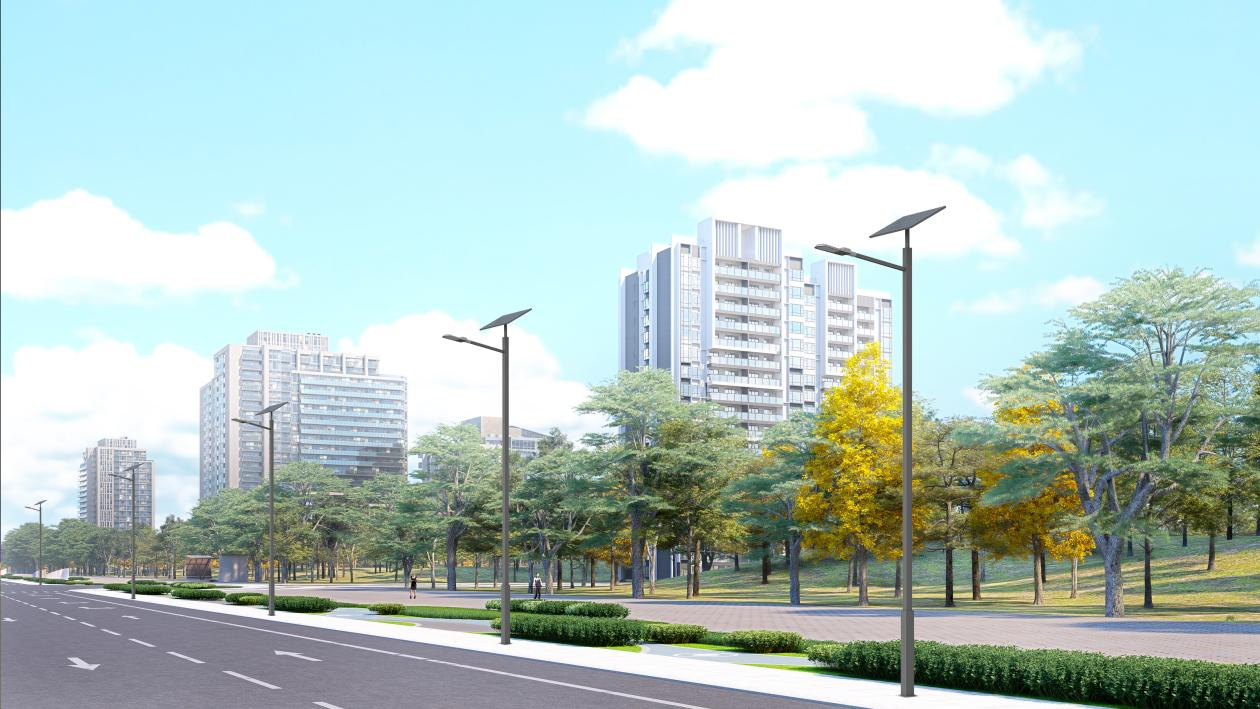
As Smart City Street Lighting networks become more connected, data security is no longer an optional feature—it is a core project requirement. For quality control and safety managers, protecting lighting controllers, communication gateways, and operational data helps reduce cyber risks, prevent unauthorized access, and maintain reliable public-space illumination. Understanding the right security requirements supports safer system integration, long-term performance, and confident delivery of large-scale outdoor lighting projects.
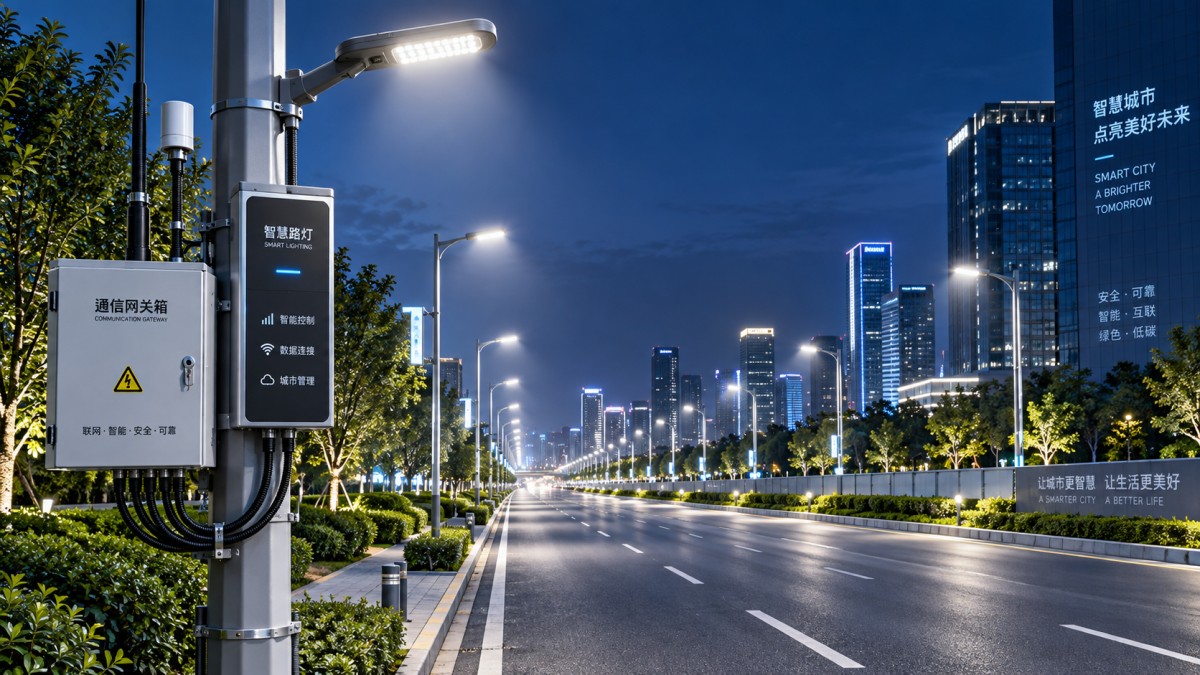
A streetlight may look like a simple field device, but a connected lighting point can include an LED driver, controller, sensor inputs, wireless or wired communications, a gateway, and a cloud-based management platform. If one layer is poorly protected, the impact may extend beyond energy reporting. Unauthorized switching, false fault alerts, exposure of location data, or loss of remote control can all affect public safety, maintenance efficiency, and public trust.
Start with the real risk: lighting is part of urban infrastructure
Security planning should begin before equipment is selected. The key question is not merely, “Does this system use encryption?” It is, “What happens if a device, credential, network connection, or management account is compromised?”
For a municipal road, industrial park, airport approach road, or large public space, the consequences differ. A short communication outage may be tolerable in one area, while loss of lighting control around pedestrian crossings, emergency routes, or transport hubs may require immediate response. Quality and safety teams should therefore classify assets by operational criticality and establish acceptable recovery times for each zone.
This risk-based approach prevents a common mistake: applying the same security settings to every project, regardless of the site’s network exposure, ownership model, maintenance arrangement, or safety importance.
Security requirements that should be written into the project specification
Clear requirements are easier to inspect, test, and enforce than broad statements such as “the system must be secure.” The following controls should be defined in technical specifications, factory acceptance procedures, and handover documentation.
1. Strong identity for devices and users
Every controller, gateway, and management user should have a unique identity. Shared default passwords are unacceptable in a large Smart City Street Lighting deployment because one leaked credential can expose hundreds or thousands of devices.
- Require unique device credentials or certificates wherever the architecture supports them.
- Change or disable factory-default accounts before commissioning.
- Use role-based access control: operators, maintenance contractors, project administrators, and auditors should not have identical permissions.
- Enable multi-factor authentication for platform accounts that can alter schedules, firmware, groups, or user permissions.
- Remove access promptly when contractors change, projects close, or staff roles are reassigned.
From a quality perspective, credential ownership must also be documented. A system that works during commissioning but has no accountable administrator after handover is not secure in practical terms.
2. Protected communications from pole to platform
Lighting data may travel through cellular, RF mesh, PLC, Ethernet, fiber, or a combination of these methods. The transport method changes, but the principle remains the same: commands and data must be protected against interception and alteration.
Specify encryption for data in transit, secure protocols for device-to-gateway and gateway-to-platform communications, and certificate validation where applicable. Avoid legacy or unencrypted management interfaces, particularly on gateways that bridge field devices with enterprise or public networks.
Network segmentation is equally important. Street lighting controls should not sit openly on the same network segment as office systems, public Wi-Fi, payment systems, or unrelated municipal services. Separating operational technology from general IT traffic limits lateral movement if another system is breached.
3. Secure firmware and controlled remote updates
Firmware updates are necessary over a lighting system’s operating life, especially when vulnerabilities are discovered. Yet remote updates can become a serious weakness when authenticity and rollback controls are missing.
A sound requirement is that controllers and gateways accept only signed, verified firmware from an authorized source. The system should record the installed version, update time, responsible account, and update result. Before a large-scale rollout, updates should be tested on a controlled pilot group rather than pushed to every streetlight at once.
Safety managers should ask an additional question: if an update fails, what is the fallback behavior? Devices should retain safe lighting operation or a defined local schedule rather than becoming inaccessible or remaining permanently off. This is especially relevant for roads and public areas where lighting continuity matters.
4. Secure configuration and local maintenance access
Field maintenance is often overlooked in cybersecurity discussions. A technician may need to access a cabinet, gateway, or pole-mounted controller using a laptop, handheld tool, Bluetooth connection, USB port, or service application. Each access path needs control.
Disable unused ports and services. Protect maintenance interfaces with authenticated access, time-limited permissions where possible, and an audit trail. Physical locks on cabinets and base compartments remain relevant; physical access can bypass otherwise well-designed network controls.
For outdoor equipment, security and durability must work together. The lighting assembly should resist weather exposure without making inspection impossible. For example, a robust pole-and-luminaire configuration such as Modern Street Lighting|MSL-GY can be configured for street applications with IP67 protection, while the smart-control design should still provide a documented and controlled route for authorized maintenance.
Data governance: collect only what the project needs
Connected lighting platforms may store energy consumption, switching history, fault records, asset locations, maintenance notes, user activity, and sensor data. Some projects also integrate traffic, environmental, parking, or video-related systems. The more data a platform gathers, the more carefully it must be governed.
Define what data is collected, why it is needed, who can see it, where it is stored, and how long it is retained. Location and operational patterns may appear harmless in isolation, but aggregated data can reveal maintenance routines, critical routes, or infrastructure usage patterns.
Contracts should address data ownership and export rights. Project owners need a clear way to retrieve operational records if the service provider, network operator, or maintenance contractor changes. Backups should be encrypted, tested for restoration, and protected by the same access rules as the live platform.
Standards provide a framework, but acceptance testing proves the result
There is no single checklist that fits every city and every communication architecture. However, security programs can draw useful structure from recognized frameworks such as ISO/IEC 27001 for information security management, IEC 62443 principles for industrial and operational technology environments, and applicable local cybersecurity, privacy, and critical-infrastructure regulations.
For procurement and inspection teams, the value of these frameworks lies in turning security into verifiable evidence. During factory acceptance testing and site acceptance testing, request records that demonstrate:
- device inventory, serial numbers, installed firmware, and communication status;
- successful removal of default accounts and passwords;
- encrypted platform and gateway communications;
- user-role testing, including confirmation that restricted users cannot change critical settings;
- event logs for login attempts, schedule changes, alarms, and firmware updates;
- backup and recovery testing for the management platform;
- documented vulnerability reporting and patch-management procedures.
It is worth testing failure scenarios, not only normal operation. Can the system maintain a safe local lighting schedule if cloud connectivity is lost? Does a gateway recover correctly after power interruption? Is an alarm raised when repeated unauthorized login attempts occur? These are the checks that reveal whether security supports resilience rather than simply adding another software feature.
Supplier evaluation should look beyond the luminaire
Outdoor lighting projects are often evaluated through photometric performance, pole strength, ingress protection, wind resistance, and product lifespan. Those factors remain essential. A system intended for years of roadside exposure must still meet the physical demands of the site, from corrosion protection to reliable LED operation.
But connected projects require an additional supplier review: who designs the controller, who operates the platform, who issues security updates, and who supports integration with the owner’s network? Ask for architecture diagrams, interface documentation, update policies, access-control procedures, and a named escalation path for security incidents.
Lishida Smart Lighting supports large-scale outdoor lighting delivery with lighting products, smart control systems, and project-based integration support. For contractors and owners, the practical objective is not to add complexity. It is to align the pole, luminaire, controller, gateway, communications network, and management platform into one maintainable system with defined responsibilities.
A security requirement is only complete when it can be maintained
Cybersecurity is not finished when the lights are commissioned. Passwords expire, personnel change, vulnerabilities emerge, certificates need renewal, and network arrangements evolve. Include periodic access reviews, firmware review cycles, log monitoring, incident-response contacts, and annual recovery tests in the operating plan.
For quality and safety managers, this ongoing discipline protects more than data. It protects continuity of illumination, reliable maintenance decisions, and the confidence that public-space lighting will remain available when people need it. In a connected city, secure lighting is not separate from dependable lighting—it is part of the same responsibility.
◉ MESSAGE

Blog
- How to avoid vendor lock-in in a government smart lighting project
- Sizing the communications power budget for smart city solar street lights
- How energy-saving mode affects solar bollard light operating time
- Comparing lead times from LED street light luminaire suppliers in Europe
- What spare parts support should a smart street light exporter offer?
- Where to place a solar garden light in a partially shaded garden
- Which battery alerts matter in remotely monitored solar street lighting?
Message