
Centralized or Node-Based: Choosing a Smart Street Lighting Architecture
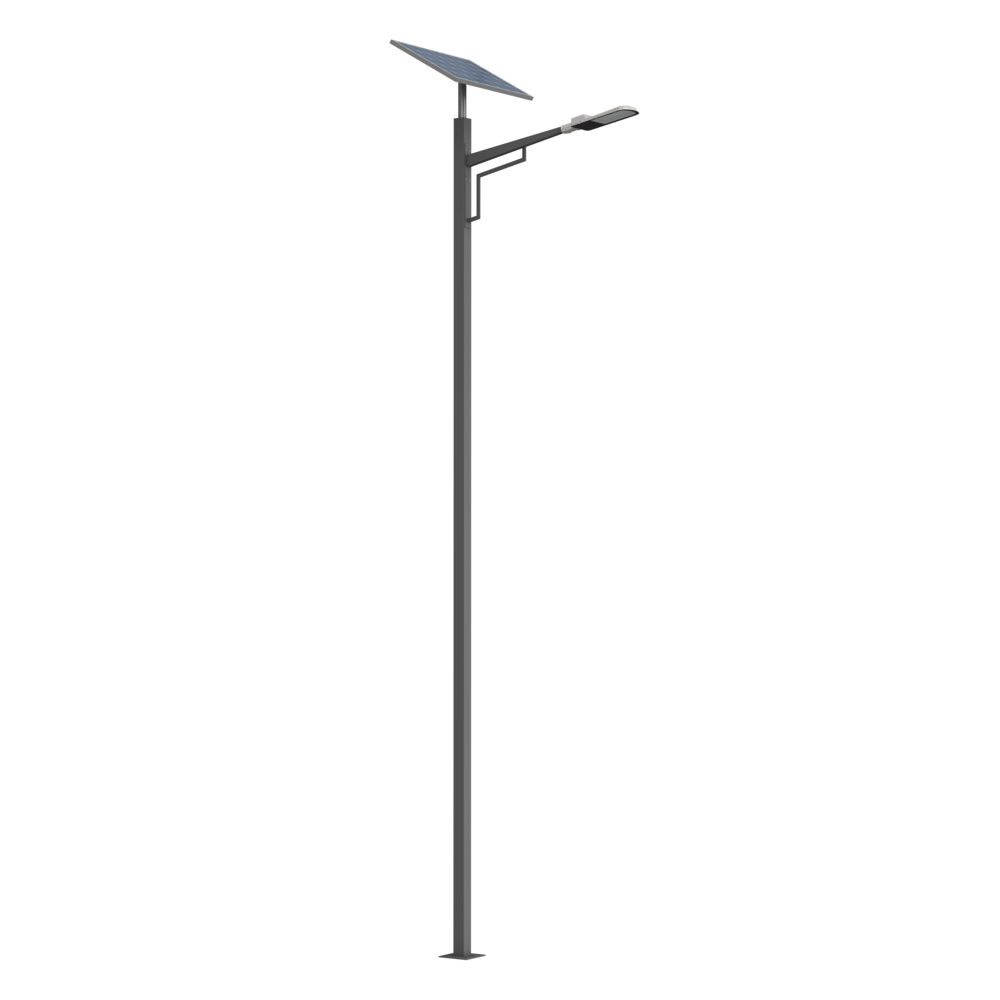
Choosing the right Smart Street Lighting System architecture is not a purely technical decision. For a business evaluator reviewing a road, park, campus, or urban renewal project, the architecture behind the luminaires will influence budget certainty, installation sequencing, maintenance workload, data availability, and the system’s ability to evolve after handover.
The central question is simple: should the project use a centralized control structure, where groups of lights are managed through cabinets or segment controllers, or a node-based structure, where each luminaire has its own intelligent controller? The practical answer is less simple. Both approaches can work well, but they solve different project realities.
A good evaluation starts by looking beyond the first equipment quotation. Outdoor lighting networks remain in service for many years, often across changing traffic patterns, public-space uses, maintenance teams, and energy-management requirements. The architecture should fit not only the lighting plan on day one, but also the operating model that follows.
Two architectures, two ways of managing the field
In a centralized Smart Street Lighting System, a control cabinet, gateway, or feeder-level controller manages a defined group of luminaires. Commands such as scheduled switching, dimming profiles, and circuit monitoring are issued at the group level. This approach is familiar to many electrical contractors because it often follows conventional distribution layouts.
Node-based control places a controller at, or within, each luminaire. Every light point can report status and receive commands independently through a communication network. Instead of treating a road segment as one electrical group, the platform can identify and manage individual poles, fixtures, or zones.
Neither option is automatically “better.” A straightforward arterial road with consistent lighting patterns may not need luminaire-by-luminaire control. By contrast, a mixed-use district with pedestrian paths, landscape areas, intersections, bus stops, and late-night activity may gain meaningful operational value from it.

Where centralized control makes commercial sense
Centralized control is often a sensible choice when the project has a stable layout, predictable operating hours, and clearly divided electrical circuits. A long roadway with similar pole spacing and uniform traffic conditions is a typical example. If all luminaires on a feeder are expected to follow the same dimming schedule, group control can deliver the required energy management without adding intelligence to every light point.
Its main advantage is a relatively concentrated hardware footprint. Fewer field controllers may simplify commissioning, reduce the number of device addresses to manage, and make the initial investment easier to model. For contractors working against a tight construction schedule, cabinet-based systems can also align well with established cable routing, feeder testing, and electrical acceptance procedures.
There are, however, limits that should be acknowledged during evaluation. When a fault occurs, the system may identify an affected circuit without immediately revealing which luminaire has failed. A group-level command also means that a single underused area may remain lit because it shares a feeder with an active one. In projects where energy savings are expected to come from fine-grained dimming, centralized control can leave value on the table.
Why node-based systems are gaining ground in complex public spaces
Node-based architecture is designed for visibility and flexibility. Each connected luminaire becomes an addressable asset: it can be scheduled, dimmed, monitored, and, depending on the system configuration, reported as a separate operating point. This is particularly useful where the lighting environment is not uniform.
Consider a city park adjoining a commercial landscape. Main pathways may need higher output during evening peaks, while secondary paths can dim later at night. Decorative garden lighting may follow a different calendar or scene. With node-based control, these decisions do not need to be constrained by the original feeder grouping.
For asset managers, the stronger case is often maintenance rather than dimming alone. Knowing the location and operating status of a specific luminaire can help teams plan field visits more effectively. Instead of sending personnel to inspect an entire section after a complaint, maintenance can be directed toward the reported asset, subject to the accuracy of the monitoring configuration and communications network.
The trade-off is greater system complexity. Each node requires compatible hardware, network planning, device commissioning, and clear responsibility for ongoing platform support. A node-based proposal that looks attractive on a feature list can become difficult to operate if the communications design, commissioning process, or data ownership arrangements are unclear.
Compare lifecycle questions—not only hardware prices
Business evaluators should avoid treating architecture selection as a comparison between one cabinet price and one controller price. The more useful question is: what will this structure cost and enable over the project lifecycle?
These differences affect more than energy consumption. They shape the cost of commissioning, the speed of fault response, the training required for operators, and the effort needed when a road is extended or a public space changes its use. In a large project, even small operational inefficiencies can become significant over time.
The outdoor environment still sets the baseline
Smart controls do not compensate for weak field hardware. Before selecting an architecture, confirm that the luminaire, pole, enclosure, connectors, and installation method are appropriate for weather exposure, wind load, temperature variation, and maintenance access. The control layer is only as dependable as the physical lighting asset beneath it.
For landscape paths, parks, and commercial outdoor areas, equipment such as LED Garden&Lawn Lighting | GLL-FQ can be assessed alongside the control strategy. Its 40W–60W range, IP67 protection level, operating-temperature range of -40°C to +70°C, and stated service life of at least 50,000 hours make the physical suitability conversation more concrete. With heights from 3.5 m to 5 m and options for square or round base plates, installation details can also be coordinated with the civil and electrical plan rather than treated as an afterthought.
For either architecture, evaluators should ask whether the selected luminaires support the intended control interface, how controllers are protected from environmental exposure, and whether replacement components will remain compatible during the operating period.
A practical decision path for project teams
Start with the lighting behavior required across the site. If most fixtures will always operate together, centralized control may be proportionate. If zones require different schedules, dimming curves, or response rules, node-based control deserves closer consideration.
Next, map the maintenance model. Will the owner have a dedicated facilities team? Is maintenance outsourced? Are crews expected to use a platform for alarms and work orders, or will inspections remain largely manual? The best architecture is one that the eventual operator can realistically use.
Then review communications as carefully as lighting performance. Ask how devices connect, what happens during temporary network interruptions, whether local schedules continue to operate, how system updates are managed, and who is responsible for cybersecurity and user access. These questions are especially important where multiple contractors supply luminaires, cabinets, gateways, and software.
Finally, consider project phasing. New urban districts and transport corridors are often built in stages. Node-based systems can offer flexibility when future zones are uncertain, while centralized systems may be highly efficient where feeder boundaries and operating requirements are already fixed. The architecture should not force the owner into unnecessary complexity, but it should not block sensible expansion either.
The decision is about operational fit
A centralized Smart Street Lighting System remains a credible, cost-conscious option for uniform and well-defined networks. Node-based control offers deeper visibility and flexibility where public spaces are varied, operational requirements are changing, or asset-level maintenance matters. The strongest choice comes from matching the architecture to the site’s electrical layout, lighting behavior, maintenance capability, and long-term management goals.
For large-scale outdoor lighting delivery, this decision should be made early enough to coordinate products, controls, communication pathways, civil works, and commissioning responsibilities. When those elements are planned together, project teams are more likely to achieve a system that is not only intelligent on paper, but dependable in the streets, parks, and public spaces where it must perform every night.
◉ MESSAGE

Blog
- How to avoid vendor lock-in in a government smart lighting project
- Sizing the communications power budget for smart city solar street lights
- How energy-saving mode affects solar bollard light operating time
- Comparing lead times from LED street light luminaire suppliers in Europe
- What spare parts support should a smart street light exporter offer?
- Where to place a solar garden light in a partially shaded garden
- Which battery alerts matter in remotely monitored solar street lighting?
Message