
How to Choose a Dimmable LED Garden&Lawn Lighting System for Mixed Outdoor Zones
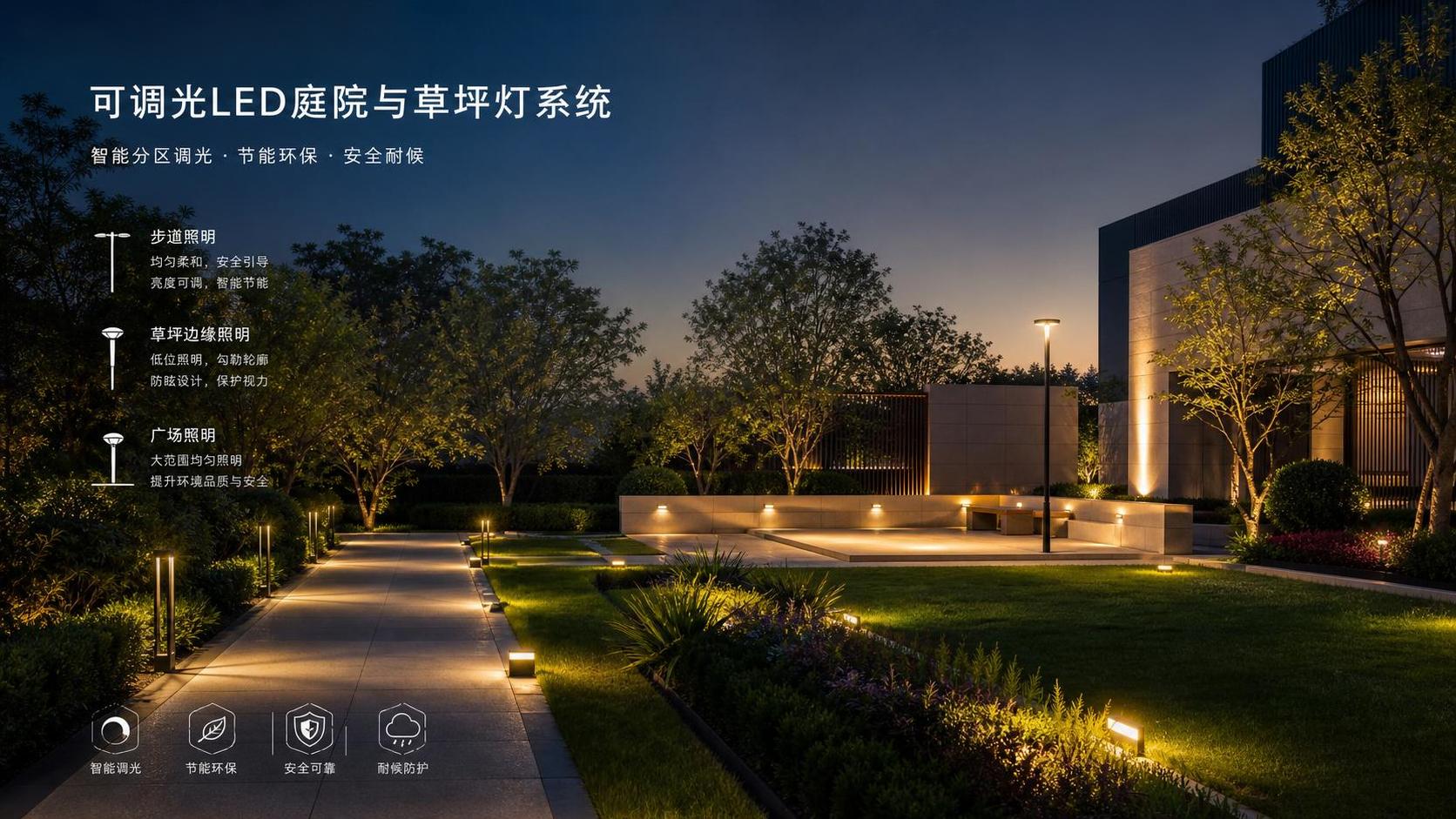
Choosing a lighting system for mixed outdoor zones is rarely about brightness alone. A practical LED Garden&Lawn Lighting dimmable version must respond to paths, open lawns, plazas, and edge areas with different visual needs and operating patterns.
That matters even more in projects where comfort, safety, energy use, and maintenance all need to stay under control. In outdoor lighting, the best results usually come from matching dimming behavior, fixture durability, and control logic to the site itself.
For larger installations, this decision also affects long-term project execution. Lishida Smart Lighting works across roads, public spaces, and complex urban environments, where integrated products, smart controls, and reliable project support must work together instead of as separate parts.
What a dimmable system really needs to do
A mixed-zone site usually includes more than one lighting task. One route may need steady guidance, while a lawn edge may only need soft ambient light during low-traffic hours.
A useful LED Garden&Lawn Lighting dimmable version should reduce output smoothly, keep light distribution stable, and avoid visible flicker. If dimming is uneven, the space can feel patchy or unsafe.
Simple dimming percentages do not tell the full story. It is more important to understand how the system behaves at different times, in different weather, and across different activity levels.
Why mixed outdoor zones need a different selection approach
A single open area is easier to light than a site with transitions. Walkways, landscape borders, seating zones, and small public gathering points all create different lighting expectations.
In these conditions, the LED Garden&Lawn Lighting dimmable version should support zoning, not just dimming. Operators need the ability to lower one area without compromising visibility in another.
This is where control compatibility becomes important. If the fixtures, drivers, and smart control platform do not speak the same language, field adjustments become slow and unreliable.
Key points to check early
- Minimum dimming level without flicker or sudden cutoff
- Consistency of color appearance during dimming
- Control options such as timer, sensor, or centralized platform
- Protection level for rain, dust, and outdoor exposure
- Maintenance access and replacement planning
Performance matters beyond the first installation
Outdoor lighting often fails as a system before it fails as a product. Drivers, controls, poles, mounting details, and environmental loads all affect service life.
For that reason, a durable support structure can be just as relevant as the dimming function itself. In mixed public zones, nearby roadway or perimeter lighting may also influence the overall specification.
A useful reference is Modern Street Lighting|MSL-GY, which reflects the kind of robustness often needed around broader outdoor networks. With Q235 steel construction, IP67 protection, wind resistance of at least 150 km/h, and a service life of 30 years or more, it shows how structural reliability supports long-term lighting stability.
Even when the primary focus is garden and lawn lighting, surrounding infrastructure should be judged with the same discipline. Mixed zones perform better when decorative and functional lighting are planned as one coordinated system.
How to match dimming strategy to real site conditions
The right dimming strategy depends on how the space changes over time. Early evening use, late-night security needs, and seasonal occupancy can all shift the required output.
In practice, the LED Garden&Lawn Lighting dimmable version should be evaluated by scene, not in isolation. A fixture that looks fine in a catalog may underperform once trees, paving, and pedestrian flow are added.
This kind of mapping helps prevent over-lighting. It also keeps the LED Garden&Lawn Lighting dimmable version aligned with actual use instead of theoretical maximum output.
Control, efficiency, and visual quality should stay balanced
Energy savings are one reason to choose dimmable lighting, but not the only one. Lower output during quiet hours should still preserve orientation, comfort, and the character of the outdoor space.
Color temperature and optical control also shape that result. Warmer light can support relaxed landscape areas, while neutral tones may suit circulation routes better.
Where mixed zones connect to roads or broader public infrastructure, a coordinated family of products can help. For example, systems associated with Modern Street Lighting|MSL-GY highlight how high efficacy, long LED life, and tailored configurations can fit different project requirements without fragmenting maintenance standards.
A practical way to compare options
A good comparison process starts with the site, not the fixture list. Record zone types, operating hours, expected occupancy, environmental exposure, and control method before reviewing products.
Then test whether the LED Garden&Lawn Lighting dimmable version can support those conditions over time. This includes dimming response, enclosure protection, driver reliability, and integration with the broader outdoor lighting plan.
- Define which zones require independent control
- Check real dimming curves, not just catalog claims
- Review durability against climate and maintenance cycles
- Confirm compatibility with smart control architecture
- Assess long-term operating value, not only purchase price
From there, the next step is straightforward: build a site-based evaluation list, compare dimmable options by zone behavior, and review how each choice fits the wider outdoor system. That approach usually leads to fewer adjustments later and a more dependable result on the ground.
◉ MESSAGE
Blog
- LED Street Luminaire Specifications That Matter for Roadway Projects
- What to Evaluate When Selecting a Smart Street Lamp Manufacturer
- How to Prepare a Compliant Solar Lighting Bid for Public Infrastructure Projects
- LED Street Lighting Solutions for Urban and Municipal Roads
- LED Street Light Installation Guide for Road Projects
- LED Street Light Lifespan: How Long Do LED Road Lights Last?
- LED Street Light IP Rating: What Should Buyers Choose?
Message